Table of Contents
Last updated on October 11th, 2026 at 07:53 pm
When someone comments on your weight, you can respond with a short boundary: “Please don’t comment on my body.” You can change the subject, leave the conversation, or say nothing. You do not owe anyone an explanation of your weight, your food, or your recovery.
Maybe someone has announced that you’ve gained weight. Maybe they’re congratulating you on weight loss you never asked them to notice. Or maybe you’re trying to eat lunch while someone gives your plate a performance review. It can be exhausting to have your body or food turned into a conversation you never agreed to have.
You can choose a response that fits the situation and how safe you feel, whether that’s a gentle redirect or a firm boundary. Sarcasm is available if you’ve got the energy for it, but you don’t have to entertain anyone to get your point across.
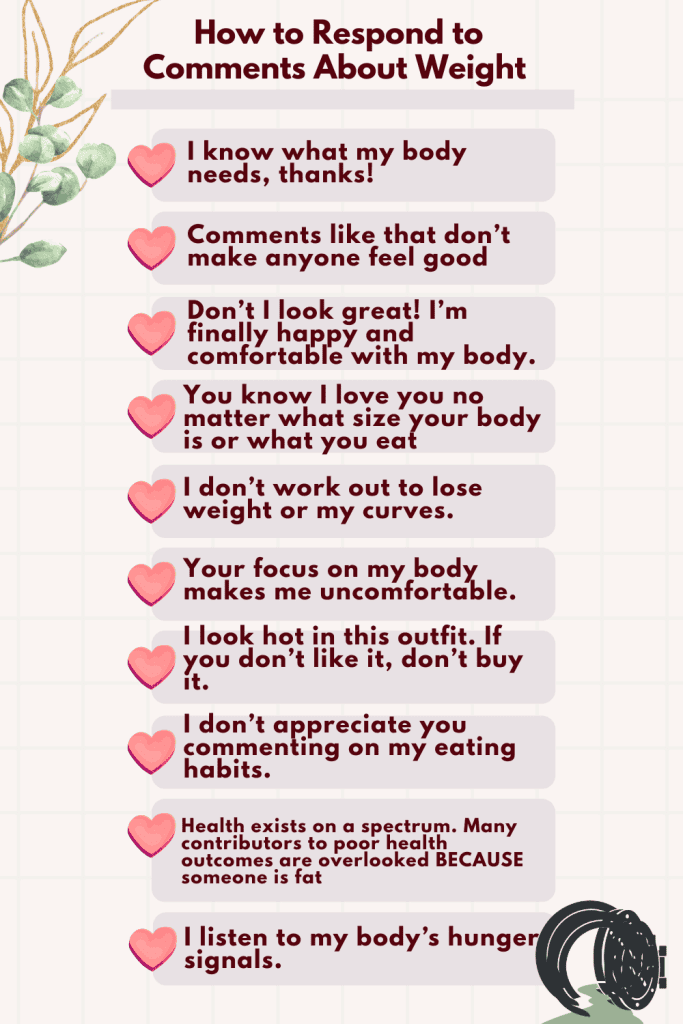
15 Responses to Unwanted Weight Comments
You do not need to deliver the perfect comeback. Pick something you can actually imagine saying.
| Someone says… | You could respond… | Tone |
|---|---|---|
| “Have you lost weight?” | “I’d rather catch up without talking about my weight.” | Gentle |
| “You look great now that you’ve lost weight.” | “I’d appreciate compliments that aren’t about my size.” | Gentle |
| “You’ve gained weight.” | “My weight isn’t something I’m discussing.” | Firm |
| “You’re so skinny!” | “Please don’t comment on my body.” | Firm |
| “Are you really going to eat all that?” | “My lunch doesn’t need supervision.” | Witty |
| “Maybe you shouldn’t eat that.” | “I’m not looking for advice about my food.” | Firm |
| “You’d look better if you lost weight.” | “I didn’t ask for a review of my body.” | Firm |
| “I’m only saying this because I care.” | “You can care about me without commenting on my weight.” | Gentle |
| “You’re too big to wear that.” | “The outfit wasn’t submitted for approval.” | Witty |
| “You need to work out.” | “My movement choices aren’t up for discussion.” | Firm |
| “You’ll never get your body back after pregnancy.” | “My body is still here. Please stop commenting on it.” | Firm |
| “You look good for a mom.” | “You can leave the ‘for a mom’ part off.” | Witty |
| “You shouldn’t be hungry already.” | “I’m going to eat. Let’s talk about something else.” | Gentle |
| “Are you sure you need those calories?” | “My food doesn’t require your permission.” | Firm |
| “You used to be smaller.” | “And we used to talk about more interesting things.” | Witty |
If speaking up could put you at risk or make the situation harder, you can skip the response entirely. You are allowed to protect yourself without explaining what you’re doing.
How to Respond to Weight Loss Comments
Weight loss comments can arrive wrapped in a compliment, which can make responding feel complicated. You might like the attention, hate it, or feel both at once. Whatever comes up for you, you don’t have to explain why your weight changed or pretend you’re comfortable with someone treating a smaller body as an achievement.
A gentle redirect can give the conversation somewhere else to go: “It’s good to see you. I’d rather hear what you’ve been up to.” If you’d rather make your boundary clear, try: “I’d prefer we leave weight out of our conversations.”
If someone asks what they should say instead, give them something useful: ask about your work, the book you’re reading, or something you’re looking forward to. There is plenty to notice about a person beyond how much space they take up.

How to Respond to Weight Gain Comments
“You’ve gained weight” is an observation you probably didn’t need delivered to your face, and it can leave you feeling pressured to explain yourself. You do not have to follow it with an apology, a promise to diet, or a list of reasons your body has changed.
You can keep your response simple: “I’m not discussing changes in my body.” If the person starts offering suggestions, you can be more specific: “I’m not asking for weight loss advice.”
You don’t need to prove that you love your body before setting this boundary. You can feel uncomfortable in your body and still decide that other people’s commentary is unwelcome. Your privacy does not depend on your confidence, and you don’t have to wait until you feel better about yourself to ask for it.
Funny Responses to “Have You Lost Weight?”
Sometimes you want a little sarcasm with your boundary.
- “I haven’t been keeping you updated on my gravity situation.”
- “I was hoping we’d discuss my excellent taste in shoes.”
- “My body has declined this interview.”
- “Can we skip the weigh-in and get to the catching up?”
Use humor if it feels like you, but don’t feel obligated to make someone laugh to soften a boundary they needed to hear. If a joke invites more questions, follow it with something direct: “Seriously, I’d like us to stop talking about my weight.”
What to Say When Family Members Comment on Your Weight
Family members can act like years of knowing you came with unlimited access to your body, your plate, and your medical history. Being related doesn’t give someone permission to make comments you’ve asked them to stop making, even if those conversations have been happening for years.
If you expect weight comments at a visit or holiday meal, consider sending a message beforehand:
“I’m looking forward to seeing everyone. Please leave comments about my weight, body, and food out of the visit. I’d like to spend our time catching up.”
You can also ask someone you trust to help redirect the conversation: “If weight or diet talk comes up, could you help change the subject? I don’t want to handle it alone.” Having someone ready to back you up gives you another option when you don’t want to respond yourself.
In the moment, a short reminder may be all you want to say: “We’ve talked about this. Please stop commenting on my body.”
If they continue, choose a next step you can realistically take. That might mean sitting elsewhere, stepping outside, ending a phone call, or spending less time in the conversation. You are not responsible for turning dinner into a successful seminar on diet culture, especially when you came to spend time with people you care about.
What if They Say They’re “Just Concerned About Your Health”?
You can acknowledge someone’s concern without inviting them to manage your body: “I hear that you’re concerned. I’m not discussing my weight with you.” You don’t have to debate their intentions before telling them which conversations you’re willing to have.
If you want a different kind of support, be specific about what would help. You might say, “What would help is spending time together without talking about my size,” or, “If you want to check in, ask how I’m doing and listen to my answer.”
You can choose to have a private conversation about your health with someone you trust. That choice belongs to you. An unsolicited comment at the dinner table does not require you to share personal information.
How to Handle Weight Comments During Eating Disorder Recovery
In recovery, you may want people to stop noticing your body out loud altogether. Even a comment intended as encouragement can be unwelcome, and you can tell people what kind of support you’d prefer: “Please don’t comment on changes in my body, even if you mean it positively.”
Another option is, “I’d appreciate support that focuses on how I’m doing rather than how I look.” You can share more about your recovery if you want to, but setting a boundary doesn’t require you to disclose it.
If a comment leaves you upset, consider contacting someone on your recovery team or a trusted support person. You can say:
“Someone commented on my body, and I’m having a hard time with it. Can you help me get through the next part of my day?”
Your eating disorder voice may try to turn someone else’s opinion into a new rule about what you’re allowed to eat. That comment does not get to write your recovery plan, even if the eating disorder keeps bringing it up as evidence that you should change what you’re doing.

What to Do if Someone Keeps Commenting After You’ve Asked Them to Stop
When someone keeps commenting, you can repeat your boundary without adding a new explanation: “I’ve asked you not to comment on my weight.” If you want to name what happens next, try: “If you keep commenting on my body, I’m going to end this conversation.”
Choose a response that fits your circumstances. If you live with the person, depend on them, or don’t feel safe confronting them, a direct boundary may be harder to use. Changing the subject or seeking support privately may be more workable. Whatever you choose, someone ignoring your boundary does not mean you explained it badly. Their response is their responsibility.
Sometimes the Best Response Is No Response
When someone comments on your weight, try letting their words sit there. Don’t answer the question, explain your body, or rush to make the moment less awkward. Sometimes people will start fumbling through an explanation or reconsidering what they said when you simply stand there without responding. You don’t have to rescue them from the pause they created. Trust me, awkward silence can sometimes get your point across faster than any witty comeback. It also teaches the offender quickly that these types of conversations won’t be tolerated in the future.
When the subject changes, pick the conversation right back up. You can happily talk about someone’s new job or weekend plans without returning to the commentary about your body. This gives you a way to stay engaged while letting the weight comment go unanswered. They may not get the message every time, but you don’t owe them a response just because they asked.
If you’re not comfortable with full fledged silence (and trust me, this can feel extraordinarily awkward for both parties when you’re not used to it) then simply leave the room. This is personally my FAVORITE strategy because it teaches someone almost instantly that their comments were not appreciated and sometimes leaves them dwelling on what they said for days. This also saves you from sitting in the “argumentative” zone.

Why Weight Comments Can Be Hurtful
Unwanted weight comments can leave you feeling watched or judged. A supposed compliment may suggest that the person likes you better at a particular size. A criticism can turn an ordinary conversation into a demand that you defend your body.
Research also gives us a reason to take weight-based teasing seriously. A 2021 study following young people from adolescence into young adulthood found associations between weight teasing and disordered eating behaviors. The study does not establish that a single comment causes an eating disorder, or that every comment affects everyone in the same way.
You don’t need a research paper to justify asking someone to stop commenting on your body. If the conversation makes you uncomfortable, that is enough reason to ask for it to change.

What to Say Instead of Commenting on Someone’s Weight
If you want to connect with someone, give them room to tell you about themselves. “It’s good to see you. How have you been?” leaves space for whatever they want to share, without putting their appearance at the center of the conversation.
When you want to offer a compliment, choose something specific that doesn’t rank their body:
- “I love the color of that jacket.”
- “You explained that so clearly.”
- “I always enjoy spending time with you.”
- “I’m proud of the work you put into that project.”
If you’re worried about someone, ask privately how they’re doing. Listen before offering advice. You can offer practical support without making their appearance the focus.

You Don’t Owe Anyone a Perfect Response
You might laugh because you don’t know what else to do, freeze, or think of the response you wanted three hours later while you’re washing dishes. You can return to the conversation when you’re ready: “I’ve been thinking about what you said. I’d like you to stop commenting on my weight.”
You can also decide you don’t want another conversation about it. Your body doesn’t need a defense attorney, and you don’t need to earn a peaceful meal by winning an argument first. Choose the response that gives you the most room to get on with your day.


- Dating Someone With an Eating Disorder: Supporting Them Without Losing Yourself - October 19, 2026
- The Evolution of Thinspo: From Pro-Ana Websites to SkinnyTok - September 19, 2026
- Meal Support For Eating Disorders - August 12, 2026