Table of Contents
Last updated on October 26th, 2026 at 10:38 pm
When you’re dating someone with an eating disorder, ordinary plans can become complicated. Dinner may be stressful, body compliments may land badly, and you may be unsure whether to bring up something that worries you or leave it alone.
You can care deeply about someone and still have no idea what to say. Learning how to offer support gives you somewhere more useful to start than watching every bite or trying to love the illness out of them.
Start With What Your Partner Is Experiencing
Eating disorders can affect shared meals, social plans, communication, and physical closeness. Your partner might want to see you and still feel overwhelmed by a restaurant invitation or anxious about being touched.
Ask about their experience rather than assuming you can tell from their appearance or diagnosis. You could ask:
- “What do you wish I understood about your eating disorder?”
- “What tends to make dates or spending time together harder for you?”
- “Are there things I say about food or bodies that make things more difficult?”
- “When you’re struggling, would you rather I listen, keep you company, or offer practical help?”
- “What would help you feel more comfortable when we eat together?”
- “How would you like me to check in when I’m worried?”
- “Is there anything about touch or physical closeness you’d like me to know?”
You may hear about body image fears, difficulty eating around others, shame about symptoms, or exhaustion. You may also hear about food textures or fear of choking, so don’t assume weight loss is the reason behind every eating disorder.
Let your partner decide how much detail to share. You do not need their weight, calorie intake, or a description of every behavior to take them seriously.
Keep in mind that a person with an eating disorder might not always have the words to share what may trigger them. New triggers may also come up that neither of you were expecting. It is important to keep checking in rather than attempting to avoid any conversation that might elicit a trigger.
If You’re Worried, Have a Direct Conversation
Choose a private moment away from the dinner table. Describe what you have noticed without diagnosing them or arguing about whether they look sick enough.
For example: “I’ve noticed you’ve been skipping our dinners and seem really distressed around food. I care about you, and I’m worried about how you’re feeling.”
Listen before moving into solutions. If they are open to help, ask whether they would like company looking for an eating disorder provider or arranging a medical appointment.
If they are not ready to talk, you can leave the invitation open and check in again. You do not need to wait for visible weight changes before expressing concern.
Change the Food and Body Talk
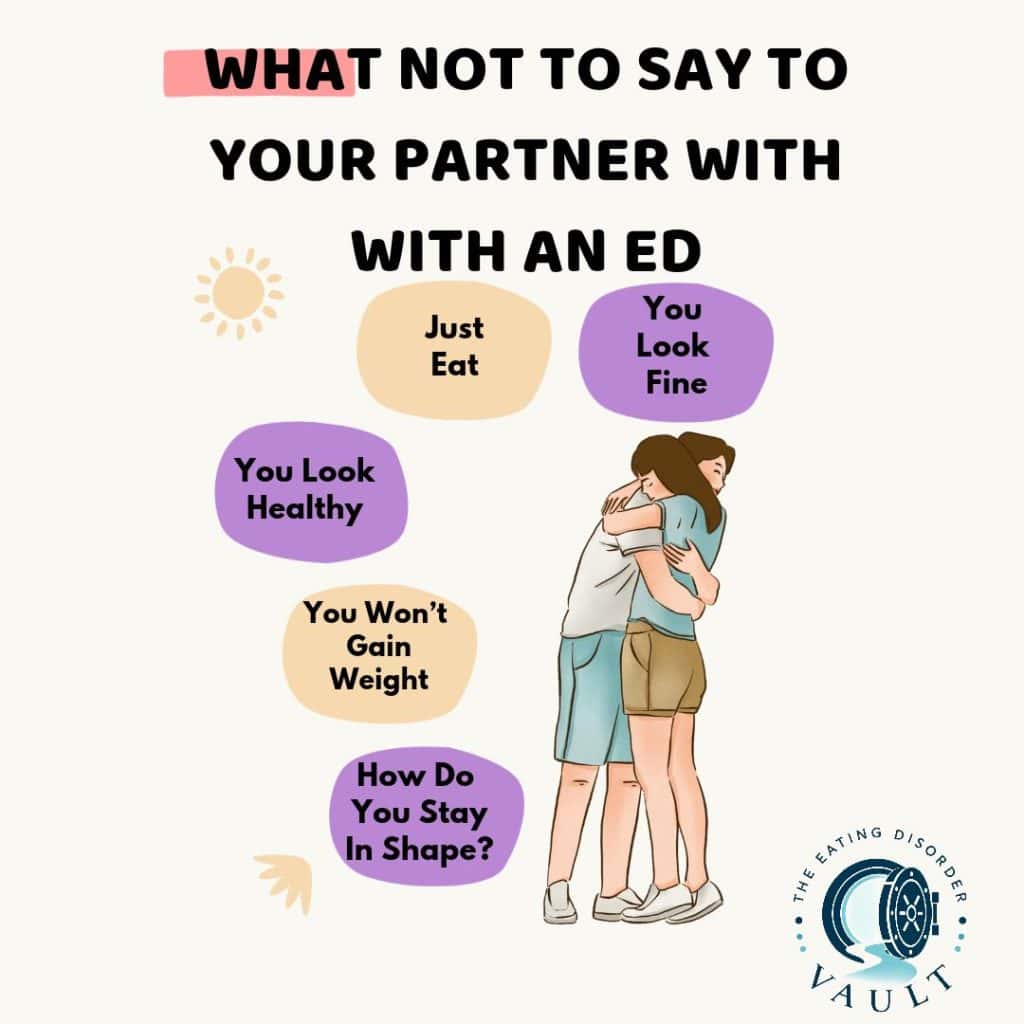
Avoid commenting on your partner’s weight, portion sizes, or how much discipline they have around food. Even a compliment about weight loss can praise something that is making them unwell.
A simple rule: don’t comment on bodies unless they’re on fire. That includes your partner’s body, your own body, and other people’s bodies, whether they’re on TV or sitting at the next table. The eating disorder may translate those comments into a judgment about your partner’s body, so even “I hate how my stomach looks” or “They look great since losing weight” can become “My partner must think my body needs to change, too.”
Your own diet talk matters, too. Describing dinner as something you need to burn off or announcing that you were “bad” for eating dessert can bring the eating disorder right back into the conversation.
Try changing familiar comments like these:
| Instead of | Try |
| “You look so much healthier!” | “I’m glad we’re spending time together.” |
| “That’s all you’re eating?” | “Would some company or support help right now?” |
| “I need to earn this dinner.” | Leave exercise and food compensation out of the conversation. |
| “Just eat. You’re beautiful.” | “I can see this is hard. What support can we agree would help?” |
These are starting points, not magic phrases. Ask your partner which comments help and which make things harder, rather than expecting one script to work in every situation.
Make Dates Predictable Without Organizing Everything Around Avoidance
Agree on a time and place, and avoid springing a surprise meal or workout on your partner. A shorter outing may be more manageable than a full day of activities, especially when energy is limited.
Respect meals and snacks even when you aren’t hungry yourself. You can keep someone company without comparing what is on your plates or treating their need to eat as an inconvenience.
A date without food can give you another way to connect. But if you notice your shared life becoming a growing list of forbidden places and activities, talk about that pattern with care rather than making the list longer indefinitely.
You might say: “I want our time together to feel manageable, and I’ve noticed we’re avoiding more things. What would make a next step possible?”
Agree on How Involved Your Support Will Be
Dating someone with an eating disorder does not automatically tell you how involved they want you to be in recovery. One person may want reminders, meal support, and practical help. Another may want their treatment kept separate from the relationship.
Talk about what you both want and can realistically offer. These examples are starting points for that agreement.
Low-Involvement Support
Your role may simply be to:
- Keep comments about food, weight, and bodies out of your time together.
- Respect boundaries around touch and intimacy.
- Make room for meals, snacks, and rest without questioning or judging those needs.
You are not expected to remind them to eat, ask about appointments, or check on symptoms. Your partner manages those things independently or with other support.
An agreement might sound like: “I don’t want you involved in managing my recovery. What helps is keeping diet and body talk out of our relationship and listening when I tell you what feels comfortable physically.”
Moderate-Involvement Support
Your partner may want some practical support, with clear limits. That could include:
- An agreed snack reminder.
- Company during a meal or afterward.
- Listening when they want to talk about recovery.
- Helping prepare questions for an appointment, if asked.
Be specific. “Please remind me once at three” gives you a clearer role than “Make sure I eat.”
An agreement might sound like: “I’d like company after dinner and a snack reminder when we’re together. I don’t want you checking what I’ve eaten throughout the day.”
High-Involvement Support
You may both agree that you will participate more actively in recovery. Depending on the treatment plan, this could include:
- Attending appointments with your partner’s permission.
- Learning structured meal-support skills from their treatment team.
- Helping your patient complete 100% of meals
- Managing the recovery meal plan for your partner
- Helping with or completely taking over meal preparation or following an agreed support routine.
- Knowing whom to contact when your partner needs more help.
- Taking part in a plan for difficult periods, with clear responsibilities and backup support.
This level of involvement needs your agreement, too. Discuss the time it requires, what guidance you need, and what happens when you are unavailable. Clinical decisions still belong with qualified providers.
An agreement might sound like: “I’m willing to attend an appointment and learn how to support dinners. I can’t supervise every meal or be available throughout my workday. We need other support for those times.”
Keep the Agreement Open to Review
You can want different levels of involvement in different areas. Someone might welcome help at appointments while wanting no food reminders from their partner.
A difficult moment does not automatically expand your responsibilities or cancel the agreement. If support starts feeling intrusive, overwhelming, or insufficient, revisit it together when things are calmer. If it is part of a treatment plan, involve the team in that conversation.
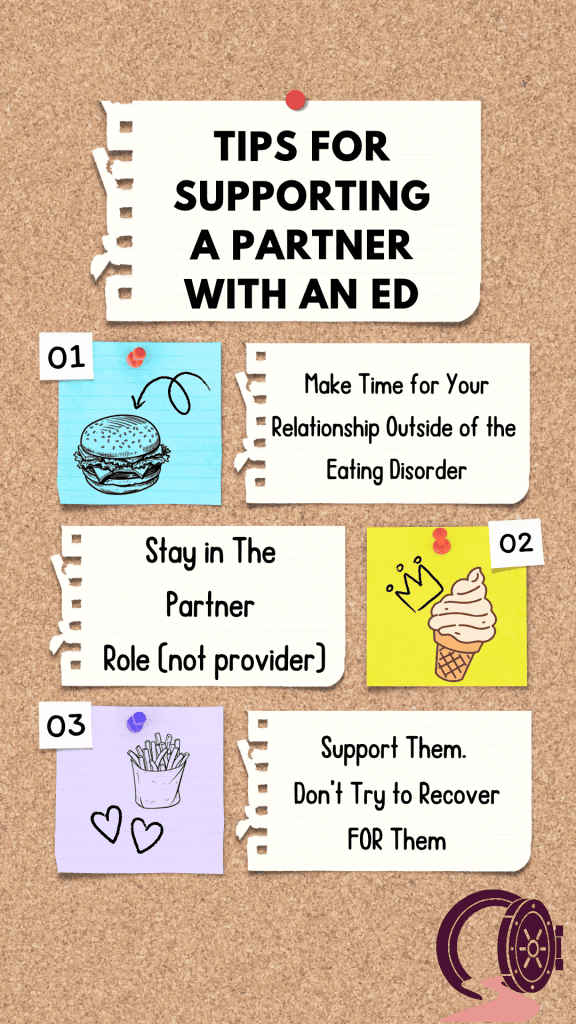
You are not responsible for your partner’s recovery. You are responsible for how you treat them and for following through on the support you have agreed to provide. That might mean keeping body comments out of the conversation, giving an agreed snack reminder, or sitting with them after dinner.
If you can no longer provide the support you agreed to, say so and revisit the arrangement together. You can be dependable while having limits.
Those actions can support recovery, but they cannot guarantee it. A difficult meal, worsening symptoms, or a setback does not automatically mean you failed as a partner. Your partner’s progress is not a grade on how well you love them.
When Meal Support Means Triggers
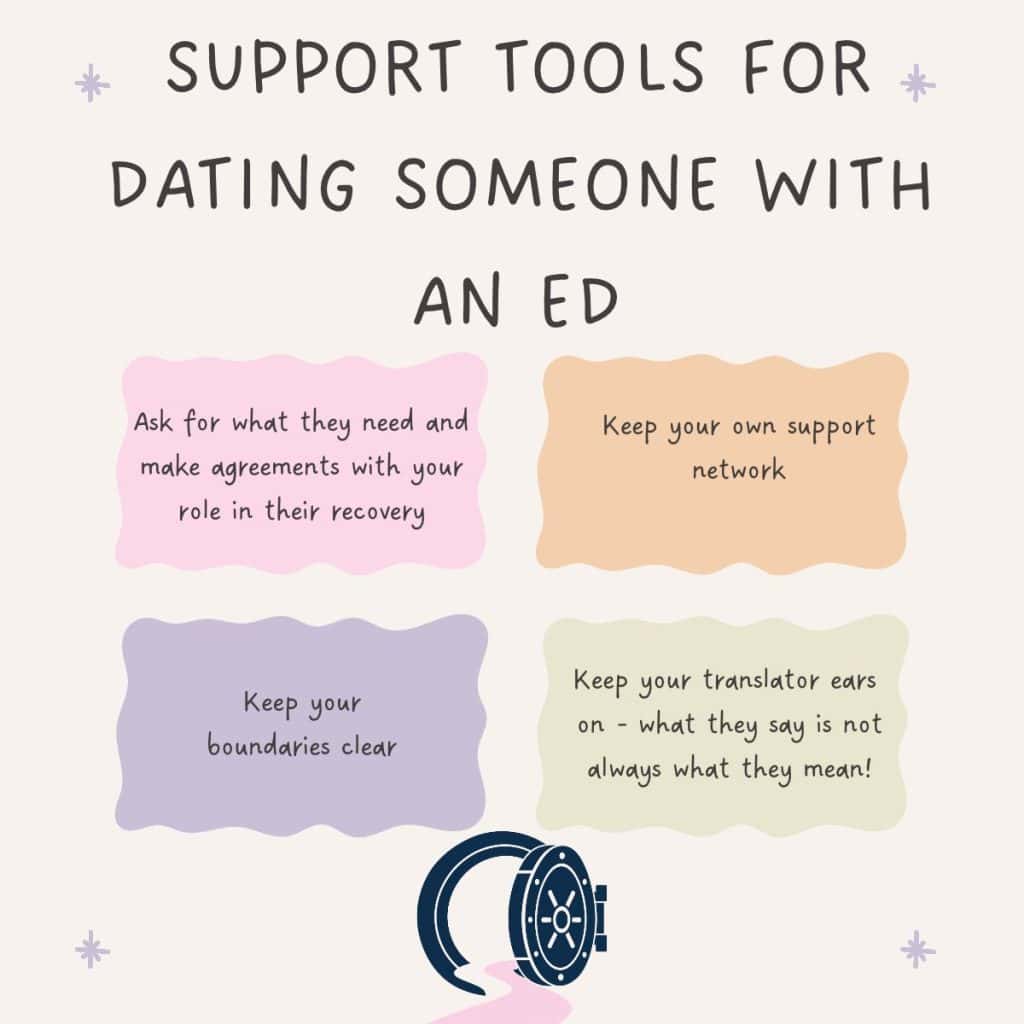
A reminder can bring up eating disorder thoughts even when you are doing exactly what you both agreed would help. If your partner asked you to remind them about snacks and then finds the reminder triggering, that discomfort does not automatically mean you did something wrong or that the agreement needs to disappear. You can acknowledge that it feels hard without letting the eating disorder make every decision about support.
Try asking: “We agreed that I’d remind you about snacks, but I can see this brought up some difficult feelings. Would you like us to revisit my role or how I give the reminder?”
That conversation gives you both room to clarify what helps. Maybe they want different wording, a different time, or reminders from someone else. If reminders are part of a treatment plan, bring the difficulty to the treatment team before changing that arrangement. The aim is to support recovery while respecting your partner’s choices and the limits of your role.
Stay in the Partner Role
It can start with wanting to help. You remind them about a snack, check whether they booked an appointment, and cancel your own plans because you are worried about leaving. Over time, you may find yourself managing their recovery while your relationship gets less and less room.
Being a supportive partner does not make you responsible for providing treatment. You can listen, offer company, and help with practical things you have both agreed on. Decisions about nutritional needs, medical safety, and treatment belong with qualified providers, with your partner involved in their care.
Pay attention if you feel responsible for:
- Checking every meal or trying to catch eating disorder behaviors.
- Deciding whether they have eaten enough or are medically safe.
- Being available at all hours because you feel something bad will happen if you take a break.
- Measuring your worth as a partner by whether their symptoms improve.
You might say: “I love you, and I want to support you. I can keep you company after dinner, but I can’t be responsible for monitoring your eating or deciding what treatment you need. Let’s talk about who else can help.”
If professional care is hard to access, that does not mean you suddenly have the training or capacity to replace it. Be honest about the gap and seek additional support together where possible.
You are allowed to have a relationship that includes your own needs, time apart, and conversations that have nothing to do with the eating disorder.
Take Pressure Off Physical Intimacy
If your partner pulls away from a kiss or stops wanting sex as often, you may wonder whether their feelings have changed. Attraction is only one part of what makes intimacy possible. How their body is functioning and how they feel being seen or touched matter, too.
Have that conversation outside the bedroom, when neither of you is initiating anything. You might say: “I’ve noticed physical closeness seems harder lately. Is there anything about how I approach you that you’d like me to change?” On top of the emotional challenges an eating disorder can bring into intimacy, there are physical changes as well.
Physical Changes To Intimacy
Eating disorders can cause:
- Hormone changes: Inadequate nutrition can lower estrogen and testosterone, affecting sexual desire and functioning.
- Fatigue and weakness: Having little energy can make physical intimacy feel demanding.
- Digestive discomfort: Bloating, constipation, or stomach pain can make certain touch or positions uncomfortable.
NEDA’s health consequences review describes these physical effects that the eating disorder may have on labido. They cannot tell you what your partner feels about you, and persistent changes or pain deserve medical assessment.
Make Room for Touch Without Making Every Touch a Test
Ask about closeness outside the moment someone is initiating sex: “What kinds of touch do you enjoy right now? Is there something you want more of but feel anxious about?”
That second question leaves room for wanting closeness while feeling uncomfortable with your body. You do not need to wait until every body image thought disappears before enjoying affection. You also do not need to turn your partner’s discomfort into a challenge you have decided they should complete.
Together, you might agree to:
- Spend a few minutes kissing or cuddling without an expectation of sex.
- Ask your partner if they would like you to lead or they feel more comfortable initiating. If they would like to initiate, let your partner guide your hand toward the touch they want to try.
- Focus on warmth, pressure, or pleasure when appearance worries interrupt the moment.
- Revisit an arrangement, such as keeping clothing on, if your partner wants more freedom than it currently allows.
Keeping clothing on can be a choice for today without becoming a permanent rule. Equally, undressing is not a recovery milestone they owe you. Ask what they want to work toward rather than assuming either covering up or showing more skin is always the answer.
You might say: “Would you like to keep things as they are tonight, or is there something you want to try that feels a little uncomfortable? Either way, we can stop or change our minds.”
There is no way to guarantee that touch will never bring up difficult thoughts. If your partner notices anxiety and still freely wants to continue, you can follow their lead and check in. Pain, feeling overwhelmed, or wanting to stop calls for a pause. An earlier agreement to try something never cancels their right to say no.
If body image fears keep narrowing the affection your partner wants to enjoy, encourage them to discuss that with their therapist. You can participate in an agreed plan without becoming responsible for treating those fears.
Your own needs deserve a conversation, too. Talk about missing affection or sex at a separate time, so your partner can hear you without feeling that the touch happening right now must go further.
Keep Room for Your Own Needs
You are allowed to feel worried, frustrated, or tired. It’s important to look after your own emotional wellbeing as well as supporting the person you love. Supporting someone with an eating disorder can sometimes feel all consuming. You may even start to notice yourself struggling with your own food and body challenges or feeling like you can’t do anything right.
Keep connections outside the relationship, and seek your own support if you need it. Protect your partner’s private details while making room to talk honestly about what you are experiencing.
Put On Your Translator Ears
When eating disorder distress gets intense, your partner may cry, snap, raise their voice, or say something hurtful. It can be hard to hear anything beyond the words aimed at you, especially when you were trying to help.
Putting on your translator ears means listening for what they may be struggling to express. “Stop watching me” might mean “I feel exposed and ashamed.” Anger about an agreed snack reminder might mean “I’m scared to eat, and this reminder makes that fear harder to avoid.”
Those are possibilities, not translations you can assume are correct. Ask rather than telling your partner what they really mean.
Try: “I’m hearing that you’re upset with me. Is the reminder itself feeling unhelpful, or is eating feeling especially hard right now?”
Their answer might also reveal something you need to own. Perhaps you reminded them differently than agreed or made a comment that hurt. Having an eating disorder does not make every complaint about the relationship a symptom.
Respond to the Feeling and Set a Limit on the Behavior
You can acknowledge distress without agreeing with an accusation or accepting an insult.
“I can see you’re overwhelmed, and I want to understand. I’m willing to listen, but I won’t stay in a conversation where you call me names.”.
An eating disorder can help explain relationship difficulties, but it does not require either person to accept threats, humiliation, or control. You can care about someone’s recovery and still decide a relationship is not workable for you.
Crying does not need to be stopped or fixed. Ask whether they want company, some space, or help putting words to what is happening. Sometimes, this may be helpful to establish before the event comes up as part of your role as a support person. If voices are rising, slow the conversation down rather than trying to settle every disagreement in that moment.
You might say:
- “We don’t have to solve this right now. Would you like me to sit with you or give you some space?”
- “I want to hear you. Let’s pause and come back when we can speak without yelling.”
- “I hear that the reminder brought up a lot. We can revisit our agreement when things have settled.”
You can offer choices without taking responsibility for making the feeling disappear. You also do not have to keep explaining your good intentions while someone is too upset to hear them.
Agree on a Pause and a Way Back
When things are calm, agree on how either of you can pause a tense conversation. Choose a realistic amount of time, such as 30 minutes, and a specific time to check back in. That gives you room to settle without leaving someone wondering whether the conversation will ever happen.
You might say: “I’m getting overwhelmed, and I want to give this conversation the attention it needs. Can we take half an hour and check in at seven?”
You can also agree to continue through text if writing feels easier or safer for expressing emotions. Having time to choose your words may help you explain something that gets lost when you are upset face to face.
Try: “I’m having trouble saying this out loud. Would you be comfortable texting about it for a bit?”
Agree that neither person needs to reply immediately. Send manageable messages, ask when the meaning is unclear, and pause if texting becomes another way to argue. The same boundaries around insults and pressure still apply.
If “safer through text” means someone fears threats or retaliation in person, that deserves attention beyond changing how you communicate.
Your partner deserves compassion when they are struggling. You deserve compassion when supporting them is hard. Neither person has to disappear from the conversation for the other to be heard.
If there are threats, intimidation, blocked exits, or physical aggression, prioritize getting somewhere safe. You do not need to stay and find a kinder interpretation before protecting yourself.
Build a Relationship That Includes More Than the Eating Disorder
Keep asking about your partner’s interests, opinions, and everyday life. A shared joke, a favorite show, or a conversation about something other than recovery gives you room to know the person beyond their symptoms.
Check in about support instead of assuming the arrangement stays the same forever. What helped last month may need adjusting as circumstances change.
Your partner’s recovery is not a scorecard for how well you love them. You can offer steady care, respect their boundaries, and encourage help while keeping a life and limits of your own.

- Dating Someone With an Eating Disorder: Supporting Them Without Losing Yourself - October 19, 2026
- The Evolution of Thinspo: From Pro-Ana Websites to SkinnyTok - September 19, 2026
- Meal Support For Eating Disorders - August 12, 2026