Table of Contents
Last updated on November 8th, 2026 at 04:37 pm
A meal plan can bring up a lot of mixed emotions in eating disorder recovery. You might feel relieved that someone has finally told you what to eat, terrified by the amount of food, or annoyed that eating now apparently requires homework.
A recovery meal plan gives you structure while you rebuild consistent eating and recover from the effects of restriction. It can also take some of the daily negotiating away from an eating disorder that has an opinion about every damn snack.
Meal plans can support recovery from anorexia, bulimia, orthorexia, and other eating disorders. This article focuses primarily on outpatient recovery, where you live at home and receive care through appointments rather than staying in a treatment facility.
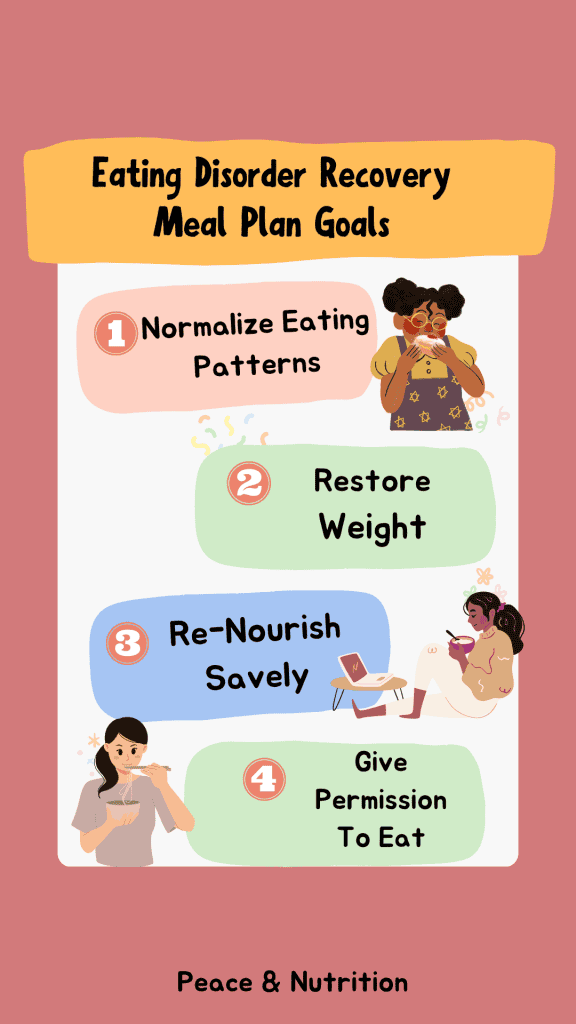
5 Goals of Eating Disorder Recovery Meal Plans
In early recovery, a structured meal plan may involve mechanical eating: eating planned meals and snacks even when hunger or appetite is missing. Restriction can change your hunger signals, and feeling full does not always mean your body has received enough nourishment.
That does not mean your body is broken or that you should ignore its signals forever. The plan helps you meet your needs while you begin to recognize and respond to those signals again.
- Support weight restoration when needed. Your body needs enough energy to repair, restore lost tissue, and support everyday functioning.
- Normalize eating patterns. Regular meals and snacks help interrupt long gaps without food and cycles of restriction and bingeing.
- Reduce negotiations with the eating disorder voice. “This is on my plan” can help you take the next bite when the disorder is loudly campaigning against it.
- Support medically appropriate nutritional rehabilitation. Your starting intake, increases, and monitoring should address both ongoing undernutrition and the risk of refeeding complications.
- Reconnect with hunger cues. Consistent nourishment gives your body opportunities to rebuild a more reliable eating rhythm.
Your needs can change as recovery progresses, and your plan needs room to change with them. A previous weight or an eating-disorder-approved number should not become a ceiling; fears about overshoot weight also deserve discussion without using them to justify continued restriction.
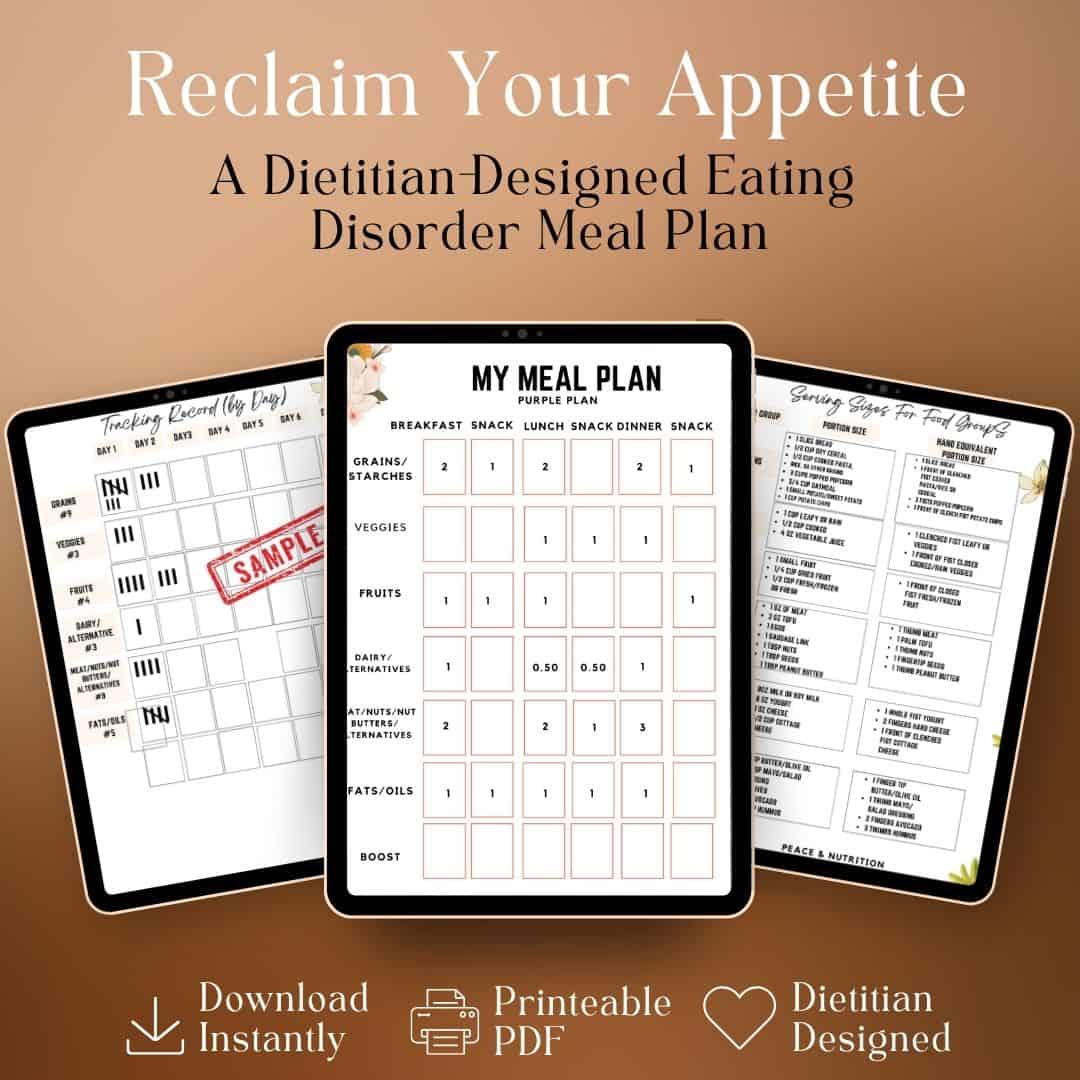
How Do You Start Eating After Starvation?
Prolonged restriction can affect your heart, digestion, hormones, and thinking. These effects of starvation syndrome can occur even when your body does not look the way people expect an eating disorder to look.
When nutrition increases after significant undernutrition, shifts in minerals such as phosphorus, potassium, and magnesium can cause refeeding syndrome, a potentially life-threatening complication. Refeeding syndrome is a potentially life-threatening complication that can occur when nutrition increases after significant undernutrition. Changes in electrolytes, minerals such as phosphorus, potassium, and magnesium, can affect your heart, breathing, and other essential functions. A medical assessment helps determine whether eating at home is appropriate and what monitoring you need.
This is a reason to get support with nourishment, not to continue restricting. If you have been eating very little, losing weight rapidly, or purging, seek medical assessment promptly rather than using an online menu to decide how to restart eating for your safety.
- Arrange nutrition and medical support when available. An eating disorder dietitian can build an individualized plan, while a medical clinician checks physical stability.
- Make meals easier to complete. Meal support might mean having someone prepare food, sit with you, or help you get through the anxiety afterward.
- Follow the plan consistently. If you cannot complete it, tell the person helping you rather than silently cutting portions or skipping the next meal.
- Step away from food-accounting rituals. Working to stop counting calories can include deleting tracking apps and letting a support person handle labels or portions.
- Include fear foods. Adequate nourishment and challenging food rules both matter, with the pace and support adjusted to your situation.
What Should I Eat in Eating Disorder Recovery, and Why?
Your body needs enough food and a range of nutrients. Recovery also means making room for foods you enjoy, foods that are convenient, and foods your eating disorder has spent years trying to put on a forbidden list.
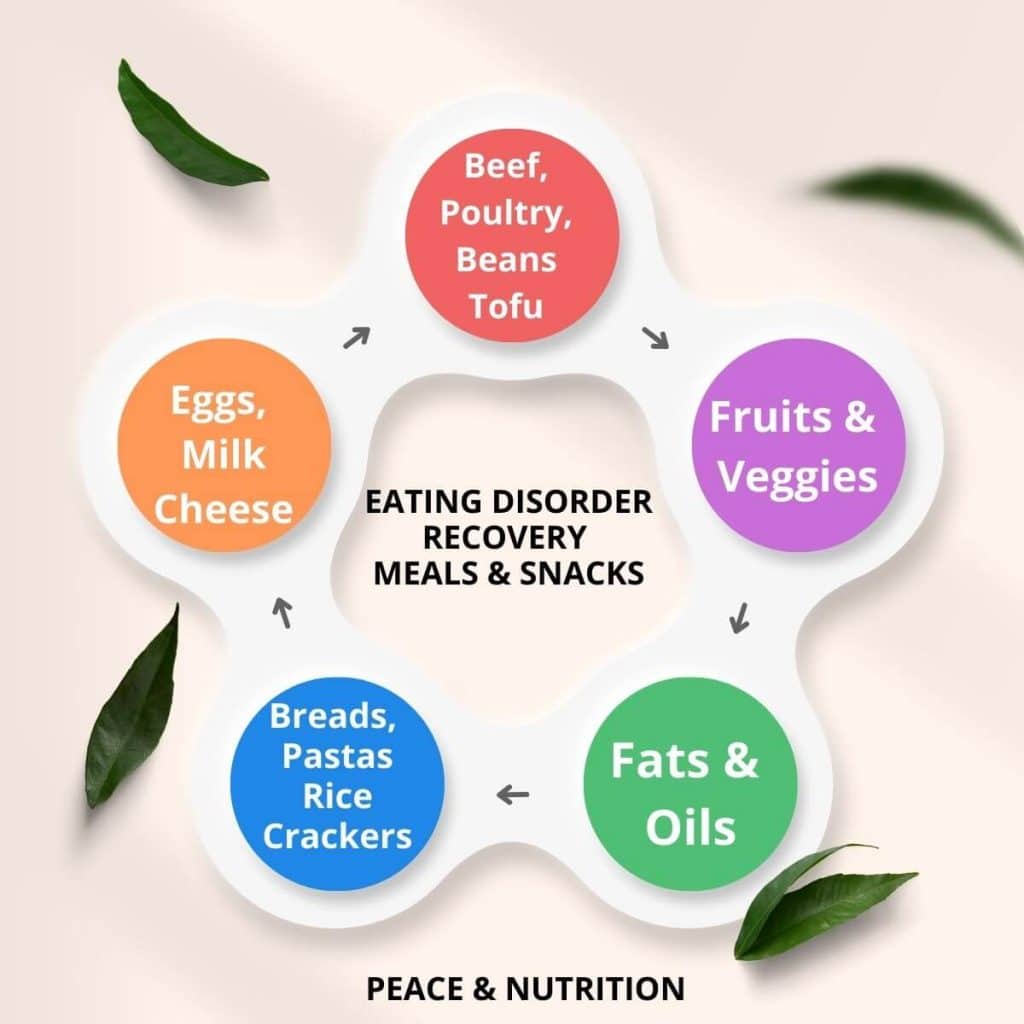
| Food group | Examples | Role in recovery |
| Grains and starches | Bread, bagels, oatmeal, rice, pasta, potatoes, crackers, quinoa, grits, polenta | Provide carbohydrates for energy and help make meals substantial. |
| Meat and alternatives | Eggs, chicken, fish, beef, pork, tofu, tempeh, beans, lentils | Provide protein for tissue maintenance and repair; different choices also contribute iron, zinc, or other nutrients. |
| Dairy and alternatives | Milk, yogurt, cheese, cottage cheese, fortified soy milk or other suitable alternatives | Can contribute calcium, protein, and vitamin D when fortified; alternatives differ in what they supply. |
| Fruit and vegetables | Bananas, berries, oranges, dried fruit, juice, carrots, tomatoes, squash, broccoli | Supply vitamins, minerals, and fiber alongside other foods. |
| Fats and oils | Butter, mayonnaise, olive oil, dressing, avocado, olives, nut butter | Add energy, support normal body functions, and help absorb fat-soluble vitamins. |
Grains and Starches
Carbohydrates supply glucose, an important fuel for your brain and body. Adequate overall energy also supports hormone function; bread does not need to pass a purity test before it gets to participate.
If you have lost periods, simply adding one particular food will not fix the underlying energy shortage. Enough total food, including carbohydrates and fats, and addressing excessive exercise are important parts of recovery.
Meat and Meat Alternatives
Protein supplies the building blocks your body uses to maintain and repair tissues, including muscle. Eating more protein while continuing to skimp on everything else still leaves you underfed, so include it alongside carbohydrates and fats.
Dairy and Dairy Alternatives
Dairy can provide protein, calcium, and, when fortified, vitamin D. Plant-based alternatives vary considerably: fortified soy milk often provides more protein than almond or oat milk, and fortification differs by product.
Bone recovery requires more than drinking milk. Adequate overall nutrition and recovery from hormone disruption matter too, and bone health may need medical assessment.
Vegetables and Fruit
Fruit and vegetables contribute vitamins, minerals, and fiber, but they should not crowd out the rest of your meal. A mountain of broccoli can leave you physically full while your body is still short on energy.
If digestion is uncomfortable, cooked vegetables, peeled fruit, juice, or smaller amounts of high-fiber foods may be easier to tolerate. More fiber is not automatically better when your stomach is already struggling.
Fats and Oils
Fats provide concentrated energy, supply essential fatty acids, and help your body absorb vitamins A, D, E, and K. Butter on toast, dressing on a salad, or mayonnaise in a sandwich can help you get more nourishment without dramatically increasing the volume of food.
Eating Disorder Recovery Meal Plan
In an individualized outpatient plan, a dietitian might use a starting intake around 1,600 calories a day and increases of about 500 calories per week until recovery needs are met. The starting amount and pace depend on the person’s current intake, medical stability, and response to nourishment, rather than a fixed schedule that is safe for everyone. Energy needs can rise as the body recovers from restriction, so starting too low or increasing too slowly can prolong undernutrition and prevent needed weight restoration.
In hospital or other closely medically monitored treatment settings, starting intakes and increases may be higher and faster, as described in guidance for adolescents and young adults with restrictive eating disorders. Outpatient care also needs medical monitoring, with the frequency based on your condition.
If you are compulsively exercising, abusing laxatives, or purging, those behaviors affect medical risk and need to be addressed when determining your nutrition needs and if any medical interventions are needed. Adding food does not make those behaviors safe.
Sample Meals and Snacks for Recovery
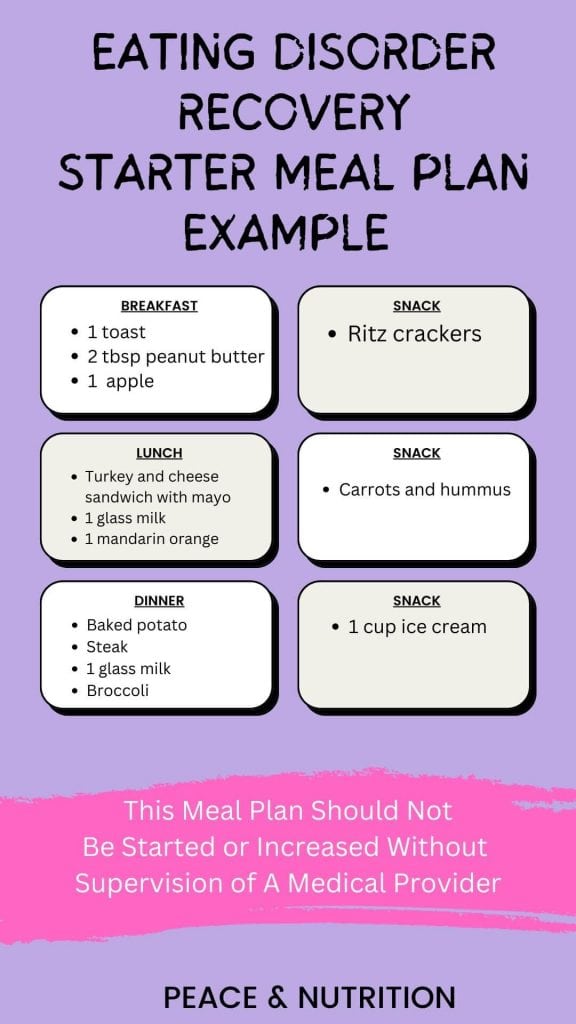
These examples show how different foods can fit together throughout the day. They are meal ideas rather than a prescribed calorie plan, and the portions, number of snacks, and additions needed will vary.
| Eating opportunity | Example | What it brings together |
| Breakfast | Oatmeal with butter and sliced banana, scrambled eggs, and whole milk | Starch, fat, fruit, protein, and dairy |
| Morning snack | Yogurt and granola | An additional eating opportunity between meals |
| Lunch | Turkey and cheese sandwich with mayonnaise, carrots, and fruit | Bread, protein, dairy, fat, and produce |
| Afternoon snack | Granola bar with milk, or crackers and cheese | A more substantial pairing than a small bar alone |
| Dinner | Pasta with marinara, meatballs or a meat alternative, broccoli, and milk | Starch, protein, vegetables, and dairy; add oil, cheese, or other foods as needed |
| Evening snack | Ice cream with cookies, or another satisfying snack | Nourishment after dinner without needing to justify it |
Keep the meals and snacks your plan includes even when the eating disorder insists yesterday’s food should somehow pay for today’s breakfast. If you are hungry beyond the plan, that deserves a response too: a meal plan should not become another reason you are forbidden to eat.
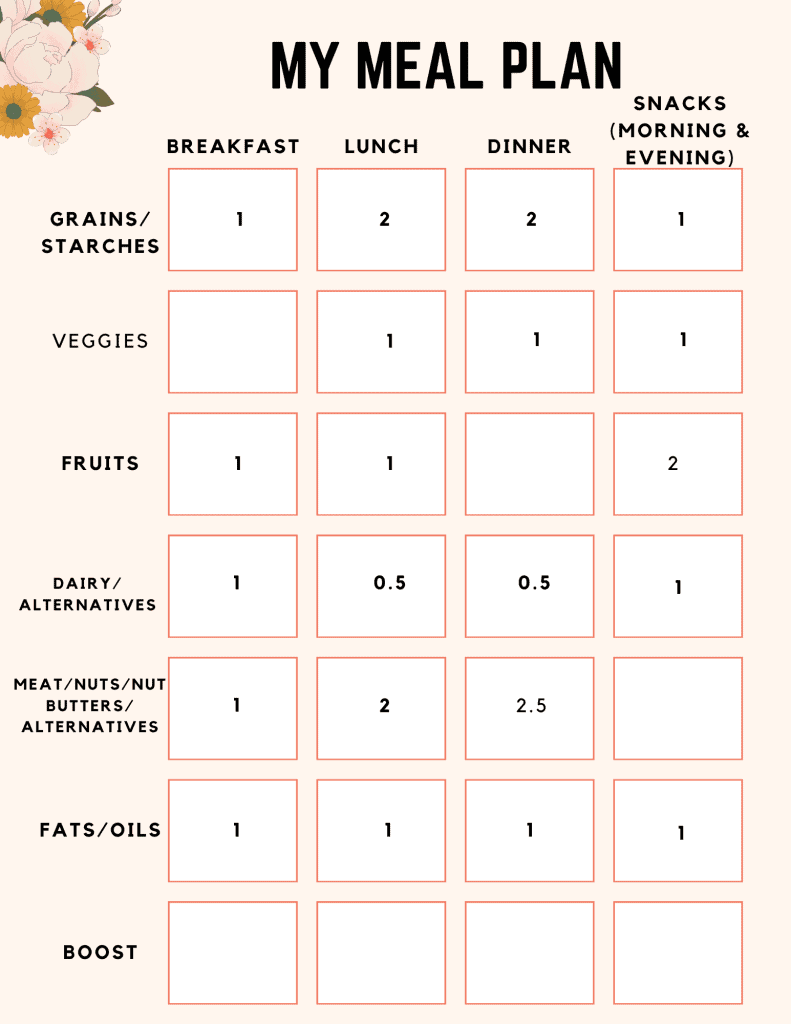
ED Recovery Snacks
The difference between meals and snacks often comes down to size and purpose, with plenty of overlap. Combining foods can help a snack provide more energy and staying power than a few bites of something chosen because it feels “safe.”
- Apples and peanut butter
- Cheese and crackers
- Rice cakes with nut butter and milk
- A peanut butter and jelly sandwich
- Tuna and crackers
- Protein balls with a drink or another food as needed
- Yogurt and granola
- A smoothie with fruit, milk or fortified soy milk, and nut butter
- Chips and hummus
- String cheese, carrots, and crackers
- A lunch-meat sandwich or wrap with vegetables
- Celery and peanut butter with toast or crackers
- A muffin with milk
- Cookies and milk
- Trail mix
Cookies count. Packaged foods count, and a snack does not need to be homemade, high-protein, or photogenic to belong in recovery.
Eating Disorder Meal Plan Variations
Different tools address different parts of eating. A schedule helps with timing, a plate guide helps with meal composition, and an individualized plan can account for needs that a general diagram cannot.
These approaches can overlap. Someone might use the rule of threes for timing and a plate guide to build meals, both within an individualized plan.
| Approach | What eating might look like | What it helps you decide |
| Individualized meal plan | Follow specific meals, snacks, and food amounts developed with a dietitian. The plan changes as your needs change. | What, when, and how much to eat. |
| Rule of threes | Eat three meals and three snacks, roughly three hours apart while awake. | When to eat. You still need enough food at each eating opportunity. |
| Plate by plate | Assemble meals using a visual guide for starches, protein, produce, added fat, and dairy or an alternative. | How to put a meal together without counting calories. Portions and snacks still need to meet your needs. |
| All in recovery | Allow previously restricted foods, respond to hunger, and work toward stopping restriction and compensatory behaviors. Some people also use a meal plan. | How to move away from eating-disorder rules. It does not provide a specific schedule or portion guide. |
Rule of Threes in Eating Disorder Recovery
The rule of threes is a reminder to aim for three meals and three snacks, with eating opportunities roughly every three hours while awake. It can give you an anchor when hunger, appetite, or trust in food feels unreliable.
Regular eating can be particularly useful when bingeing and restriction keep feeding into each other. The number three is a reminder rather than a test you fail if your schedule needs adjusting, and it does not tell you how much food your body needs.
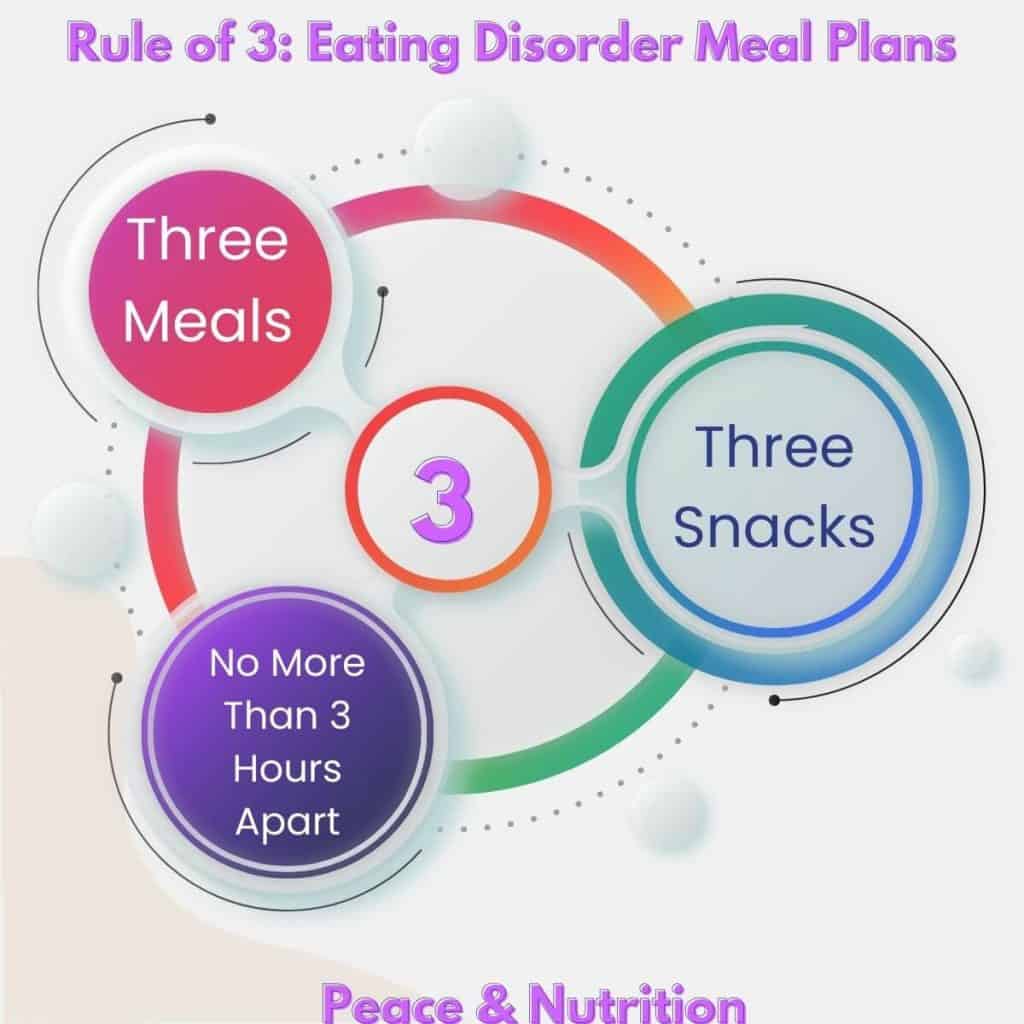
Plate by Plate Method in ED Recovery
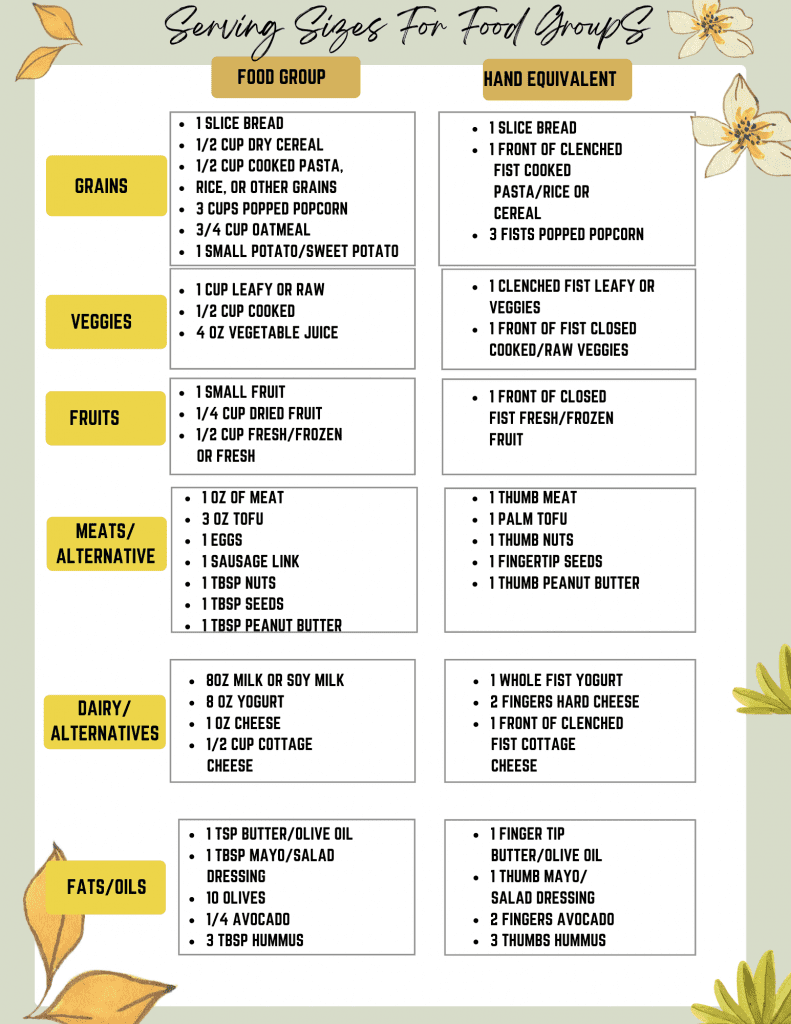
The plate approach uses a visual guide instead of calorie counting or measuring every ingredient. One weight-restoration plate model includes:
- Half the plate grains or starches
- One quarter protein
- One quarter fruit or vegetables
- An added fat
- A serving of dairy or an appropriate alternative
It can make assembling meals more straightforward, but plate size and food amounts still matter. A general plate diagram cannot account for individual energy needs, growth, exercise, or the extra nourishment someone may need for weight restoration, and snacks or additions may still be necessary.
All In Recovery
All in recovery is an informal term with no single agreed definition. People often use it to describe responding more fully to hunger, allowing previously forbidden foods, and stopping compensatory behaviors.
It may or may not involve a meal plan, and it should not be reduced to “eat as many calories as possible.” Someone at risk of refeeding complications needs medical assessment regardless of the recovery label they choose, and needing structure does not mean you are less committed.
Managing Symptoms of Your Recovery Meal Plan
Eating more after restriction can come with bloating, constipation, early fullness, and anxiety. These symptoms deserve support, but serious medical changes should not be brushed off as something you simply have to push through.
Digestive Discomfort and Early Fullness
Gastroparesis, meaning delayed stomach emptying, can contribute to feeling full quickly, nausea, and discomfort after restriction. Extreme bloating and constipation can also make a meal feel much bigger than it looks.
A warm pack, comfortable clothing, regular bathroom opportunities, and a calm activity after eating may help with discomfort. Softer foods or nourishing drinks can be easier to tolerate, and an adjusted meal schedule can spread food out without reducing the total nourishment.
Do not automatically respond by cutting food, loading up on fiber, or taking laxatives. Persistent symptoms may need assessment and treatment, especially when they prevent you from eating enough.
Hunger, Sweating, and Changing Energy Needs
Extreme hunger can be part of recovery and may show up even after you have eaten what feels like a substantial amount. Your eating disorder does not get to declare your body unreasonable because it wants another snack.
Night sweats and changes in energy needs can also occur, but sweating alone does not prove you have hypermetabolism. New or persistent symptoms deserve evaluation rather than assuming everything is caused by recovery.
Symptoms That Need Medical Attention
Electrolyte problems, significant swelling, and repeated vomiting belong in a different category from ordinary post-meal discomfort. Vomiting that happens without intending to purge still needs assessment.
- Seek emergency care for fainting, chest pain, trouble breathing, confusion, seizures, or a new irregular heartbeat.
- Get prompt medical advice for new or worsening swelling, marked weakness, repeated vomiting, or difficulty keeping food or fluids down.
Do not wait for dramatic symptoms if you have had prolonged severe restriction. Refeeding-related blood changes may need testing before you can feel that something is wrong.
What If I Miss a Meal or Snack?
Missing a meal or snack does not mean you have to give up on the rest of the day. Get back to eating rather than letting one missed snack turn into a missed lunch, dinner, and a promise to “start fresh tomorrow.”
If you have an individualized plan, follow any instructions for making up missed food. When missed meals become a pattern, identify what keeps getting in the way: scheduling, access to food, uncomfortable fullness, or the eating disorder negotiating portions down.
Tips for Following Your Recovery Meal Plan
You may need to eat before you feel ready, and you may need to eat when nothing sounds good. Waiting until the eating disorder enthusiastically approves your lunch could leave you waiting a very long time.
Choose a few practical tips for recovery that make the next meal easier:
- Reduce decisions. Keep a few repeatable meals and backup foods available, including frozen meals, sandwiches, cereal, and other convenient options.
- Use grocery shopping support. Shop with someone, use a written list, or order groceries when wandering the aisles turns into a debate over every label.
- Plan something supportive after eating. A familiar show, a puzzle, a phone call, or a recovery playlist can help you sit through the urge to compensate.
- Keep useful reminders nearby. Recovery books, recovery quotes, and, if faith supports you, Bible versescan help when motivation drops.
- Challenge misinformation. Knowing the facts and myths about eating disorders can help you recognize when the disorder is dressing up a food rule as a health fact.
- Reduce body checking. Inspecting your stomach after a meal gives the eating disorder more material to argue with.
If you feel like you do not deserve to eat, you do not have to solve that feeling before having your next meal. Food does not need to be earned through exercise, productivity, or having a smaller body.
In my anorexia story, I share more about my own experience of the eating disorder’s demands. You are allowed to be scared and still eat, and you deserve practical help making that possible.

- Dating Someone With an Eating Disorder: Supporting Them Without Losing Yourself - October 19, 2026
- The Evolution of Thinspo: From Pro-Ana Websites to SkinnyTok - September 19, 2026
- Meal Support For Eating Disorders - August 12, 2026