Table of Contents
Last updated on October 15th, 2026 at 02:05 am
Building a meal in eating disorder recovery can turn into a full-blown negotiation over a piece of toast. How much? Which bread? Does butter count as excessive? Your eating disorder apparently has time for a committee meeting before breakfast.
The Plate-by-Plate Approach® offers a visual way to put meals together without weighing food or counting calories. It gives you a starting point when deciding what to eat feels overwhelming, while keeping food variety and adequate nourishment in the picture.
A plate can provide structure. Your eating disorder does not get to turn its edges into a limit on how much you are allowed to eat.
How Does the Plate by Plate Approach Work?
Registered dietitians Casey Crosbie and Wendy Sterling developed the Plate-by-Plate Approach for eating disorder recovery. It can be used alongside family-based treatment, where caregivers help a child or teen recover, and other forms of treatment, including care for adults.
The basic idea is to build full meals with different food groups, using a visual guide instead of turning lunch into a math assignment. The approach can be adjusted to individual nutrition needs; one diagram cannot tell you everything your body needs to recover.

The Weight Restoration Plate
The creators’ 50% plate guide, shared by Children’s Hospital of Philadelphia, uses:
- A full 10-inch plate.
- About half the plate for grains or starches.
- About a quarter for protein.
- About a quarter for fruit or vegetables.
- Fat included in cooking and visibly in the meal, plus a serving of dairy.
Weight restoration often requires substantial energy. Giving rice, pasta, bread, and other starches more plate space helps meet those needs without making the meal mostly bulky vegetables or filling protein.
Large portions of vegetables can add fiber, bloating, and fullness before you have eaten enough energy. Giving starches more room helps you get enough fuel before your stomach announces it is done for the evening.
The creators also describe the half-starch plate as useful for people with higher energy needs, including during growth or nutritional recovery in athletes. Its usefulness extends beyond weight restoration.
These are visual proportions. There is no need to pull out a ruler because your rice wandered into the chicken’s section.
The Weight Maintenance Plate
The maintenance plate divides the meal into three roughly equal parts:
- One-third starches: Rice, pasta, bread, or potatoes.
- One-third protein: Chicken, fish, eggs, tofu, or beans.
- One-third fruit or vegetables.
- Include fat and dairy: For example, butter on potatoes and a glass of milk alongside the meal.
The weight restoration plate gives starches half the plate to help meet higher energy needs. The maintenance plate gives each group about the same amount of space when further weight gain is no longer needed.

When Should the Plate Change?
Reaching a certain weight does not mean it is time to eat less. Your body may still need plenty of extra food to keep healing, even when you no longer need to gain weight.
You may need to keep the bigger servings of rice, pasta, bread, or potatoes for a while longer. “Maintenance” does not give your eating disorder permission to start shrinking lunch.
What Is an Example of a Plate by Plate Meal?
- Rice dinner: Rice, chicken or tofu, and vegetables cooked with oil, with milk alongside.
- Pasta dinner: Pasta with meat or lentil sauce, vegetables with dressing, and yogurt.
- Breakfast: Toast with butter, scrambled eggs, fruit, and milk.
- Sandwich lunch: A turkey-and-cheese or hummus-and-cheese sandwich with mayo or avocado, fruit, and yogurt.
Serve full portions using the plate proportions described above, and allow more food when needed.
Mixed Meals Count Too
Burritos, curries, casseroles, and soups do not become unsuitable recovery foods because their ingredients touch. The creators describe full, cohesive meals with variety, rather than requiring every ingredient to remain in a separate pile.
For a mixed meal, consider what is already included and what would round it out. A rice-and-bean burrito with cheese and avocado includes several food groups; a thin broth with a few vegetables needs more substance to function as a meal.
Those examples show how to think about a meal. They do not prescribe the amount that will meet every reader’s needs.

Snacking With the Plate Approach
Snacks do not need to follow the plate proportions. The approach recommends two to three snacks daily, each containing at least two food groups. This regular schedule is part of mechanical eating, which provides structure without waiting for hunger to tell you it is time to eat. The handout recommends at least two food groups per snack, or three when fruit or vegetables are included.
Practical snack combinations for eating disorder recovery might include:
- Crackers and cheese.
- Toast with peanut butter.
- Yogurt with granola and berries.
- Hummus, pita, and sliced vegetables.
A handful of cucumber slices does not become a substantial snack because you put it in a cute bowl. Include foods that provide meaningful nourishment, and allow more when the planned snack does not meet your needs.
Goals of the Plate Approach
Meals can become exhausting when every bite comes with a calculation. A useful recovery structure should make it easier to eat and leave less room for the eating disorder to bargain portions down.
Goals include:
- Making meal preparation more manageable.
- Challenging fear foods by bringing avoided foods back into everyday eating.
- Practicing variety instead of rotating through the same few safe meals.
- Reducing dependence on weighing, measuring, and calorie tracking.
The aim is for food to take up less of your mental life over time. Nobody needs a new unpaid job supervising the exact placement of their potatoes.
Pros of the Plate by Plate Approach
A visual guide can be easier to use than a system that assigns numbers to every food. It also gives a caregiver something concrete to work from when “just serve a normal meal” feels about as helpful as being told to assemble furniture without instructions.
Potential benefits include:
- Less counting and measuring when preparing meals.
- A reminder to include foods like bread, rice, butter, and oil that an eating disorder may tell you to avoid.
- Makes it easier for you and anyone helping with meals to agree on what to serve.
- Helps you move beyond the same few “safe” foods.
- It can be easier to understand when support is limited
Cons of the Plate by Plate Approach
The plate by plate approach can simplify meals, but a general plate guide cannot account for everything your body needs during recovery. Two people can eat meals that look almost identical and have very different energy needs.
Some drawbacks include:
- It does not establish your individual energy needs. The proportions on a plate cannot tell you how much food you need for nourishment, weight restoration, or ongoing recovery. A meal can follow the diagram and still fall short.
- Different rules for meals and snacks can get confusing. Meals use visual plate proportions, while snacks use food-group combinations. Switching between the two can make the approach less straightforward than it first appears.
- It does not automatically account for exercise or other physical activity. The same plate guide does not tell you how to adjust food for an active job, daily movement, or exercise. Eating according to the diagram also does not establish that exercise is medically safe during recovery.
- It can be awkward for mixed dishes and different ways of eating. Soup, lasagna, curries, and family-style meals do not divide neatly into sections. The approach can be adapted, but the diagram alone gives limited direction for these meals.
- It does not tell you when to increase food. Recovery needs can change, and someone may need larger meals, more snacks, or additional nourishment beyond the pictured plate. Following the same visual guide every day does not guarantee that intake keeps up.
- It cannot determine when weight restoration is complete. A change on the scale does not automatically mean it is time to switch to a different plate or reduce portions. Ongoing recovery needs require more context than a plate picture provides.
- A standard plate may fall short when energy needs are very high. Some people need substantial amounts of food during recovery, including those experiencing hypermetabolism, meaning increased energy use by the body. The visual guide does not automatically account for these needs; larger portions, extra snacks, or additional meals may be necessary. Research on recovery energy needs
- It can make the plate feel like a limit. Someone may feel restricted to the food served or avoid seconds even when they are still hungry. Finishing the plate does not mean their body has received enough nourishment or that they cannot have more.
The approach can be individualized, but those adjustments require information the diagram cannot supply. Your body did not agree to have all its needs fit neatly onto one piece of dinnerware.
For some people, a more specific eating disorder recovery meal plan will provide clearer guidance about how much to eat and when intake needs to change.
A Plate Diagram Cannot Manage Refeeding Risk
After substantial restriction, restarting nutrition can cause dangerous changes in the minerals that help your heart and muscles work. This is called refeeding syndrome, and a plate diagram cannot tell you your risk or provide the monitoring you may need.
NICE’s eating disorder guidance calls for refeeding care that addresses both undernutrition and refeeding syndrome. If you have been eating very little or have lost weight rapidly, seek medical assessment as you begin increasing nutrition rather than trying to design a slow refeeding plan yourself.

Using the Plate Method in Eating Disorder Recovery
Use the visual structure to help you serve food, then pay attention to whether it is helping you move away from restriction. Finishing the planned meal does not take away permission to eat again.
If you are still hungry after eating, you can have more food. You do not need to wait for the next scheduled snack to earn another serving.
Extreme hunger in recovery can mean that one plate leaves you wanting more. The diagram does not get the final say on whether you are allowed another helping.
If you have a prescribed meal plan, a generic plate picture should not be used to shrink it. And if this approach is making you more preoccupied with portions, a different eating disorder recovery meal plan may give you more useful structure.
When Is a Plate Method Not Enough?
A plate guide should not be your only plan if you:
- Have been eating very little or almost nothing for several days. You may be at risk for refeeding syndrome, when increasing food causes dangerous changes in the minerals in your blood.
- Have low potassium, phosphorus, or magnesium. These minerals help your heart and muscles work. Low levels increase the risk of refeeding problems and may need treatment alongside food.
- Have lost weight quickly. You need a medical assessment to check whether eating more at home is safe and what monitoring you need.
- Have severe dehydration or malnutrition. These conditions can require urgent medical care, sometimes in a hospital.
A plate picture cannot tell you whether your heart is struggling or your blood minerals are dangerously low. You need medical help to increase food safely in these situations; continuing to restrict puts you at further risk.
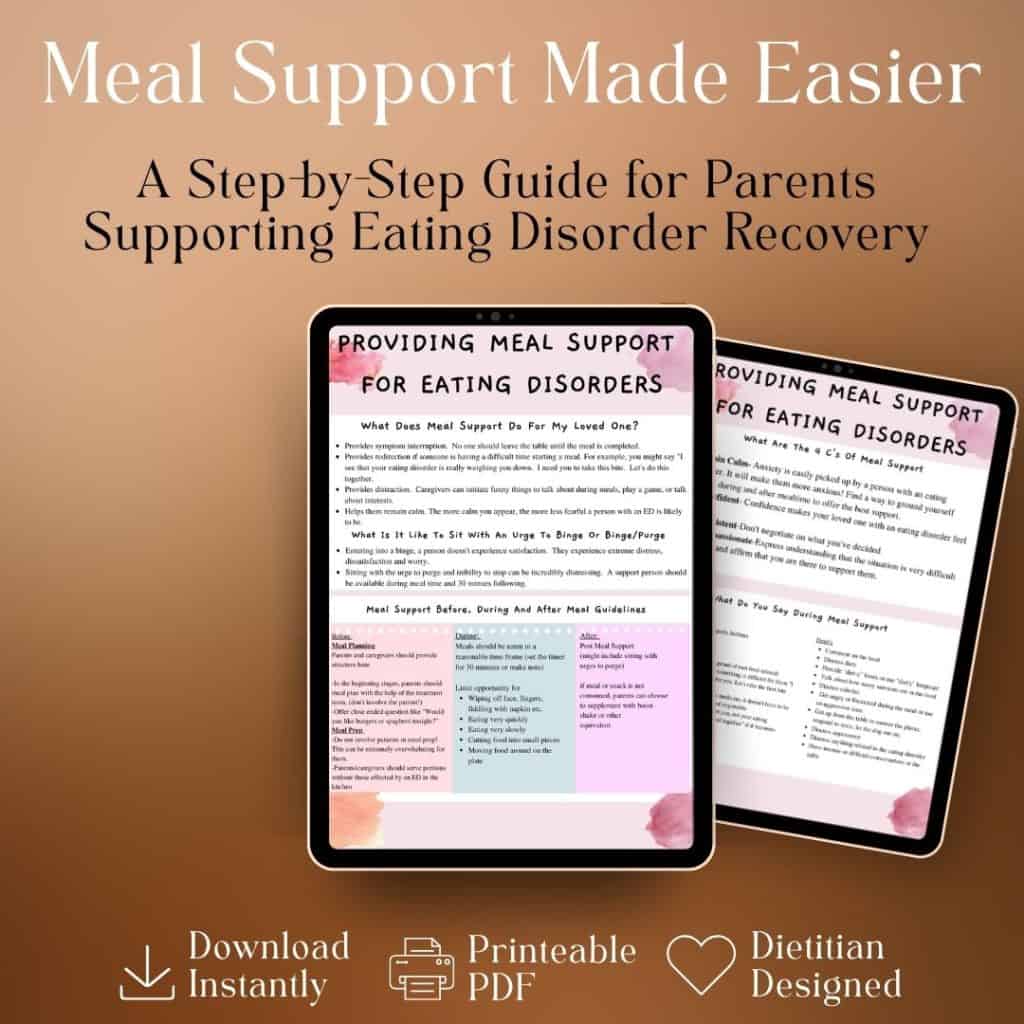
Supporting Someone Who Uses the Plate Approach
A meal can look ordinary from across the table and feel terrifying to the person eating it. Knowing that the food is necessary does not instantly switch off the fear.
Useful meal support can include:
- Preparing and serving the meal when food decisions are overwhelming.
- Eating alongside the person when possible.
- Keeping conversation away from calories, dieting, and body size.
- Acknowledging distress without negotiating the meal down.
- Planning something to do together afterward when anxiety is high.
You might say, “I can see this is hard. I’ll sit with you while you eat.” You do not have to convince someone to love dinner before helping them get through it.
Recovery already asks a lot of a person. The plate should help make eating possible, without giving the eating disorder another set of rules to enforce.
Some tools that can be helpful for someone struggling with an eating disorder includ:
- Keeping a list of recovery affirmations
- Journaling
- Creating a body positive community
- Sharing others journeys through recovery books
It’s important to consider that recovery also often means grieving the thin ideal. Check out these recovery tips for staying motivated during this often long and difficult journey.

- Dating Someone With an Eating Disorder: Supporting Them Without Losing Yourself - October 19, 2026
- The Evolution of Thinspo: From Pro-Ana Websites to SkinnyTok - September 19, 2026
- Meal Support For Eating Disorders - August 12, 2026