Table of Contents
Last updated on March 13th, 2026 at 12:44 am
Are you obsessed with counting calories? Do you feel like the more you calorie count, the more you MUST calorie count. It can feel impossible to stop counting calories once you’ve gotten in the habit. Calorie counting can be an addictive behavior that can cause food obsessions, guilt, and eating disorders.
To stop counting calories you need to:
- Identify calorie counting triggers
- Clearly identify your food rules
- Challenge food guilt associated with high-calorie foods
- Make peace with food and follow an intuitive eating journey
Calorie counting is a common result of diet culture and eagerness for the thin privilege.
In this article we’ll explore the addictive nature of calorie counting, why we might find calorie counting attractive, and how to stop counting calories for good.
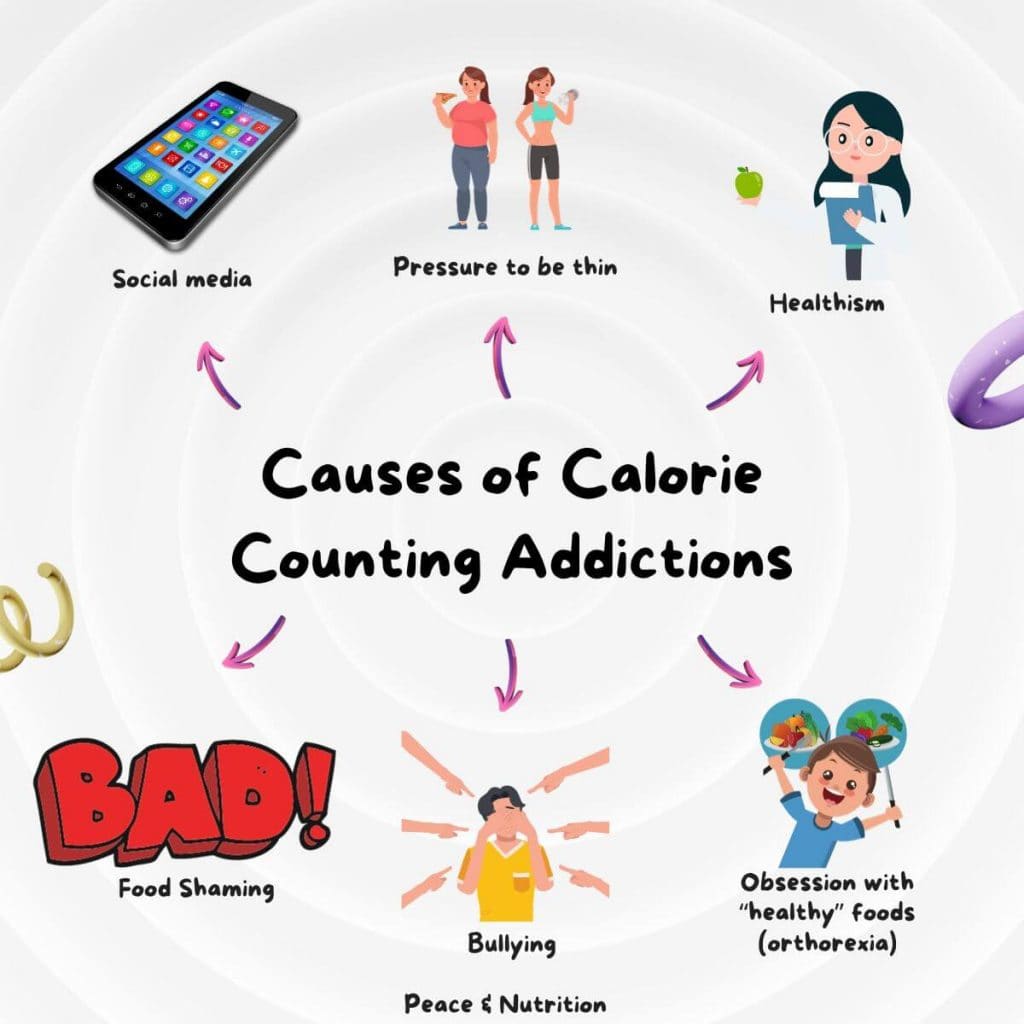
Can Calorie Counting Be Addicting
Yes.
Calorie counting CAN be an addiction. You’re likely addicted to counting calories if you have extreme anxiety, guilt and shame if you don’t follow your “calorie rules” or if you feel that you MUST compensate for calories eaten outside of your rules.
Calorie counting can be extremely dangerous to both your mental and physical health and can lead to malnutrition or starvation syndrome.
You are addicted to counting calories if:
- You become extremely anxious if you don’t know the calories in a food
- Not having a label on food gives you anxiety
- You have a list of good foods and bad foods that you decide based on the calorie content
- You refuse to keep certain foods in the house because of their calorie content
- You track the calories in an app and feel anxious if you miss a meal or a day
- You get anxious if you go over your calorie goal for a meal or the day
- You refuse to eat certain foods that don’t match your food rules
- You compensate for eating too many calories with compulsive exercise
- You compensate for excess calories with laxative abuse
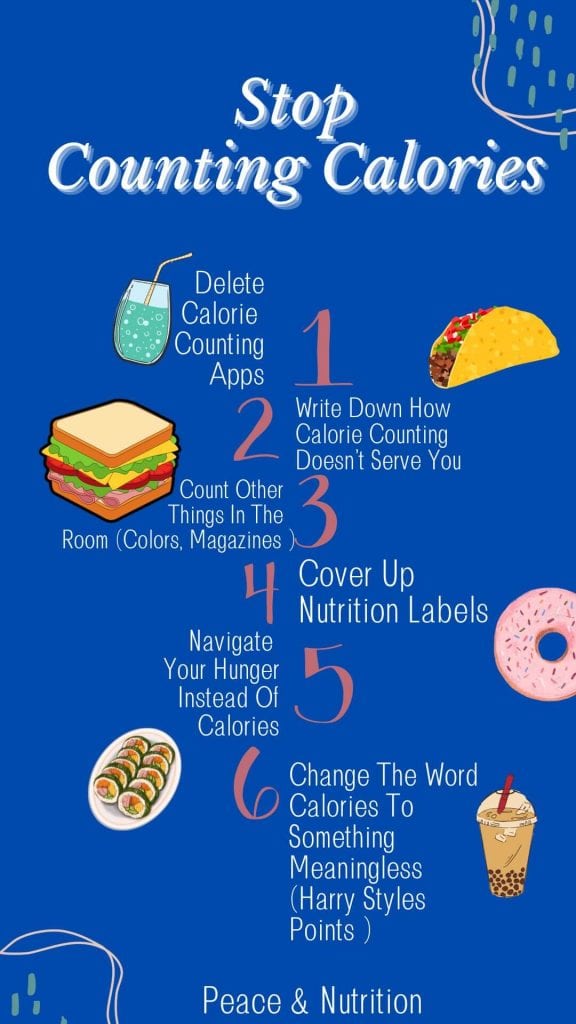
Why You Should Stop Counting Calories
If you are obsessively counting calories, it will ultimately begin to decrease your quality of life. Thoughts about food and or your body are likely to begin to seep into every activity of your day. You may find yourself spending 70% or more about your day thinking about food and/or your body.
Obsessive calorie counting can leads to:
- Obsessive thoughts about food
- Food restriction
- Loss of period for women
- Binge eating
- Shame
- Guilt
- Stress
- Depression
- Social isolation
- Feelings of Inadequacy
- Eating disorders

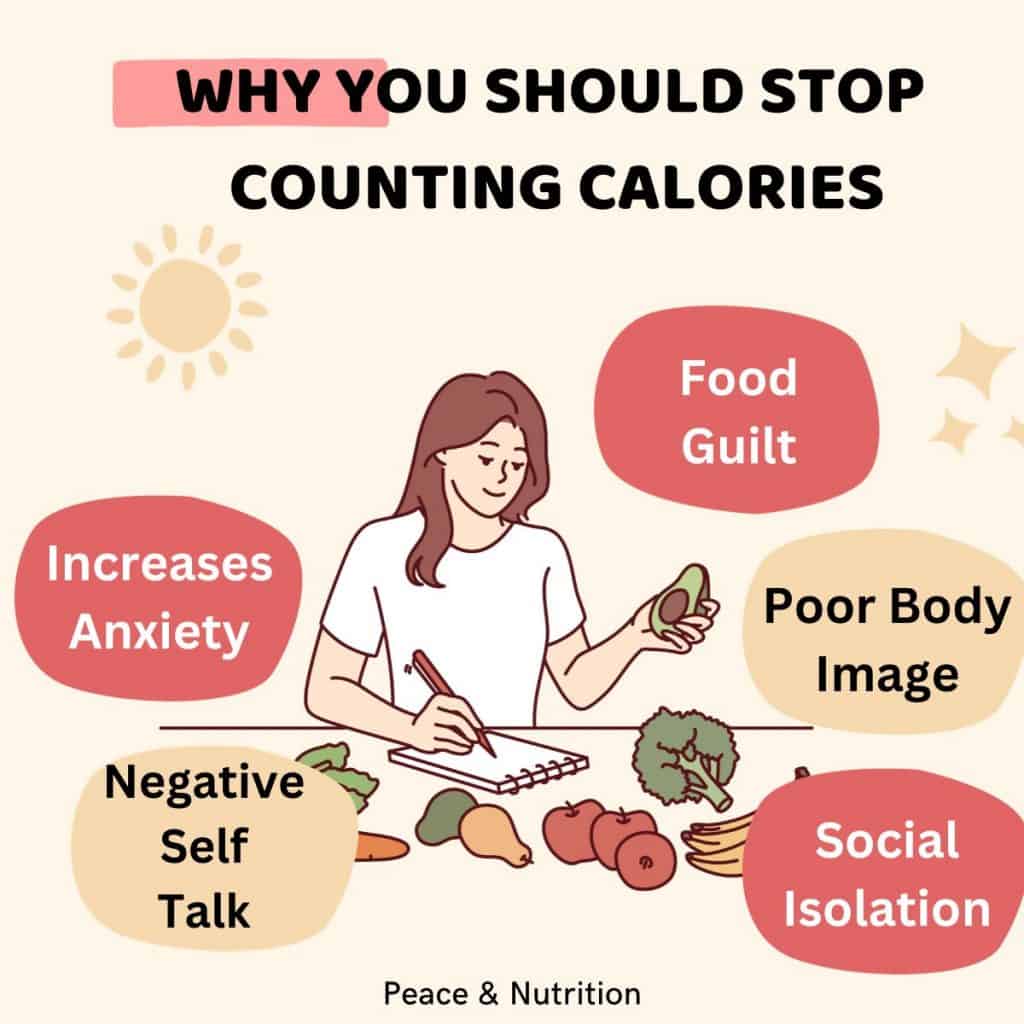
How To Stop Calorie Counting
Here are 10 steps to help you stop counting calories:
- Delete any calorie-counting apps
- Write down why calorie counting no longer serves you.
- Change the word “calories” to something meaningful (for example- Energy, fuel)
- Change the word calories to something meaningless (Michael Myers points)
- Cover nutrition labels
- Be present at each meal. Consider the taste/textures of food.
- Create an alter ego and give it a name (for example- Fred). When you have. the urge to calorie count, blame Fred and kick him out
- Create a hunger scale and track your hunger and fullness vs. calories
- Give yourself a time limit when shopping at the grocery store
- Ask a support person to prepare meals or practice eating at restaurants without caloric information
Calorie Counting and Eating Disorders
Calorie counting is common in eating disorders including anorexia, atypical anorexia, Orthorexia, Bulimia nervosa, and Binge eating disorder
If you have an eating disorder, you likely wont be able to stop calorie counting on your own. You should work with an eating disorder dietitian to help you with a recovery meal plan not focused on calories. A person with an eating disorder likely has a very loud eating disorder voice ( toxic inner dialogue) that will make it very difficult to resist the temptation of counting calories.
Calorie counting in eating disorders is usually associated with:
- An intense desire to lose weight
- Fear of gaining weight
- Wanting to change the body shape
- Body dysmorphia
- Compulsive exercise
- An obsession with “healthy eating”, “eating clean” or “eating organic”
These desires can quickly spiral out of control if they are not addressed. If you have an eating disorder and are obsessively counting calories, you’ll likely experience a loss of identity and lack of control once this behavior is discontinued. You may feel unworthy and unlovable. It is important that you work with a mental health counselor trained in eating disorders to help manage these difficult emotions

- 100 Snack Ideas for Eating Disorder Recovery - April 18, 2026
- Diet Culture is Toxic - December 22, 2025
- I Don’t Eat Anything White - December 11, 2025