Table of Contents
Last updated on March 13th, 2026 at 12:42 am
A hunger scale is a tool you can use to help navigate the physical cues your body is giving you when it comes to food.
A hunger scale is used to:
- Teach us that hunger exists on a spectrum
- Allow us to decide when its best to start and stop eating for our own body
- Give us information about how much our body likes to eat
- Help us feel safe experiencing different levels of hunger
We’re too often fed the lie that there is simply “hungry” and “full.” This scale is here to debunk that crap.
Let’s dig into how to make a hunger scale, how to trust our own intuition on when its best for us to start and stop eating, and ways to use physical and emotional cues to navigate hunger and fullness.
Hunger Scale Rubric
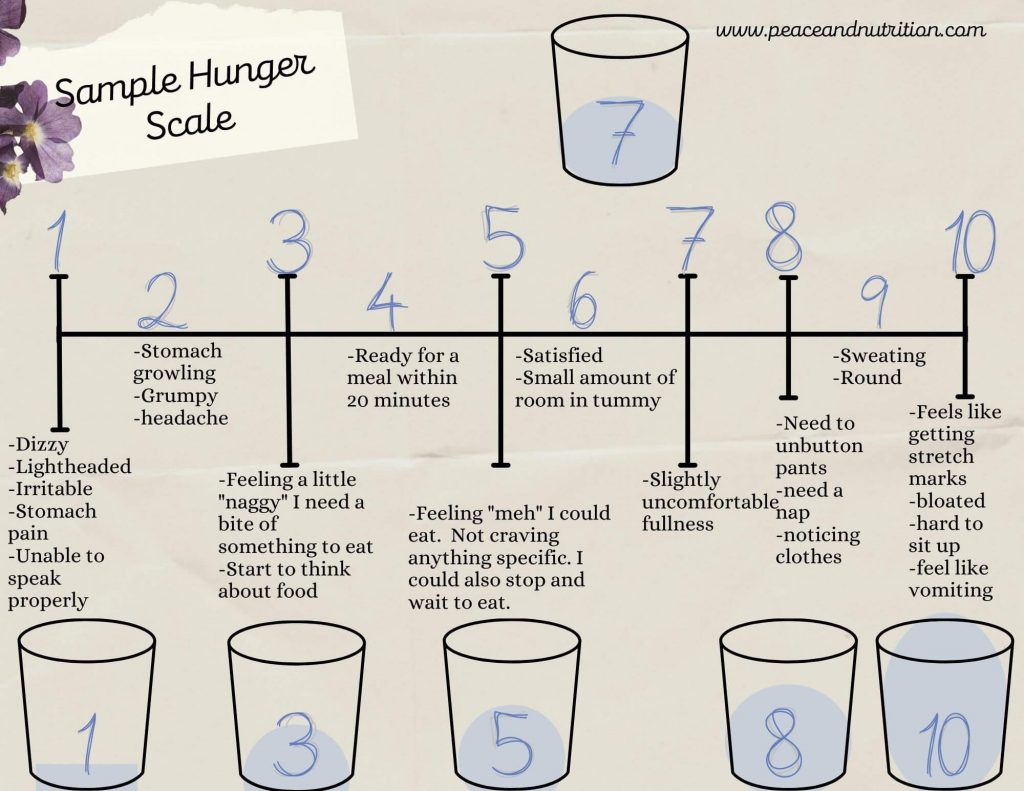
A hunger scale includes:
- A numbering system to categorize hunger and fullness
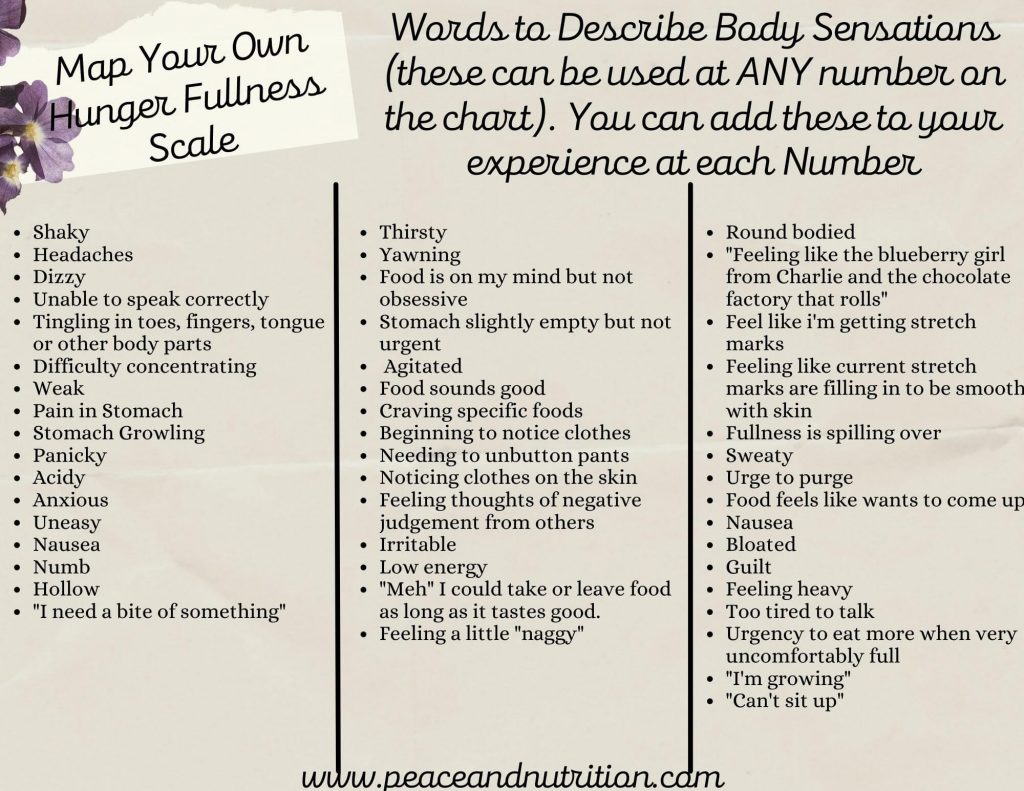
- A list of physical sensations for each level of hunger
- A key that tells us which numbers are closer to “hungry” and which numbers are closer to “full”
While there are many types of hunger, all of which are valid, the hunger scale is only designed to measure the physical sensations of hunger. If you are experiencing a lot of mental hunger, it’s a good time to revisit the principles of intuitive eating in addition to using this physical hunger scale.
Hunger and Fullness
Diet culture often teaches us that we should only be eating at the most extreme levels of hunger. With our hunger fullness scale we’re going to debunk this myth!
Take note- this tool is NOT intended to become the hunger-fullness diet. The hunger scale is simply a tool to help us navigate the information about food out body is telling us.
Hunger and fullness cues will vary based on:
- The person
- Medical conditions
- Physical activity
- Weight changes
- Stress
- Sleep routine
While these factors can change how hungry you feel, your hunger scale should not change. There is no “right” or “wrong” number on this intuitive eating tool. It is all simply information you are collecting about your body.
Intuitive Eating Hunger Cues
hunger cues can include:
- Headaches
- Decreased mood with lack of food
- Tummy growling
- Physical discomfort
- Difficulty concentrating
- Trouble finding words
- Irritability
- Fatigue
Not all hunger has the same meaning. This intuitive eating scale will teach you that some signs of hunger mean you have waited too long to eat!
Some signs you have waited too long to eat include:
- Physical pain
- Urgency
- Panic
- Physical disorientation
It’s important to distinguish where these physical symptoms fall for you on your hunger scale, and avoid reaching that level of hunger when possible.
Feel Your Fullness
Your fullness will feel different than someone else’s. That’s great because you live in a whole different body than the next guy! Here are some signs of fullness that can help you determine where YOU should stop eating.
Signs of Fullness
- More pressure breathing
- Difficult to move
- Sweating
- Pain in upper abdomen
- Overall pain in the belly
- Feeling pressure from clothing
- Feeling sleepy
- Nausea
- Too tired to talk
- Round bodied
Not sure when to stop eating? It might be helpful to write down wether the sign of fullness you experience was pleasant, unpleasant or neutral on your hunger fullness scale.
This can really help give you clues about the best stopping point for your body.
Building The Hunger Scale
You can create your own Intuitive eating hunger scale by:
- Labeling a sheet of paper 1-10
- Start with #1. List all of the physical sensations that occurred in your body on your hungriest day ever
- Move to # 10. List all of the physical sensations that occurred in your body at the time it felt the most full ever.
- Move to # 5, list all of the sensations that occur in your body regularly when you are between your hungriest and fullest life experiences.
- Fill in the remainder of the numbers on the hunger scale
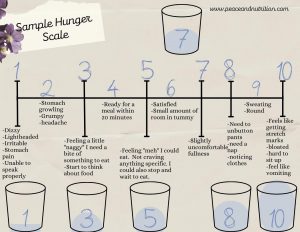
It may help to do a graphic representation of the level of fullness your body physically felt when you experienced hunger at each level. For example, you could use a circle and fill in the circle with a marker for each level of hunger to represent the body’s fullness level.
Circling the numbers where you feel the best physically and emotionally starting and stopping eating can help give you clues on the best ways to structure your meals and snacks.
Goals of The Hunger Scale
The goal of the hunger scale is to:
- Help you recognize internal cues for hunger
- Create awareness of various levels of fullness
- Allow you to experience different levels of hunger without food guilt
- Help you find food freedom by guiding you in listening to your body
- Help you eat intuitively
- Help you practice food neutrality
- Used as a tool to respect your body and its needs
- Stop calorie counting and honor your bodies cues instead
The hunger scale can also be a great tool to break food rules and challenge fear foods.
Who Should Not Use A Hunger Scale
A hunger scale is not appropriate for everyone. You should not use this tool if:
- You’re experiencing the warning signs of an eating disorder
- You’re following a mechanical eating meal plan for eating disorder recovery
- You’re trying to get your hunger cues back after an eating disorder
- You need to significantly increase your energy to get your period back after the restriction
- You’re experiencing hypermetabolism
- During the early stages of binge eating recovery
- You have recently had bariatric surgery
If you are experiencing any of these things, it’s important to discuss your nutrition plan with a haes dietitian and qualified healthcare team.
Someone with an eating disorder is not experiencing regular hunger and fullness cues and thus is not in a place where it is safe to trust their internal cues. They will also need a special eating disorder recovery plan to safely weight restore.
Time needed: 20 minutes
How To Make A Hunger Scale
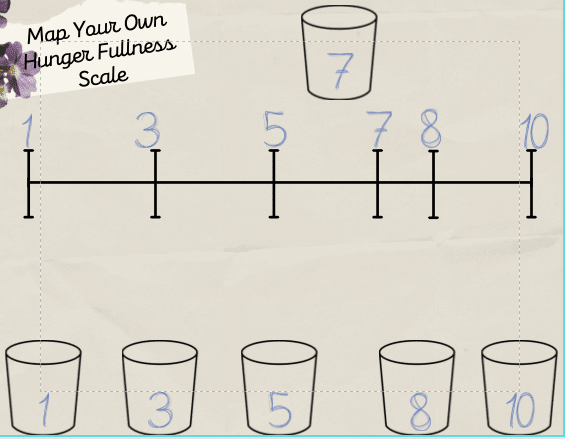
- Draw a horizontal scale with the numbers 1 and 10 at the end.
Think about a time when you were the MOST hungry in your life or the MOST full. List the exact sensations your body felt at the most hungry you’ve ever been below number 1. List the exact sensations your body felt at the most full below number 10.
- Draw a square, circle or bucket below levels 1 and 10
Fill in each bucket to represent the space the food took up in your body. This helps you get really personal with the experience.

- Fill In Hunger and Fullness Cues For Level 5
Now think about what your body feels like at level 5 on the hunger and fullness scale. Do you just need a small snack? Could you eat an entire meal? List the sensations your body feels below the tick mark at level 5.
- Fill In Hunger and Fullness Cues for Level 3, 7 and 8.
Write hunger/fullness sensations for levels 5 and 8. Then move to level 7. There’s often a clear distinction in fullness between levels 7 and 8. How does it feel in your body?
- Draw and Fill In Buckets If you Want To
This isn’t necessary for all numbers on the chart. But it can be helpful for the numbers that you personally notice a big transitioning point in your body for.
- Add remaining numbers to the hunger/fullness scale
Add in remaining numbers and body sensations to the hunger fullness scale.


- 100 Snack Ideas for Eating Disorder Recovery - April 18, 2026
- Diet Culture is Toxic - December 22, 2025
- I Don’t Eat Anything White - December 11, 2025