Table of Contents
Last updated on October 23rd, 2026 at 06:10 pm
Missing a workout should not mean spending the rest of your day negotiating whether you are allowed to eat dinner. But when exercise becomes compulsive, movement can start making decisions about your food, your schedule, and whether you deserve to sit the hell down.
Learning how to stop compulsive exercise means addressing the rules that keep you moving, eating enough, and making room for rest even when it feels uncomfortable. Sometimes that includes eliminating exercise for a period of time; when movement is medically appropriate, reducing it and interrupting rigid routines can also be part of the work.
What Is Compulsive Exercise?
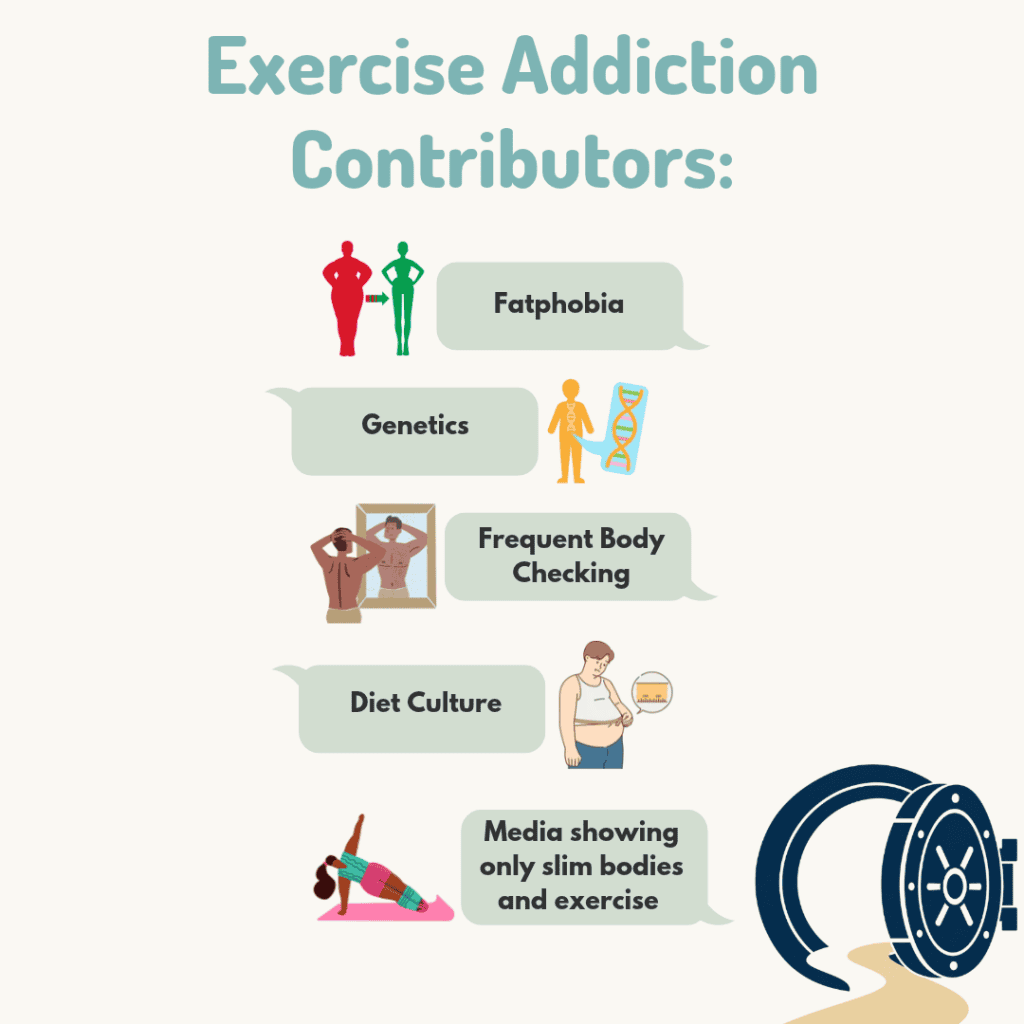
Compulsive exercise involves feeling driven to move according to rigid rules or to prevent something you fear, even when the behavior harms your health or interferes with your life. You may exercise to escape guilt, manage distress, or feel that you have done enough to deserve food or rest.
Exercise that is compulsive or compensatory may look like exercising for hours, looking a certain way, or burning more energy than you eat
Warning signs can include:
- Feeling guilty, ashamed, or panicked when you miss a workout.
- Restricting food when you exercise less, or adding movement after eating.
- Following fixed rules about duration, distance, heart rate, or calories burned.
- Exercising despite illness, injury, exhaustion, or advice to stop.
- Hiding extra workouts or the intensity of your routine.
- Turning down plans, losing sleep, or rearranging your life to complete exercise.
- Feeling unable to rest even when you no longer enjoy the activity.
- Pacing after meals or taking unnecessary steps around the house to increase steps
Is Exercise Addiction the Same as Compulsive Exercise?
People often use “exercise addiction,” “exercise dependence,” and “compulsive exercise” to describe overlapping experiences. Researchers use different definitions, so the terms do not always mean exactly the same thing.
Excessive exercise is not a standalone diagnosis in the DSM-5-TR, the manual clinicians use to classify mental health conditions. It can be part of an eating disorder, and a clinician considers the full pattern of symptoms rather than assigning a diagnosis based on exercise alone.
You do not need to settle the terminology before taking the problem seriously and your level of physical activity does not need to meet extremes to deserve attention. Feeling trapped by movement is enough reason to seek support and start challenging the rules around it.
What Can Contribute to Compulsive Exercise?
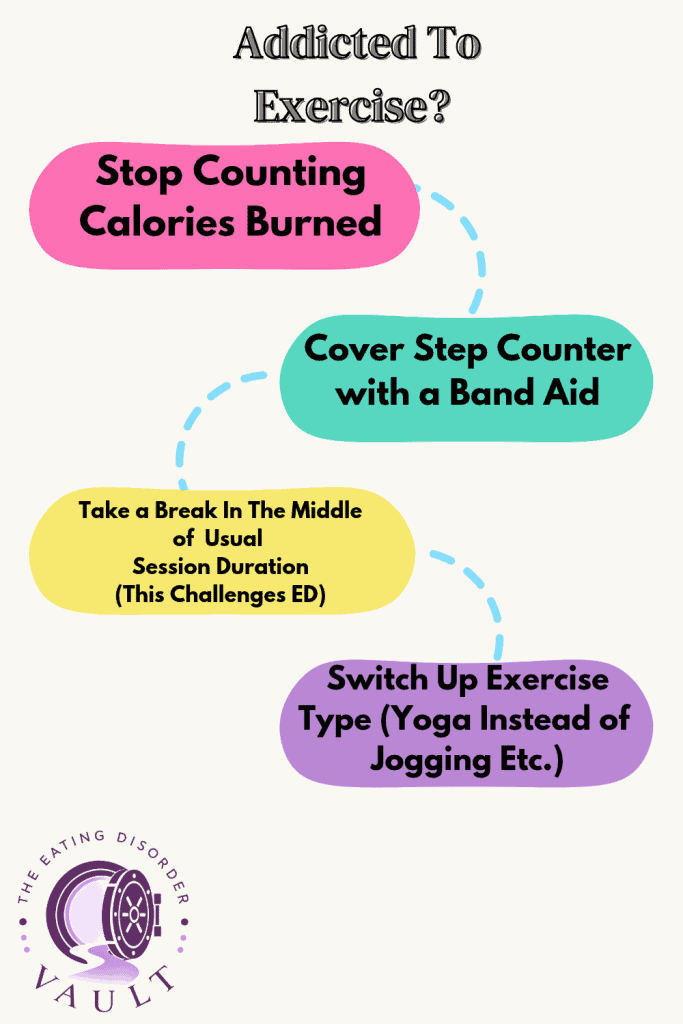
There is rarely one neat explanation. Exercise may start as something you enjoy, then become tied to your body image, sense of achievement, or ability to manage difficult feelings.
Pressures and patterns worth exploring include:
- Trying to shrink your body, build muscle, or change your shape.
- Body checking that leads to another workout or a stricter routine.
- Diet culture messages that praise exercise used to “earn” or “burn off” food.
- Pressure from coaches, teammates, family members, or social media.
- Perfectionism and tying your worth to being disciplined or productive.
- Using exercise as your only reliable way to cope with anxiety or distress.
Being praised for a behavior can make it harder to recognize the harm. People may compliment your dedication while having no idea how frightened you feel about taking a day off.
Compulsive Exercise and Eating Disorders
Exercise can become a way to compensate for eating, alongside other food restriction and eating disorder behaviors. You might believe you have to earn breakfast, undo dessert, or change tomorrow’s workout because you ate more today.
Some examples of when exercise becomes compulsive include:
- Skipping meals when you cannot exercise.
- Trying to match food intake with calories burned.
- Increasing exercise after weighing yourself or feeling uncomfortable in your body.
- Exercising even if you are injured or sick
- Refusing to stop until a particular number appears on a tracker.
- Adding secret movement after a planned workout ends.
Your eating disorder voice may call you lazy or undeserving when you interrupt the routine. That pressure can feel convincing, especially when fitness culture is handing out gold stars for the same behavior.
Food remains necessary on rest days. Your brain, heart, digestion, and tissue repair require energy whether or not you go to the gym.
Dangers of Excessive Exercise
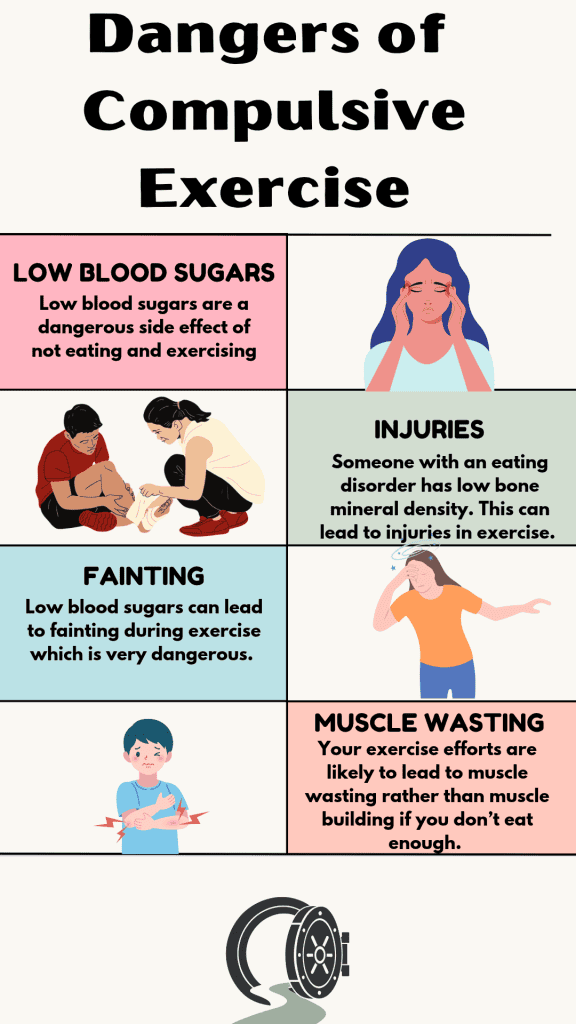
Exercise can cause harm through repeated physical strain, inadequate recovery, and insufficient nourishment. When too little energy is available (aka, you’re not eating enough to support your physical activity) you may be compromising your body’s organs and tissues for the sake of a workout.
The International Olympic Committee’s consensus on relative energy deficiency in sport (REDs) describes effects on bone health, reproductive function, immunity, and energy metabolism. Although this framework comes from sport, being able to finish a workout is no guarantee that your body is adequately fueled.
Possible concerns include:
- Overuse injuries and stress fractures.
- Lower bone density.
- Missed or irregular periods and other reproductive hormone changes.
- Persistent fatigue, poor recovery, and declining performance.
- More frequent illness.
Eating disorders can also involve heart and electrolyte problems, which make continued exercise dangerous. Electrolytes are minerals that help your heart, muscles, and nerves work properly.
Chest pain, fainting, severe shortness of breath, or a racing or irregular heartbeat with dizziness needs urgent medical attention. Repeated dizziness, significant restriction, missed periods, or a suspected stress fracture also warrants assessment before continuing exercise.
Why Stopping Compulsive Exercise Can Feel So Difficult
Stopping compulsive exercise can feel difficult for several reasons at once. The relief you get from a workout, the physical effects of underfeeding, and the fear of breaking your routine can all play a part.
Some of the physical processes involved include:
- Runner’s high. Exercise can give you a temporary mood boost or turn down the anxiety. Chemicals your body makes called endocannabinoids appear to help create that feeling. That relief can feel pretty appealing when your eating disorder makes resting feel like a crime.
- Endorphins and other brain chemicals. Exercise also affects chemicals involved in pain, stress, and motivation, including endorphins and dopamine. There is more going on than getting a gold star in your head for finishing a workout.
- Underfeeding can leave you exhausted and restless. Not eating enough can lower leptin, a hormone that tells your brain about your body’s energy stores. Some research in people with anorexia links low leptin with more restlessness and movement, although findings vary. Underfeeding can also affect stress hormones such as cortisol, but their role in compulsive exercise is less clear. Feeling like you could keep moving does not mean your body has the fuel to do it safely.
There is also a learned pattern: if exercise repeatedly takes away guilt or anxiety, you may feel increasingly pulled to use it whenever those feelings appear. Researchers call this negative reinforcement, meaning that the relief encourages you to repeat the behavior.
How to Stop Compulsive Exercise
The practical goal is to stop letting exercise dictate your food, rest, and daily life. That requires changing the behavior and addressing what you fear will happen if you stop.
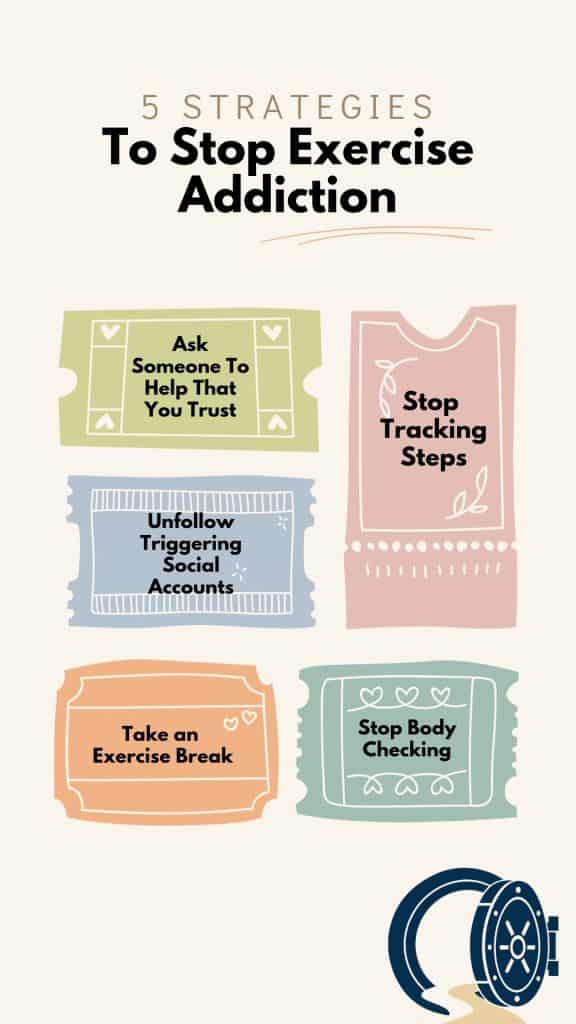
1. Reduce or Eliminate Exercise When Needed
A period without exercise may be necessary, especially with undernutrition, injury, or medical complications. NICE eating disorder guidance advises people with eating disorders who exercise excessively to stop exercising entirely for a period of time.
It might be necessary to:
- Pause structured workouts when exercise is unsafe or a clinician has advised rest.
- Remove exercise equipment from easy reach, pause workout apps, or freeze a gym membership if those cues keep pulling you back.
- Reduce avoidable movement used to compensate, such as pacing after dinner or adding errands to increase steps.
- Use practical support, such as sitting with someone after meals or getting a ride instead of adding a compulsory walk.
Avoid turning “eliminate activity” into another perfection rule. Necessary daily tasks and involuntary restlessness deserve individual consideration; feeling fidgety does not mean you have failed.
2. Interrupt Rigid Exercise Routines
Eating disorders love routine and systems. The more you can shake these up, the more power you will take back from your eating disorder.
These strategies are for interrupting compulsive rules, and do not make an unsafe workout safe. However, they can help you move towards a healthier relationship with exercise when “just stop” feels completely out of the question.
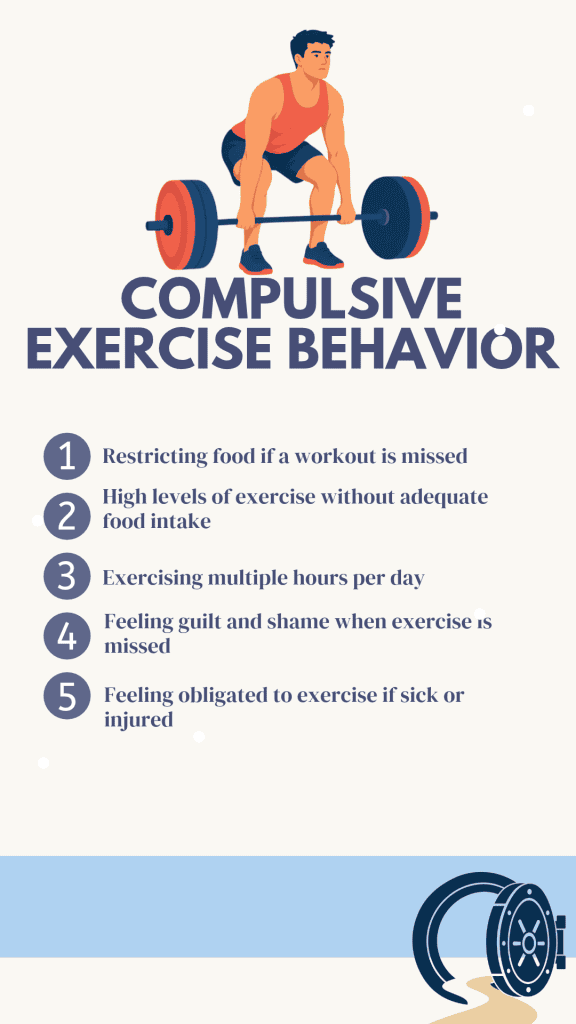
- Avoid repetitive exercise that keeps you stuck. Running, cycling, or the elliptical are especially easy to create rituals around because they can easily be tracked by time or steps.
- If repetitive exercise remains in an agreed safe plan, interrupt the sequence. Pause your exercise ritual. Rebel against the demands of the eating disorder. Switching to stretching, yoga, or weights mid routine can break the automatic habit without adding more activity to your session.
- Change the time of day. Practice letting a usual workout window pass without treating it as an emergency or adding a replacement workout.
- Change the location or environment. A different setting may help interrupt cues tied to a particular machine, route, or sequence.
- Change exercise days and rest days. Work on tolerating a different schedule without banking exercise beforehand or making it up afterward.
- Switch the activity type when appropriate. If you ALWAYS use the elliptical, try a group activity or pilates.
- Make movement social if it helps. Choose someone who respects stopping and resting, rather than someone who will push you to finish.
Watch for the eating disorder turning every suggestion into a new requirement. Replacing a run with hours of walking, stretching until it feels “complete,” or insisting you must exercise with a friend can keep the exercise rules alive.
3. Reduce the Power of Exercise Trackers
Step counts, calorie displays, and activity rings can give the eating disorder an endless supply of assignments. Your watch does not know whether you are recovering from restriction or terrified of sitting down.
- Stop using a pedometer or fitness tracker when you can.
- If you are not ready to remove your tracker, cover the activity display with a bandage or tape.
- Turn off movement reminders, streak notifications, and exercise comparisons.
- Hide step widgets or stop opening the activity dashboard on your phone. Better yet, delete them if you can. Having these apps on your phone can also trigger other media messages about weight loss and exercise in social media etc.
- Stop calorie counting for both food and exercise.
4. Eat Consistently Without Compensating
Follow a regular eating pattern, including meals and snacks on rest days. A mechanical eating plan, which uses planned eating times rather than waiting for hunger, can provide structure when hunger cues are unreliable.
An eating disorder dietitian can tailor that plan to recovery and any medically appropriate movement. If that support is not available yet, start by protecting regular opportunities to eat rather than letting each workout decide whether food is allowed.
- Keep your next meal or snack when a workout is canceled.
- Do not add exercise because you ate more than planned.
- Don’t cut out food to compensate for sitting, taking a rest day, or doing less activity.
- Notice mental compensation too, such as promising to “be better tomorrow” after dessert.
You do not owe the treadmill a payment for dinner. Reducing movement while continuing to restrict can leave your body underfed and the food rules firmly in charge.
5. Have Something Ready for the Urge
Plan something specific for the time you would usually exercise, so you have an action available when the urge shows up. Start with things you can do while resting, even if they feel ordinary.
- Sit somewhere away from your exercise equipment and call or message someone.
- Play a game, knit, draw, or pick up a musical instrument.
- Watch a show with someone who can help you stay seated when you start negotiating extra steps.
- Use a direct script: “I’m having an urge to exercise. Can you stay with me while I let it pass?”
- Keep your next planned meal or snack even if the urge is still there.
The activity does not have to erase the feeling to be useful. You are practicing responding to discomfort without automatically obeying the exercise demand.
6. Challenge the Rule Underneath the Workout
Reducing exercise becomes harder when you still believe rest makes you lazy or food has to be earned. Notice the specific threat your eating disorder uses, then practice a response that does not require proving anything about your body.
- “I haven’t done enough to eat.” “Eating is a basic need, including today.”
- “I’ll make up for this tomorrow.” “I can leave a missed workout missed.”
- “Rest means I’m lazy.” “My discomfort does not make rest wrong.”
- “I need to check whether my body changed.” “I can leave that check unanswered and keep my plans.”
Respecting your body includes responding to its needs before you feel good about how it looks.
Recovery progress can look like leaving the tracker off, eating after a canceled workout, or letting an unfinished activity stay unfinished. Those choices count even when the eating disorder throws a tantrum about them.
Healthy Exercise vs. Disordered Exercise
In eating disorder recovery, exercise can slip back into disordered territory faster than you realize. These are three check-ins I use to notice when my eating disorder has hijacked movement again:
- Am I trying to change my body or lose weight? If either is my first or second reason for exercising that day, I stop. That desire might be somewhere on the list, but when it climbs to the top, I pay attention.
- Does it feel urgent? The second I feel like I HAVE to exercise or can’t miss a workout, I don’t.
- What do I actually enjoy about it? Sometimes it’s as simple as wanting to walk outside on a sunny day. As a social dancer, I want the stamina to stay on the dance floor longer. I also love watching dancers while jogging on the treadmill and picturing the steps in my head. That gets me excited, and it has nothing to do with shrinking my body.
These check-ins help me catch when movement starts crossing over to the dark side.

- Dating Someone With an Eating Disorder: Supporting Them Without Losing Yourself - October 19, 2026
- The Evolution of Thinspo: From Pro-Ana Websites to SkinnyTok - September 19, 2026
- Meal Support For Eating Disorders - August 12, 2026