Table of Contents
Last updated on October 20th, 2026 at 11:29 pm
Grocery shopping with an eating disorder can turn picking out a loaf of bread into a full-blown decision making meltdown. There are labels to inspect, foods your eating disorder has declared illegal, and about thirty versions of the same damn yogurt.
Between your self-imposed rituals of only eating clean, sticking to the grocery store perimeter like your life depends on it, and treating all white foods like they’re poison, shopping can feel more like you’re committing a crime than restocking your kitchen.
Meanwhile, you still need groceries. Your eating disorder would love to turn every shopping trip into a 2-hour investigation of which foods you are allowed to bring home, but you have meals to eat and a life outside the cereal aisle.
Grocery shopping with an eating disorder can feel overwhelming. These tips can help you handle anxiety in the aisles, spend less time arguing with food labels, and bring home food you’ll actually eat.
Why Grocery Shopping With an Eating Disorder Feels So Hard
The grocery store gives your eating disorder a lot of material to work with, and the food packaging is often happy to help keep you in distress. Apparently even crackers need to explain how guilt-free they are before you can put them in a cart.
An ordinary shopping trip can involve:
- Noise, bright lights, crowds, and loudspeaker announcements.
- Diet culture messages on packaging and displays.
- Calories and nutrition information that invite repeated checking.
- More choices than you know what to do with.
- Worry about other people seeing or commenting on your food.
- Prices that your eating disorder uses to argue against buying something.
So when you can’t stop adding up the calories in your head, the ingredients list seems to get longer every time you look at it, and…. Oh you forgot about that fucking fiber…. what do you do? How do you actually make it OUT of the grocery store once you get in there without a complete mental breakdown in the organic food section?
Money is a real consideration, and working within your budget matters. Your eating disorder may also use the price of a snack to argue that you should skip eating altogether, even when an affordable alternative is available.
You may feel pulled toward stores that sell mostly “clean,” organic, or specialty foods because they fit your food rules. Buy organic if you want to and can afford it, but a regular box of pasta does not need to pass a purity test before it can become dinner.
Before You Go: Make Food Decisions Easier
A little preparation can save you from making every decision with your eating disorder voice yelling over your shoulder. Give yourself a plan that gets food into the house and leaves room to practice something difficult without making the entire trip a recovery obstacle course.
Notice Where You Get Stuck
Your eating disorder might insist shopping is “not that big of a deal,” then spend twenty minutes arguing over pasta. Think about what actually happens when you shop:
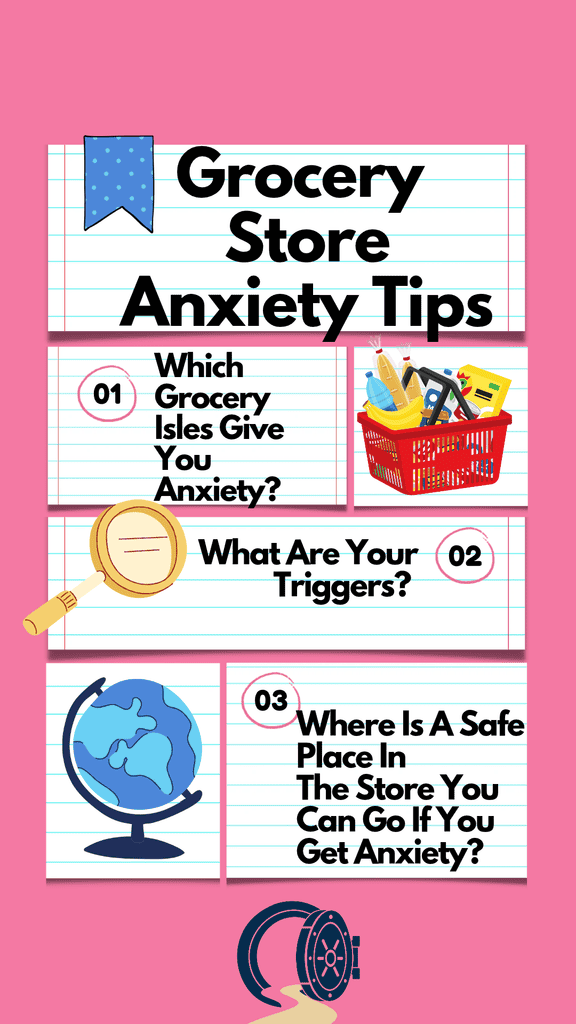
- Which aisles or food groups make you anxious?
- Do you get stuck comparing calories, ingredients, brands, or prices?
- Are crowds, lighting, conversations, or particular areas such as the café difficult?
- Does one store feel more manageable than another?
- Would a store map or a list arranged by aisle help?
Use your answers to choose the support you need, whether that means a quieter store, a shopping buddy, or a list you can follow when decisions feel hard. You do not need to untangle your entire relationship with food before buying lunch.
Build Your List Throughout the Week
Keep a running grocery list and add foods as you think of them. Organizing it by store section can save you from wandering back and forth while your eating disorder takes another crack at negotiating dinner.
Include ingredients for meals, snacks, and easy options for days when cooking feels impossible. A cart full of ingredients for the person you imagine becoming on Sunday afternoon may leave actual Tuesday-night you with nothing manageable to eat, especially when nothing sounds good.
Choose a backup for items you rely on so an empty shelf does not become permission to skip a meal. If your usual bread is sold out, another brand can still make a sandwich, and your list can also make room for something that sounds good once you get there.
Choose Your Timing and Shopping Method
- Eat before you leave. Have your planned meal or a snack rather than delaying food until the trip is finished. Bring something if shopping will overlap with your next eating time.
- Pick a less crowded time. Ask the store when it tends to be quieter instead of assuming evenings will always be calm.
- Choose a manageable store. Familiar layouts, tolerable lighting, and prices that fit your budget all count.
- Use pickup or delivery when helpful. You can build an online order yourself, work on it with someone, or ask another person to shop from your list.
Getting food into the house matters, and delivery counts. You do not have to earn groceries by making yourself walk through an overwhelming store; use the option that helps you have enough to eat while you work on shopping skills.
If Getting Through the Door Feels Impossible
A full weekly shop may be too much for a first practice trip. You can choose a smaller step, such as:
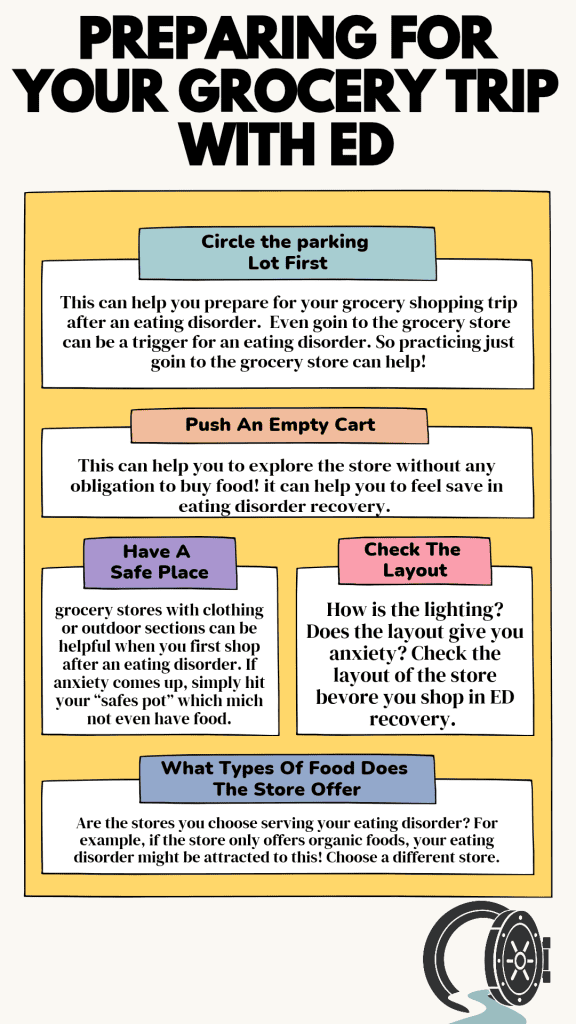
- Visiting the parking lot or walking up to the entrance.
- Walking around the parking lot
- Pushing an empty cart around the parking lot or grocery store (without any pressure to put things into it!)
- Visiting the clothing or household section of a store that also sells food.
- Walking through a food aisle, then buying one planned item.
Pick a specific step and decide what you will practice next, without making zero anxiety the entry requirement for moving forward. If today’s practice is walking inside, arrange pickup, delivery, or help from someone else so you still have meals and snacks available. Practicing the entrance does not feed you dinner.
Use Instacart as a First Step
Instacart or another grocery delivery service can help you practice choosing food before adding crowded aisles, bright lights, and checkout conversations to the mix. It gives you a place to start while getting food into the house.
- Build your list over time. Add meals, snacks, and foods you want to try without making every decision at once.
- Choose with support. Have someone sit with you while you order and help interrupt food-rule negotiations.
- Plan substitutions. Choose alternatives so an unavailable brand does not become a skipped meal.
- Watch the comparison trap. Set a reasonable ordering window so scrolling through labels does not become your evening activity.
- Plan an in-store step. Try picking up a few items or visiting one aisle while delivery covers the rest.
Delivery can remain a practical tool, but if shopping in person is your goal, keep practicing manageable steps toward it. You do not have to wait until the anxiety disappears.
While You Shop: Keep the Trip Moving
Your eating disorder may have an opinion about every item you touch, including the food you bought without a second thought last week. You can keep shopping while those opinions are present, using tools that help you finish instead of giving every thought its own debate.
- Wear headphones. Music, a podcast, or a supportive person on the phone may make the trip more manageable.
- Use a flexible time limit. Give yourself a reasonable shopping window or a limit on repeated comparisons. Set a timer if you find yourself repeatedly going over your limit. Leave room for queues, accessibility needs, and finding unfamiliar products.
- Interrupt label loops. Check what you need for genuine medical requirements, such as allergies, without repeatedly comparing products to find the lowest-calorie option.
- Use your substitutions. When something is unavailable, choose your backup rather than dropping that food from the plan.
- Choose the checkout that helps you finish. Self-checkout may reduce unwanted conversation; a staffed checkout may be easier if scanning and bagging feel overwhelming.
Prepared meals, deli foods, frozen options, and bulk foods can all be useful. Choose them because they fit your needs, taste, and budget, rather than making the absence of a nutrition label a condition for buying food.
If labels keep taking over, imagine choosing food at a potluck: what looks appealing, and what would make a satisfying meal? You wouldn’t be able to check labels at a potluck. Try to re-create this vibe in the grocery store.
If You Freeze in the Aisle
If you are standing in front of the pasta and every choice feels impossible, keep the next step small. You do not have to settle every argument your eating disorder starts before you can move your cart.
- Stop comparing products and return to your list.
- Choose the item you planned or your backup.
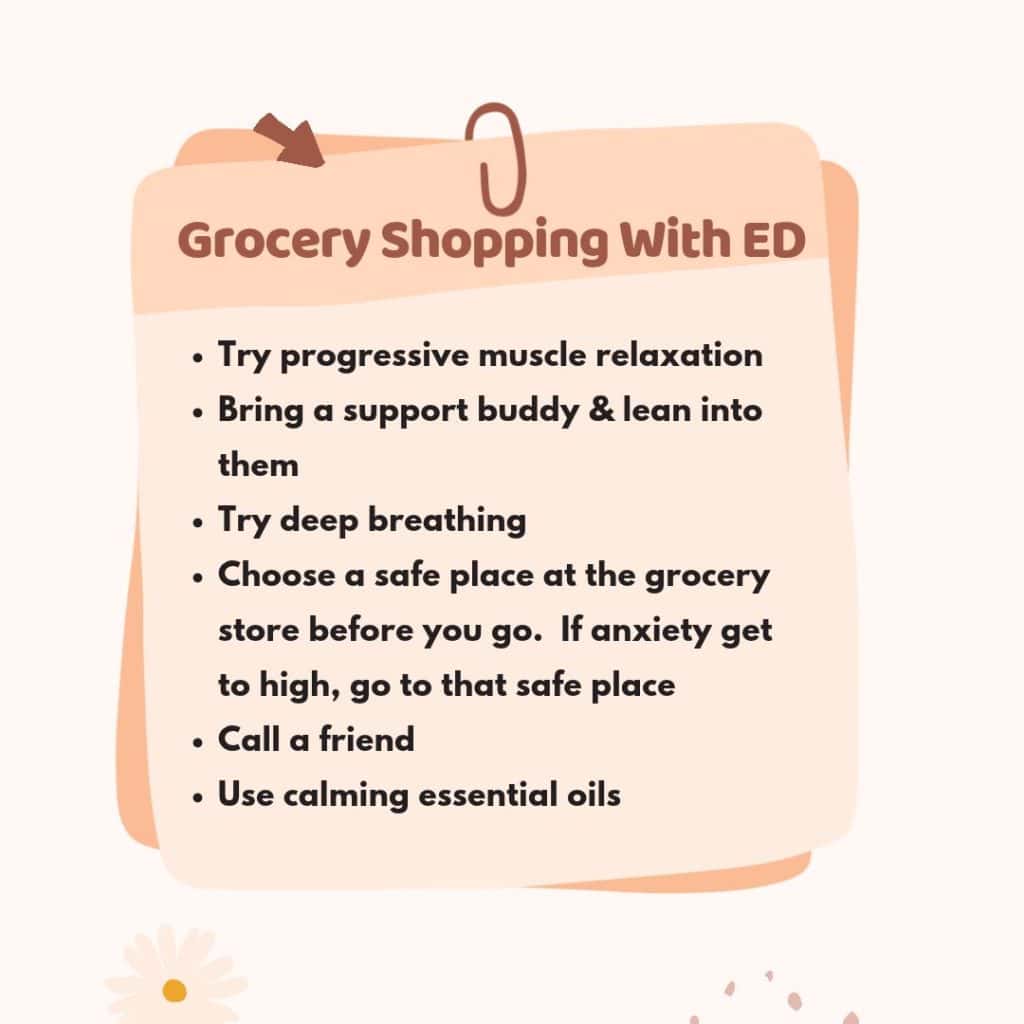
- If you need a break, step somewhere less overwhelming or call your support person.
- If finishing is not manageable today, arrange another way to get the remaining food.
When the Eating Disorder Says…
| When the eating disorder says… | Something to try |
| “Compare every brand before choosing.” | Choose an option that meets your practical needs and budget, then move to the next item. |
| “Put that back. You don’t need it.” | Is fear changing your plan or is this a REAL budget issue. If you can afford the food and you don’t have an allergy to it, add but never take away from the cart. |
| “They’re judging your cart.” | Return to your list. You do not owe strangers an explanation for your groceries. |
| “Your usual brand is gone, so skip it.” | Choose your planned substitute so you still have food available. |
| “You can only buy that if you remove something else.” | Keep the food you need. One purchase does not require a compensatory restriction elsewhere in the cart. |
| “This trip was a failure because you were anxious.” | Notice what you did while anxious: entered the store, chose food, asked for help, or completed checkout. |
You can also watch my grocery-shopping tips for eating disorder recovery.
What If People Judge My Grocery Cart?
Nobody cares about you. They’re all too busy thinking about themselves. In the grocery store, that’s a useful reminder: most people are thinking about their own dinner, their budget, or whatever they forgot in the last aisle, rather than inspecting your cart.
And if someone really IS judging your cart, you still do not have to rearrange your groceries to make them comfortable. Here is how I think about it:
- Their judgment says more about them. Someone who feels safe with their own food choices generally has less reason to police yours. If they are judging your cookies, that may reflect their own insecurities or food rules; it does not make their opinion a useful guide to what you should buy. It also does not make their opinions’ facts or your cookies wrong.
- Five minutes in the realm of eternity. Even if someone has a negative thought about your cart, it may be gone before they leave the parking lot. Think of it as five minutes in the realm of eternity, rather than a verdict you need to carry home with your groceries.
- You do not owe an apology or an explanation. You do not have to explain who the ice cream is for, promise that you usually eat differently, or justify how much food you are buying. Your grocery cart does not require a defense statement.
Feeling watched can still be uncomfortable, but you can let that discomfort be there and keep the food you chose. If someone actually comments, “I’m all set, thanks” is enough; you can also keep shopping without answering.
Give Your Support Person a Specific Job
A shopping buddy can be a friend, partner, family member, or a professional who offers shopping support. Choose someone who can be kind to you without joining the eating disorder in a lengthy discussion about whether the bagels are acceptable. You do not need an existing treatment team to ask someone you trust to come along.
Before you go, explain what would help. Your buddy could:
- Find items while you work through the list.
- Interrupt repeated label checking or food-rule debates.
- Help you choose a planned substitute.
- Support a food challenge you agreed on beforehand.
- Sit with you during a short break, then help you decide how to continue.
- Keep conversation away from diets, calories, and judgments about anyone’s cart.
Give them words they can actually use: “If I keep comparing the same products, remind me that we already found one that works.” Or, “Please don’t reassure me that a food won’t make me gain weight. Help me stick with buying it.”
If nobody can come in person, try a phone or video call using headphones and agree on when they will be available. They might stay with you for the whole trip, one difficult aisle, or the meal afterward if you also want support with eating.
Challenge Food Rules Without Turning Shopping Into Another Test
Choose one manageable challenge for the trip. That might mean buying a different brand, visiting an avoided aisle, or purchasing one of your fear foods.
Buying the cereal once does not mean you have to feel completely fine about it next week. Practice the challenge again so it has a chance to become more familiar; working on rigid food rules and repeatedly including feared foods are part of the recovery approach described in CCI’s eating-disorder resources.
Try “Add, Don’t Take Away”
Once a food lands in your cart, notice the urge to put it back. Did you discover an allergy concern, accidentally pick up a duplicate, or realize you cannot afford it? Or did your eating disorder start negotiating?
The “add, don’t take away” approach means resisting fear-driven removal. If you chose a food you want and can afford, practice letting it stay instead of swapping it for something your eating disorder considers more acceptable. The cookies do not need to be replaced with rice cakes because your eating disorder filed a complaint.
You can also practice adding something that catches your interest. The goal is more flexibility around food, so leave room for genuine budget limits and practical changes rather than turning this tool into another absolute rule.
Plan a Place to Take a Break
Choose a store with a clothing, furniture, or household section where you can step away if the food aisles get overwhelming. Check the store map beforehand so you know where to go without having to figure it out while your eating disorder is yelling about cereal.
- Pick your break spot before shopping. Choose somewhere that feels less overwhelming and is easy to find.
- Consider the in-store café. If it feels comfortable, plan a tea or coffee break midway through shopping or use it when things get tense. Keep your meals and snacks on schedule; a drink does not replace food.
- Tell your shopping buddy the plan. They can sit with you without debating food choices or rushing you.
- Choose where you’ll restart. After your break, return to the next item on your list rather than reconsidering everything in your cart.
A break can help you continue. You do not have to feel completely calm before heading back to the food aisles.
After Shopping: Let the Food Become Food
Buying a feared food is one step, but the crackers cannot help you challenge a food rule if they spend the next six months as a kitchen decoration. Give the food a place in your kitchen and decide when you will eat it, arranging company or a phone call for that meal or snack if helpful.
Keep your next meal or snack on schedule, even if shopping was stressful. Your eating disorder does not get to charge you for the trip by demanding less food or extra exercise afterward.
Before writing the whole experience off, notice what you actually did: bought enough for lunch, kept the snack in the cart, or chose a substitute when your usual brand was missing. Feeling anxious does not cancel those actions or mean you have to start over.
What Helped Me With Grocery Store Anxiety
During my experience with anorexia, grocery shopping became a daunting task. I would obsess over finding the perfect label to match my disordered thoughts about calories, refuse desserts or sweets, and choose only organic or “clean” foods.
A few things I found helpful were:
- Starting in the middle aisles, then working my way to the perimeter.
- Putting blinders on when it came to calorie labels.
- Drafting my grocery list throughout the week and grouping it by where foods were in the store.
You can practice shopping beyond the aisles your eating disorder approves of. There are foods that can help you get fed throughout the grocery store.
Keep your own reasons for recovery handy, too. When your eating disorder wants another round of negotiations over a box of crackers, remind yourself what you want that time and energy back for. You deserve to buy groceries and get on with your damn day.

- Dating Someone With an Eating Disorder: Supporting Them Without Losing Yourself - October 19, 2026
- The Evolution of Thinspo: From Pro-Ana Websites to SkinnyTok - September 19, 2026
- Meal Support For Eating Disorders - August 12, 2026