Table of Contents
Last updated on October 13th, 2026 at 08:17 pm
.Overshoot weight is a term people use for gaining beyond their pre-eating-disorder weight or an initial recovery weight target. It can happen after restriction, but going above a target does not automatically mean you have gained more than your body needs.
Your eating disorder may have agreed to recovery under very specific conditions: gain the smallest amount possible, stay within an approved clothing size, and absolutely do not get comfortable eating dessert. Now your body is changing, and the eating disorder wants to file a complaint.
That fear can be loud as hell. Understanding what overshoot means can help you keep feeding yourself without treating every body change as evidence that recovery has gone wrong.
What Is Overshoot Weight in Eating Disorder Recovery
People use “overshoot” to describe weight gain beyond an earlier weight or recovery target. Here are some concrete examples of what that might look like:
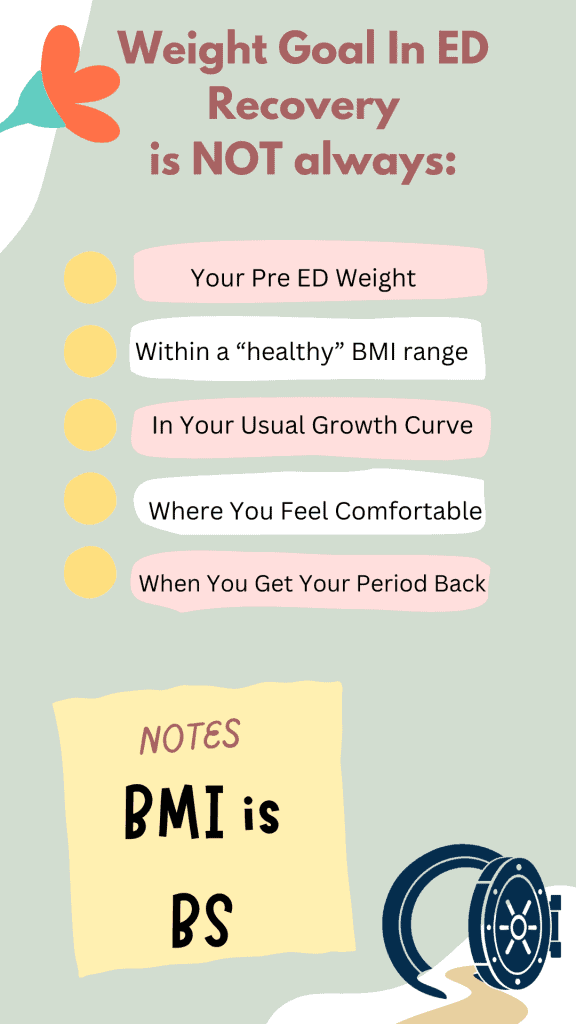
- Going above your pre-eating-disorder weight. You weigh more in recovery than you did before the eating disorder began.
- Going above your usual growth curve. For a child or teen, weight or BMI-for-age rises above the percentile pattern they previously followed on their growth chart.
- Going above a “healthy” BMI range. Your weight rises beyond the range a BMI chart labels “healthy,” even though that chart cannot determine your individual recovery needs.
- Going above your initial recovery target. You reach the goal weight you were first given, but your weight continues to rise as you keep nourishing yourself.
These are descriptions of crossing a weight marker, not proof that you have gained more than your body needs. Growth charts can help guide recovery for children and teens, but a change in that pattern needs individual assessment; neither a growth percentile nor a BMI cutoff is an automatic ceiling.
Your pre-eating-disorder weight may also reflect years of dieting rather than a well-fed body. Returning to that exact number is not automatically the same as recovering.
The word itself can be misleading because it sounds like you missed the exit. You have not failed recovery by reaching a weight you did not expect.
For children and teens, recovery weight targets need to account for their own growth history and development. Returning to the weight they were at before the eating disorder may leave out the growth that should have happened while they were ill.
A target is a clinical estimate that may need updating. It is not a rule that your body must obey forever.

Why Do I Need Additional Nutrients in Recovery
Restriction can leave your body with lost muscle and depleted energy stores. Restoring those tissues takes food, even when you have already reached a number that looks acceptable on a chart.
In a reanalysis of the Minnesota Starvation Experiment, researchers found that hunger during refeeding was related to how much fat and lean tissue still needed restoring. Lean tissue includes muscle and other tissues that are not body fat.
The findings suggest that hunger after starvation can reflect unfinished recovery. However, the study involved a small group of adult men without eating disorders, so it cannot tell us exactly how much weight any individual needs to gain.
Your extreme hunger does not become suspicious the moment you reach your old weight. A bathroom scale cannot tell you whether your body has finished rebuilding lost tissue.
For adolescents recovering from anorexia, getting a period back can happen before full physical recovery. Further weight gain may still be needed, so a returning period is not an automatic instruction to eat less.
What Is an Example of Overshoot Weight?
Imagine someone reaches an initial recovery target, but their body is still showing possible signs of undernourishment or incomplete physical recovery. For example, they might:
- Feel cold while everyone else in the room is comfortable.
- Feel exhausted or notice muscle weakness during ordinary daily activities.
- Get dizzy when standing up.
- Still have no period after it stopped during restriction, if they normally menstruate.
- Have persistent constipation or unusually slow digestion.
These symptoms can occur with restrictive eating disorders, but they can also have other causes. They deserve medical assessment rather than an assumption that every symptom means you need a specific amount of additional weight.
If their recovery target is revised upward after that assessment, they may call the additional gain “overshoot,” even though the first estimate did not meet their needs. Their eating disorder may declare the job finished because the scale hit a number, while their body is still struggling to get through the day.
Or imagine a teenager returning to their weight from two years ago. They are older now, and their body needs nourishment for development as well as recovery; that earlier weight is not a permanent finish line.
There is also a more specific research use of the term. Post-starvation fat overshoot describes body fat recovering beyond its earlier level while lean tissue is still catching up.
None of these examples gives you a formula for how many pounds to gain. There is no universal “extra” amount that makes recovery complete, and an eating disorder diagnosis alone cannot tell you whether overshoot will happen.
When Will I Stop Gaining Weight After an Eating Disorder
There is no calendar date or online calculator that can answer this for you. Reaching an initial target does not establish that weight restoration is finished, and a stretch of weight gain does not tell you what your body will weigh years from now.
If you have a prescribed eating disorder recovery meal plan, do not shrink it just because you passed a number you hoped would be the ceiling. If you do not have a plan, avoid using that number to justify skipping meals, cutting portions, or ignoring hunger. If your hunger cues are still unreliable, waiting for a growling stomach can leave you missing meals your body needs.
Useful recovery questions go beyond the scale: Can you eat regularly without compensating afterward? Are food rules loosening, and are meals taking up less of your entire damn day?
Those changes matter, but they do not replace medical assessment of weight restoration. An eating disorder can still need treatment when weight is stable or falls within a supposedly “normal” BMI range, as happens with atypical anorexia.
Should I Still Eat More If I’m Hungry at My Goal Weight
Reaching your goal weight does not automatically mean your body’s nutritional needs have been met. A weight target is an estimate, and hunger can continue while your body is restoring lost tissue.
If you finish a meal and are still hungry, you can have more food. You do not need to wait until tomorrow or make your next meal smaller to compensate just because the scale reached a particular number.
Your eating disorder might treat goal weight like a spending limit: “You’ve reached your allowance. Kitchen’s closed.” But that number does not cancel your hunger or mean that further weight gain would be wrong.
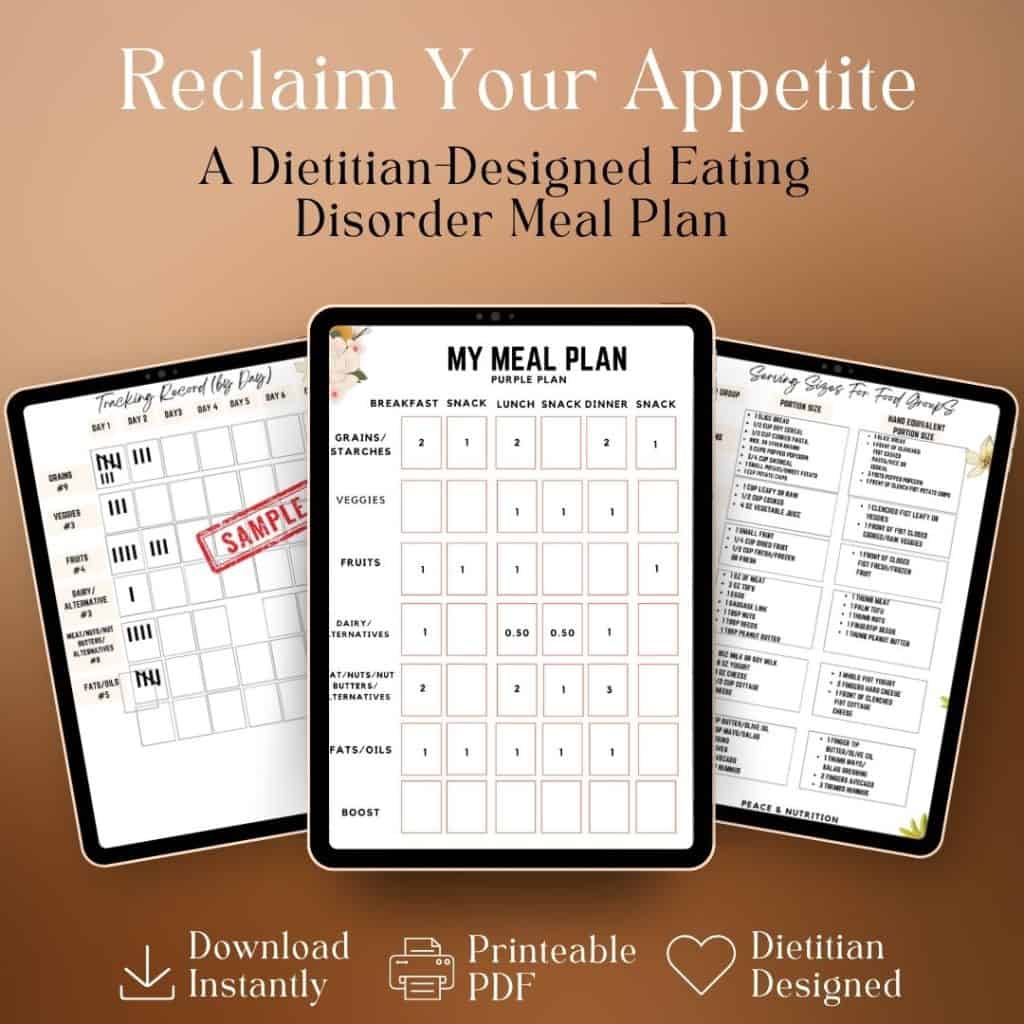
If you follow a prescribed meal plan, ongoing hunger may mean it needs adjusting. The plan should not become a ceiling that leaves you hungry.
How Long Does It Take to Lose Overshoot Weight
There is no reliable timeline for losing overshoot weight after an eating disorder. Some people’s weight changes over time, while others stay at a higher weight than they expected.
Studies of people recovering from starvation show that body fat can return faster than muscle and other lost tissue. That can help explain why weight may rise above its earlier level, but those studies cannot tell us whether you will lose that weight or how long it would take.
It makes sense to want a definite answer when you are afraid of gaining weight. But making yourself a promise that you will eventually get smaller can leave you treating every meal as something you are only allowed to have temporarily. You deserve enough food even if your body stays larger than you hoped.
Try separating the fear from the action: “I want this weight to go away, and I am still going to eat lunch.” You do not have to feel delighted about your body to stop punishing it.
Looking up other people’s weight timelines can also become a form of checking. If every search ends with comparing bodies or planning restriction, close the tab and choose something concrete to do next, such as preparing your snack or texting someone who supports your recovery.

Dealing With Weight Gain in Eating Disorder Recovery
Weight gain can bring grief, anger, and a real sense that you are losing part of your identity. If people praised your smaller body while you were miserable in it, their compliments can make recovery feel especially confusing.
You may also worry about how others will treat you in a larger body. Weight stigma is real, and you do not need to pretend those fears are silly to keep moving forward.
Make the difficult days more manageable with specific changes:
- Wear clothes that fit today. Put clothes that pinch or trigger repeated size comparisons out of your daily rotation. You deserve to sit through lunch without a waistband arguing with you.
- Interrupt one body-checking habit. If you pinch your stomach after meals, keep your hands occupied with a game, craft, or another activity. Reducing body checking gives you something to practice beyond demanding that you suddenly love your reflection.
- Keep the next meal on the schedule. A hard body image day does not need to become a skipped-breakfast day or pull you back into the binge-restrict cycle. Choose your next meal before the eating disorder turns distress into a new food rule.
- Have a response ready for comments. “I’m not discussing my weight” is enough. You can use responses to unsolicited weight comments without explaining your recovery to everyone who has an opinion.
- Notice the non-scale victories recovery gives back. Write down a meal you shared, a food you enjoyed, or a conversation you could follow without calculating calories in your head. These are parts of your life that the scale cannot measure.
You can be scared of a bigger body and still buy clothes that fit it. You can miss your old size and still eat dinner.
The eating disorder has already taken enough. It does not get to decide that your recovery only counts if you stay small.
.

- Dating Someone With an Eating Disorder: Supporting Them Without Losing Yourself - October 19, 2026
- The Evolution of Thinspo: From Pro-Ana Websites to SkinnyTok - September 19, 2026
- Meal Support For Eating Disorders - August 12, 2026