Table of Contents
Last updated on October 12th, 2026 at 10:11 pm
Blood tests can show some of the ways an eating disorder is affecting your body. They check things like blood sugar, blood cells, and minerals that help your heart and muscles work. They can also give clues about your kidneys and liver. But a blood test cannot diagnose an eating disorder by itself, and normal results do not mean you’re “not sick enough” to need help.
If you’re restricting food, purging, or feeling out of control around eating, you might hope blood work will explain what’s happening. You might also dread the results because your eating disorder is ready to use whatever comes back as an excuse: an abnormal result becomes something to panic about, while a normal result becomes permission to keep going.
Understanding the numbers can help you ask useful questions. Your labs deserve attention, but they don’t get to decide whether your struggle counts.
Should I Get a Blood Test if I Have an Eating Disorder?
Blood work is often part of checking how an eating disorder is affecting your health. The American Psychiatric Association recommends two common groups of tests: a complete blood count and a comprehensive metabolic panel. These names sound complicated, but they simply describe sets of measurements taken from a blood sample.
If you don’t already have care, you can start with a primary care appointment and say, “I’m concerned about my eating and want to check how it’s affecting my health.” Write down what’s happening with food, exercise, and symptoms. Include vomiting or the use of laxatives or diuretics, sometimes called water pills. You don’t need a diagnosis or a spreadsheet proving you’ve earned the appointment.

Common Blood Tests for Eating Disorders
The two groups of tests below are common starting points. Other tests may check magnesium, phosphorus, thyroid hormones, iron, or vitamins. Magnesium and phosphorus usually need to be requested separately, so having a metabolic panel doesn’t necessarily mean they were checked.
The test I routinely recommend for patients include:
- Complete metabolic panel
- Lipid panel
- Complete blood count
- Thyroid testing (including free T3 and T4)
- Magnesium testing
Complete Blood Count
A complete blood count (CBC) checks the cells that carry oxygen, fight infection, and help stop bleeding. Low hemoglobin, the protein that carries oxygen in your blood, can be a sign of anemia. Low white blood cells or platelets, which help blood clot, can happen when your body isn’t getting enough nutrition. Other conditions can cause these changes too.
Comprehensive Metabolic Panel
A comprehensive metabolic panel (CMP) checks blood sugar, several minerals, proteins, and measurements related to your kidneys and liver. You may recognize names like glucose, sodium, potassium, calcium, BUN, and creatinine on the report.
The minerals are often called electrolytes. They help your nerves, muscles, and heart work and help balance the water in your body. BUN and creatinine give clues about your kidneys, while ALT and AST can give clues about injury to your liver or other tissues. The chart below explains what high and low results could mean.
Can You Have an Eating Disorder with Normal Blood Tests?
Yes. You can have an eating disorder and normal blood tests. In fact, normal labs in an eating disorder are the norm rather than the exception. Oftentimes in an eating disorder, lab values are the VERY LAST thing to change, even if a person is extremely malnourished. In fact, some people may never experience altered lab values – even after a very prolonged, aggressive starvation.
Normal results also don’t guarantee that your body is safe. The American Academy of Pediatrics explains that normal labs can occur even when an eating disorder causes serious illness in its guidance for children and teens. A health check also looks at symptoms, eating habits, pulse, blood pressure, and sometimes a heart test called an ECG.
It’s also important to remember that blood work doesn’t measure how much of your day goes into negotiating meals, avoiding food, or planning how to make up for eating. If your eating disorder voice uses a normal result as permission to keep restricting, that result has not answered the whole question. What you’re experiencing still matters.
Why Eating Disorder Training Matters When Reading Your Labs
Eating disorders can affect lab results in ways that are easy to misinterpret without specialized training. A provider needs to understand how restriction, purging, and refeeding may be affecting your body before recommending treatment. Otherwise, an abnormal result can lead to advice that reinforces the eating disorder, such as cutting out foods when you already aren’t eating enough.
Cholesterol can rise because of changes caused by undernutrition. Your body makes cholesterol and clears it from your blood, so your cholesterol level isn’t simply a reflection of what you eat. During restriction, changes in thyroid hormones and the way your body breaks down stored fat may contribute to slower removal of LDL cholesterol from the blood. A provider who is not trained in eating disorder care is likely to reinforce further restriction and food rules when seeing a high cholesterol reading in labs. This will only make the problem worse.
Restriction can also disrupt how your body manages blood sugar. Insulin is the hormone that helps move sugar from your blood into your cells. Research has found changes in the timing of insulin release in people with anorexia, and prolonged fasting can change how the body responds to insulin. These changes may contribute to difficulty handling glucose when food is reintroduced.
An abnormal lab result should help identify what your body needs when combined with information about any food restriction or purging behavior you are engaging in. A provider with eating disorder experience can investigate the medical concern without unintentionally providing advice that fosters further food restriction.
Common Abnormal Lab Results in Eating Disorders: High and Low Values
The “reference range” on your report is the range that the lab uses to describe typical results. Use the range printed beside your own numbers, because it can vary between labs and with age. A flag means a result is outside that range; it doesn’t tell you the cause or how serious it is by itself.
This chart gives possible explanations of what might be happening with lab changes when you have an eating disorder on board.
| Lab result | What a low value could mean | What a high value could mean |
| Potassium | Losses related to vomiting, diarrhea, laxatives, or some diuretics; shifts during refeeding | Reduced kidney clearance, certain medicines or supplements; sometimes a collection-related error |
| Sodium | Sodium losses or dilution from excess water; some medicines or medical conditions | Too little water relative to sodium, often with dehydration |
| Phosphorus/phosphate | Severe malnutrition, poor absorption, some medicines, or a drop during refeeding | Reduced kidney clearance; phosphate-containing laxatives or enemas; some hormone disorders |
| Magnesium | Inadequate intake, poor absorption, diarrhea, or kidney losses | Magnesium-containing supplements, laxatives, or antacids; reduced kidney clearance |
| Glucose | Starvation or other causes of hypoglycemia (low blood including glucose-lowering medicines | Diabetes, a stress response, or certain medicines; timing of food intake matters |
| Bicarbonate/total CO2 | Bicarbonate loss with diarrhea or an acid-base disorder such as metabolic acidosis | An acid-base pattern such as metabolic alkalosis, which can occur with vomiting |
| Chloride | Vomiting-related losses or metabolic alkalosis | Dehydration, kidney problems, or metabolic acidosis |
| BUN | Low protein intake, malnutrition, or liver disease | Dehydration, impaired kidney function, or high protein intake |
| Creatinine | Low muscle mass or malnutrition | Impaired kidney function, dehydration, or muscle injury |
A note about creatinine: Creatinine is a waste product your kidneys remove from your blood. It’s different from creatine, a substance involved in muscle energy. The amount of muscle you have can affect the result, so muscle loss can make kidney function harder to judge from creatinine alone. A low number doesn’t automatically mean your kidneys are working especially well.
What you eat can affect it too. A study comparing vegetarians with people who ate meat found lower average creatinine in the vegetarian group. If you eat a vegetarian or vegan diet, that may contribute to a lower result without meaning you’re malnourished. Share your usual diet and any creatine supplements when discussing your results, along with changes in your weight or strength.

How Restriction and Refeeding Can Affect Liver and Thyroid Tests
Not eating enough can affect these results in ways a chart can’t fully explain. That can also matter in atypical anorexia, because body size alone doesn’t tell you whether someone is getting enough food.
ALT and AST During Restriction and Refeeding
ALT and AST are substances inside cells that can leak into the blood when cells are injured. AST is found in muscles as well as the liver. These numbers can rise during severe restriction, and they can change again when someone starts eating more, a process called refeeding.
Starvation and refeeding can affect the liver in different ways. Starvation can cause large increases in ALT and AST. In early refeeding, smaller increases may happen as the liver stores more fat and sugar. Injury from starvation can also continue after eating increases, so a rise at that point doesn’t automatically mean food caused the problem.
Repeat blood tests help show what direction the numbers are moving. Symptoms, other results, medicines, and sometimes a liver scan help explain why. A rising number needs attention, but it isn’t a reason to stop eating or cut back on your own. The response depends on what is causing the change.
Thyroid Results
Your thyroid is a gland in your neck that helps control how your body uses energy. TSH tells the thyroid to make hormones. A high TSH can suggest the thyroid is working too slowly; a low TSH can suggest it’s working too quickly. Illness can change these results too.
You may need to request that your doctor test free T3 and free T4 to get the most accurate details about your thyroid function. These are tests that are not routinely performed for most individuals.
T3 and T4 are thyroid hormones. Restriction can lower T3 as the body adjusts to too little food, so a low result doesn’t automatically mean you need thyroid medication. Mention any medicines or supplements you take, especially products sold for weight loss or metabolism, when discussing the results of thyroid tests.

How Purging Can Change Several Lab Results Together
Vomiting can lower potassium and chloride while raising bicarbonate, a substance that helps keep your blood from becoming too acidic or too alkaline. This combination can point to changes caused by losing stomach acid. Diarrhea from laxative misuse may lower bicarbonate instead. These different patterns help explain why the way someone purges matters when looking at blood work.
Fluid loss can affect kidney results at the same time. Looking at the numbers together helps explain more than one result on its own. Low potassium can affect your heartbeat, even if you don’t feel particularly unwell, but the pattern alone doesn’t prove that someone is purging.
Why Albumin and Calcium Don’t Tell the Whole Story
Albumin is a protein made by your liver. It can be low when you aren’t getting enough nutrition, but inflammation and kidney or liver problems can lower it too. Dehydration can make it look higher. Albumin alone cannot tell you whether you’re eating enough.
A calcium blood test measures the calcium in your blood, not the strength of your bones. A bone-density scan, often called a DXA scan, measures that separately. Some blood calcium is attached to albumin, so changes in albumin can affect the calcium result too.
Why Blood Tests Matter During Refeeding
When you start eating more after a long period of restriction, your body moves some minerals from the blood into cells to help use that food. Blood levels of phosphorus, potassium, and magnesium can drop. Serious changes are part of a condition called refeeding syndrome, which is why repeat testing can matter even when the first results look normal.
If you’ve been severely restricting for a long time, arrange a prompt medical check as you begin increasing food. A recovery meal plan can help organize eating, but it can’t show what’s happening to those minerals in your blood. Concern about refeeding is a reason to get support with eating more, not to keep starving yourself.
Monitoring Labs During Outpatient Refeeding
If you’re recovering at home, your medical provider can arrange blood tests through a clinic or local lab to check phosphorus, magnesium, potassium, and other measurements as you increase food. Ask who will review the results, how quickly they’ll contact you, and what happens if a result needs treatment.
Weekly testing may be appropriate once you’re stable, but being outpatient doesn’t mean weekly checks are always enough. People at higher risk of refeeding syndrome may need daily testing or checks several times a week early on. The schedule should follow your medical needs, with testing becoming less frequent as results stabilize.
People are at higher risk when their body has gone without enough nutrition for a prolonged period, especially with substantial weight loss or low electrolyte levels. Recognized risk factors include:
- Eating very little or nothing for several days, particularly more than 10 days.
- Losing a significant amount of weight over the past few months.
- Being severely underweight.
- Having low phosphorus, potassium, or magnesium before increasing food.
Blood tests are only part of monitoring; symptoms, pulse, blood pressure, and fluid changes matter too. If the checks or treatment you need cannot be provided safely at home, day treatment or inpatient care may be needed. The purpose is to support adequate nutrition with the level of medical care your body needs.
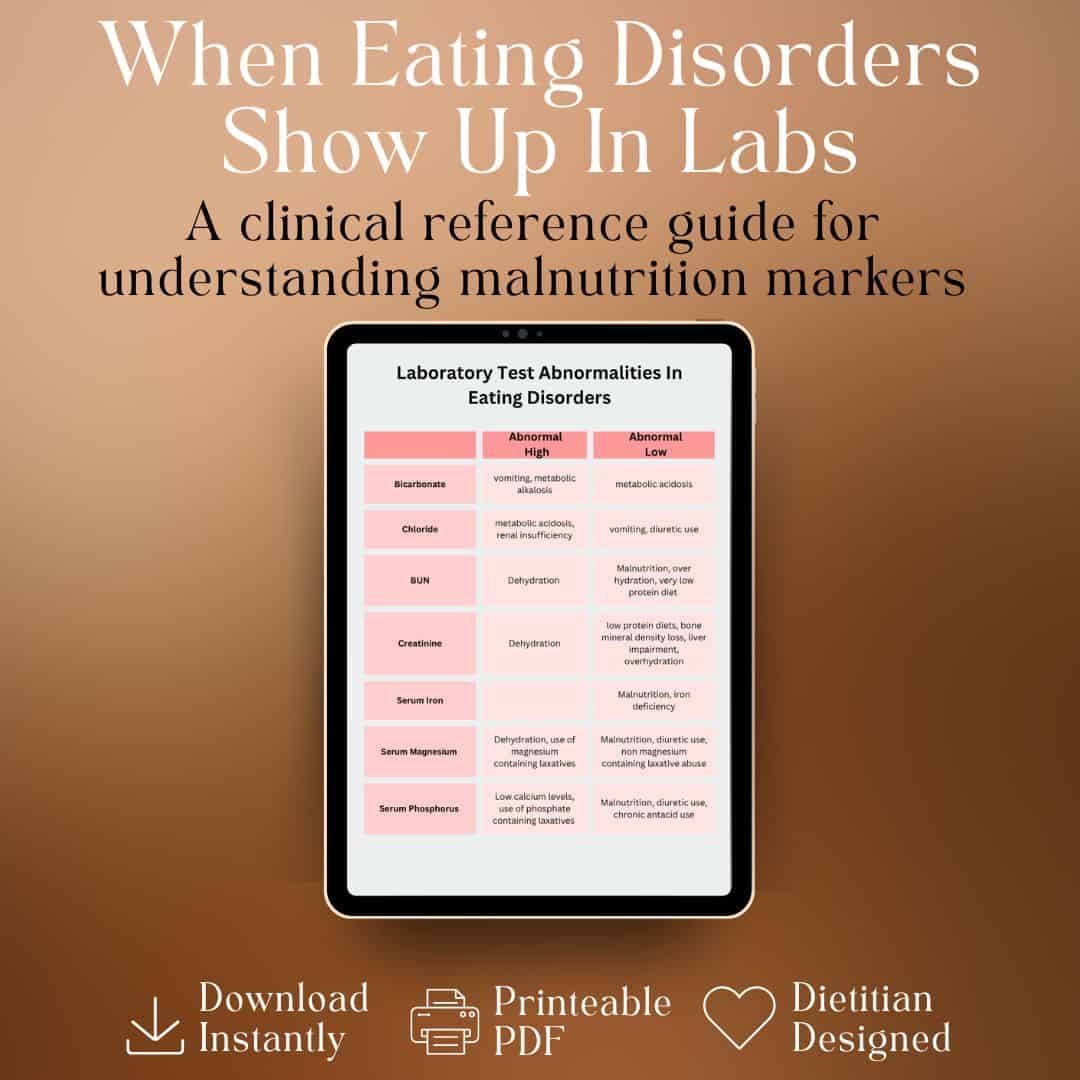
Treating Abnormal Labs in Eating Disorders
Treatment needs to address the low or high number and whatever caused it. Eating enough and reducing purging can help stop ongoing losses, but some changes need more immediate treatment. Medicines, kidney problems, or other conditions may also need attention.
Replacing Low Electrolytes
Low potassium may be treated with prescribed tablets or, in more serious cases, through an IV, a small tube that delivers treatment into a vein. The choice depends on how low it is and what else is happening. A heart test and repeat blood tests may help check whether treatment is working.
Other low electrolytes can also be replaced by mouth or through an IV. But replacement alone may not last if vomiting, diarrhea, or another cause keeps removing them. Treating the cause helps prevent the same problem from returning.
Correcting Sodium and Fluid Balance
Treatment for low sodium depends on why it is low. Someone who has lost water and sodium may need a different approach from someone whose sodium is low because there is too much water. Treatment may involve fluids through an IV, changes in how much you drink, or changes to medicines.
A low sodium result isn’t an instruction to take salt, and a high result isn’t an instruction to quickly drink lots of water. Ask what is causing the change and what you should do while waiting for the next check.
Eating Enough and Checking Progress
Regular, adequate meals help address the restriction behind many nutrition-related problems. A recovery meal plan can give you structure, but no single food amount or body weight guarantees that every result will return to its usual range. Some problems, including anemia or changes in kidney or liver tests, may need other treatment too.
Keep copies of your results and any follow-up instructions. Include the test date and the range printed on the report so you can compare results over time. Don’t start potassium or sodium supplements based on the chart; the wrong supplement or amount can cause harm, especially with kidney problems or certain medicines.
Useful questions for an appointment include:
- “What could be causing this result?”
- “Were magnesium and phosphorus checked too?”
- “Do I need a heart test or another blood draw?”
- “What should I do before the next appointment?”
Get urgent medical help for chest pain, fainting, confusion, severe weakness, difficulty speaking or an irregular heartbeat. Don’t wait for a routine blood draw or assume an old normal result explains a new symptom.
If you’ve been waiting for a lab report to give you permission to take your eating disorder seriously, you can stop waiting. You deserve care that considers what you’re experiencing, rather than one number deciding whether you count.

- The Evolution of Thinspo: From Pro-Ana Websites to SkinnyTok - September 19, 2026
- Meal Support For Eating Disorders - August 12, 2026
- Vegetarian & Vegan Eating Disorder Recovery - July 28, 2026