Table of Contents
Last updated on October 21st, 2026 at 03:49 pm
You’re eating lunch while thinking about dinner. Then you’re wondering whether lunch was too much, whether dinner should be smaller, and whether you can have the cookie sitting in the break room. Somehow a sandwich has become a full-time administrative position.
If you want to know how to stop thinking about food all the time, start by looking at whether you’re eating enough, eating regularly, and giving yourself permission to eat the foods you want. Restriction and rigid food rules can keep food at the center of your day.
You deserve to eat without every bite requiring a negotiation. Getting there can take both nutritional support and help with the fears that make eating feel so complicated.
How Much Thinking About Food Is Too Much?
We all need to think about food sometimes. Planning dinner, remembering to buy groceries, looking forward to birthday cake, and noticing you’re hungry are ordinary parts of feeding yourself. Your brain is allowed to get excited about a really good sandwich.
Pay attention when those thoughts become distressing, difficult to step away from, or start deciding what you can do with your day. Here are signs food may be taking up too much space:
- You can’t stop body checking. Oftentimes food thoughts actually show up as body thoughts. Frequent body checking is a behavior that often reflects this.
- You can’t stay present. You miss parts of conversations, struggle to concentrate at work, or can’t follow a movie because you’re replaying what you ate or planning what you’re allowed to eat next.
- Every meal turns into a calculation. You repeatedly add up calories, check labels, or mentally budget the rest of your food, even when you want to stop.
- You plan your life around avoiding food anxiety. You turn down dinner invitations, skip celebrations, or avoid travel because the food won’t fit your food rules.
- Eating changes how you feel about yourself. Having dessert becomes evidence that you’re “bad,” “lazy,” or a failure, and guilt after eating follows you long after the meal is over.
- You keep planning how to compensate. Thoughts about eating lead to plans to skip meals, purge, or exercise to earn or undo food. Promising to eat less tomorrow can keep the binge-restrict cycle going.
- Simple food decisions take over. You repeatedly compare menus, change your order, or stand in the kitchen trying to find the choice your eating disorder will approve of.
- You feel trapped by the thoughts. You want to focus on something else, but the same food worries keep returning and leave you anxious or exhausted.
There isn’t a percentage of your day you need to hit before you deserve help. However, I always say 70%+ time spent thinking about food is a major red flag. These are examples to notice, not a diagnostic checklist you have to pass; persistent fixation on food intake, weight, or shape can be a sign of an eating disorder.
Recovery can also involve more intentional meal planning and food decisions while you establish regular eating. Consider what the thinking is doing: helping you get fed and return to your day, or repeatedly pulling you into fear, judgment, and compensation. If you recognize the second pattern, bring it up with your treatment team or an eating disorder-informed clinician.
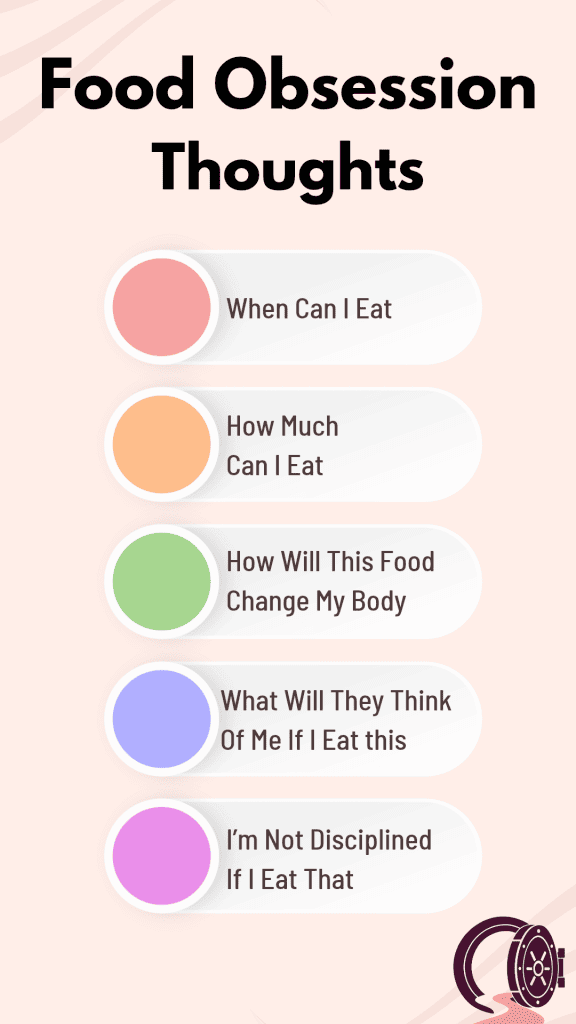
Why Do I Think About Food All the Time?
You May Not Be Eating Enough
When your body isn’t getting enough food, thinking about food can become persistent. The Centre for Clinical Interventions describes food preoccupation and difficulty concentrating among the effects of prolonged restriction.
You don’t have to be in a smaller body to experience the effects of underfeeding. Having eaten something today also doesn’t establish that you’ve eaten enough for your needs.
Imagine needing to pee and telling yourself, “It’s not 12:30 yet, which is the time I’ve designated for urinating.” You could spend the next hour trying very hard to think about something else, but your bladder would probably have some thoughts about that arrangement.
Food is a biological need too. Asking your body to stop bringing it up while continuing to underfeed it is asking a lot.
How Hunger Hormones Affect Your Brain
Your gut, fat tissue, and brain communicate about your energy needs through hormones, which are chemical messengers. Ghrelin helps stimulate hunger, while leptin, made in fat tissue, helps the brain regulate food intake and energy use. These signals help your brain respond to how much fuel is available.
When food intake is restricted and weight is lost, those signals can shift toward encouraging you to eat. In a study of adults following a very-low-energy diet, weight loss was accompanied by lower leptin, higher ghrelin, and increased reported hunger. This was a dieting study, rather than an eating disorder recovery study, so it helps explain a biological response without predicting exactly what your hormones or recovery will look like.
Hunger signals can also affect how compelling food seems. In a brain-imaging study in healthy volunteers, giving ghrelin increased responses to food pictures in brain regions involved in reward and motivation. That suggests one way the body’s need for fuel can make food cues harder to ignore: your brain is giving food more priority, even while you’re trying to focus on something else.
Your eating disorder may call that a lack of discipline. Biology has a much more practical concern: getting you fed.
Food Rules Can Keep You Mentally Restricting
Physical restriction involves limiting what you actually eat, such as skipping meals or cutting portions. Mental restriction is the bargaining, judgment, and conditions you attach to eating, even when you do eat the food.
That can sound like:
- “I can have pasta, but only because I exercised.”
- “I already had a cookie, so I’ve ruined today.”
- “I’ll eat dinner with everyone, but tomorrow I’m making up for it.”
- “I’m allowed bread, but only the lowest-calorie kind.”
The cookie made it into your mouth, but your eating disorder is still conducting a disciplinary hearing. Notice the rules alongside the amount you’re eating.
Rigid food rules can increase anxiety and preoccupation with avoided foods. Working on challenging fear foods means practicing eating them while also challenging the conditions attached to them.
Trying to Ban the Thoughts Can Backfire
Have you heard of the white bear experiment? Participants asked to suppress thoughts of a white bear subsequently thought about it more than participants who hadn’t first tried to suppress it.
That study of thought suppression wasn’t a food study, but it illustrates why “just stop thinking about it” can be an unhelpful assignment. You can notice a food thought without treating its existence as another thing you failed at today.
Why a Cookie Can Feel Like Such a Big Deal
Sometimes the thought begins with “I want a cookie” and ends with “What if nobody loves me if my body changes?” That is a hell of a lot to put on a cookie.
The fears underneath the decision might include:
- “If I start eating this, I won’t stop.”
- “Other people will judge me for eating it.”
- “Eating this means I’m undisciplined.”
- “If my body changes, I’ll be less worthy of love.”
There is no such thing as “just a cookie” when eating it has become tied to your worth. You deserve help with those fears, along with enough food.
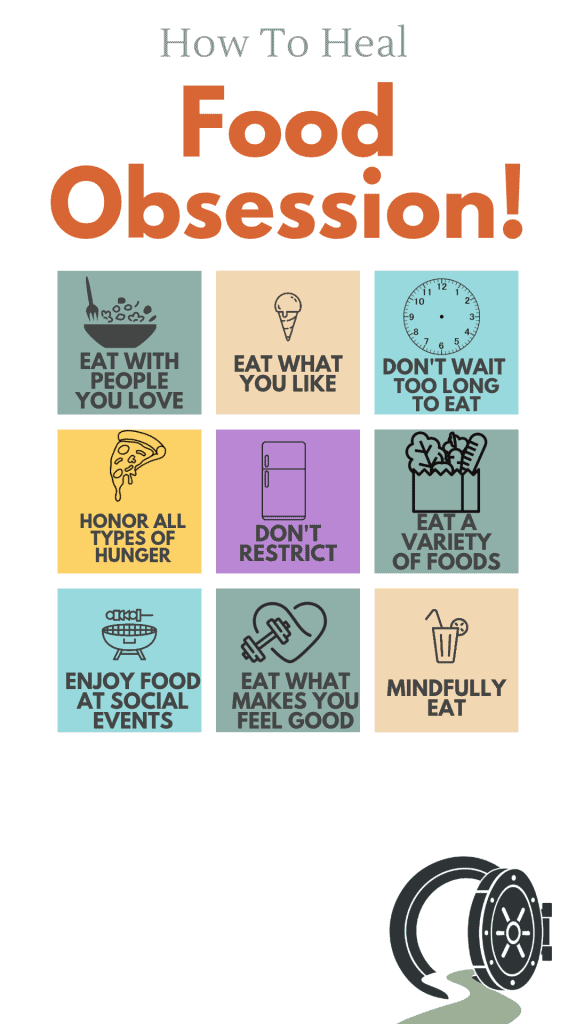
How to Stop Obsessing Over Food
Eat Regularly and Make Sure It Is Enough
Regular eating is a foundation of eating disorder recovery. A routine of meals and snacks can provide structure while you work toward more flexible eating.
Start by noticing missed meals, long gaps, and snacks that disappear whenever the day gets busy. Pack food for the afternoon, make space for lunch, and keep your next meal even when you feel guilty about the previous one.
Regular eating also needs to be adequate eating. If you’re following a meal plan and remain hungry or preoccupied with food, tell your dietitian so you can review the amounts and choices together.
Challenge One Rule You Keep Negotiating With
Pick a specific rule and practice a different response, with support if needed. “Be more relaxed around food” is vague; “eat the sandwich without taking off the bread” gives you something you can actually do.
Other examples include keeping your afternoon snack after a bigger lunch or choosing food without checking its calorie count.
Practice including the food again, rather than treating one attempt as a final exam. Feared-food experiments are a way to test eating-disorder predictions while continuing regular eating.
Notice the Thought Without Obeying Every Instruction
“I ate bread, so I need to skip dinner” contains both something that happened and an instruction from the eating disorder. You can acknowledge the anxiety and still eat dinner.
Try a direct response: “I’m scared, and I’m keeping my next meal.” If guilt after eating is loud, ask someone to sit with you rather than negotiating portions with the guilt.
Use Coping Tools Alongside Nourishment
Calling a friend, doing a puzzle, listening to music, or watching a show with someone can give you something to do while anxiety is uncomfortable. Choose something you can start without first having to solve your entire relationship with food.
Check what the activity is doing for you: is it helping you get through anxiety after eating, or helping you avoid food you need? If you’re hungry or due for a meal or snack, make room for eating.
Urge surfing and hunger scales need the same care. Don’t turn them into a requirement to wait out hunger or achieve a particular hunger score before you’re allowed to eat; discuss their role with your treatment team if they become another food rule.
Why Am I Still Thinking About Food After Eating?
Finishing a meal doesn’t answer every question about your nutrition. Consider whether the meal was enough, whether it included satisfying foods, and whether you spent it promising yourself you would eat less later.
You might feel physically full and still want food. Digestive changes during eating disorder recovery can include bloating and fullness after small amounts, so a full-feeling stomach does not tell the whole story.
Extreme hunger in recovery explains some of the real physical experiences in that go along with repairing the body’s organs and tissues during eating disorder recovery.
Some effects of restriction can persist during renourishment and ease over time with consistent, adequate food. One meal, or one day of eating differently, is too little information to decide that recovery isn’t working.
What Can I Do Today?
- Keep your next meal or snack. Avoid compensating for what you ate earlier.
- Make the food available. Pack your snack or arrange lunch before work swallows the afternoon.
- Name one rule. Write down the condition your eating disorder keeps attaching to food and choose a supported way to challenge it. A good trick to help you know if your thought is a rule is if it contains the words good food, bad food, healthy food, unhealthy food or in moderation.
- Ask for company. Try: “Food decisions are taking over my day. Can you sit with me while I eat?”

When to Get Help With Constant Food Thoughts
If food thoughts keep disrupting your day, or come with restriction, binge eating, purging, or exercise you feel compelled to do, reach out to an eating disorder-informed clinician.
You can say, “I’m thinking about food so much that I can’t concentrate, and I need help figuring out what is keeping it going.” You don’t need a diagnosis or a particular body size to ask for support.
If you recognize other warning signs of an eating disorder, a doctor, eating disorder dietitian, and therapist can help assess your needs. If you’ve been severely restricting or losing weight rapidly, get medical guidance for renourishment.
I share more about my own recovery in my anorexia story. You deserve room in your day for more than debating whether you earned lunch.

- Dating Someone With an Eating Disorder: Supporting Them Without Losing Yourself - October 19, 2026
- The Evolution of Thinspo: From Pro-Ana Websites to SkinnyTok - September 19, 2026
- Meal Support For Eating Disorders - August 12, 2026