Table of Contents
Last updated on October 21st, 2026 at 11:50 pm
You sit down to eat, and somebody decides your lunch needs a public performance review. They question the portion, announce how many calories it probably contains, or explain why they would never put “that crap” in their body.
Fantastic. You wanted a sandwich and got a diet culture seminar.
Food shaming can make an ordinary meal feel like something you need to defend. Whether the comments come from a parent, partner, coworker, or healthcare provider, you deserve to eat without being ridiculed or asked to prove you deserve what’s on your plate.
What Is Food Shaming?
Food shaming is judging, mocking, or putting someone down for what, when, or how much they eat. It can be obvious, like calling someone disgusting for eating fast food, or dressed up as concern: “I’m only saying this because I care about your health.”
Having a food preference is fine. Turning that preference into a running commentary on someone else’s plate is where the problem starts.
A respectful conversation about an allergy, a medical need, or difficulty getting enough food can serve a real purpose. Food shaming adds blame, embarrassment, or a judgment about someone’s worth to the conversation.
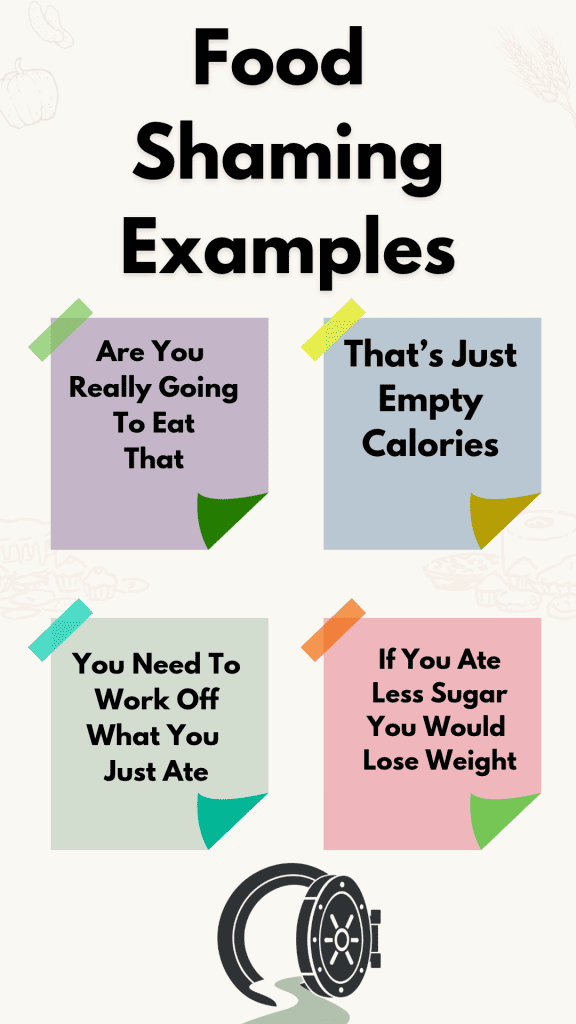
Food Shaming Examples
Food shamers don’t always say, “You should feel ashamed.” The message can arrive through questions, jokes, unsolicited advice, or a dramatic look at your second helping.
- “I would never eat that crap.”
- “Do you know how many calories are in that?”
- “I respect my body too much to put junk like that in it.”
- “Are you going to exercise after you eat that?”
- “I guess some of us just don’t care about the way we look.”
- “Are you really going to feed that to your kid?”
- “You don’t need that big of a piece.”
- “Are you actually hungry, or are you just bored?”
- “You’re eating again?”
People can also direct the judgment at themselves while you’re eating the same food: “I’m being so bad. I’ll have to skip dinner after this.” You may suddenly feel expected to explain why you’re eating it, even though nobody asked you directly.
Why Food Shaming Can Make Eating Harder
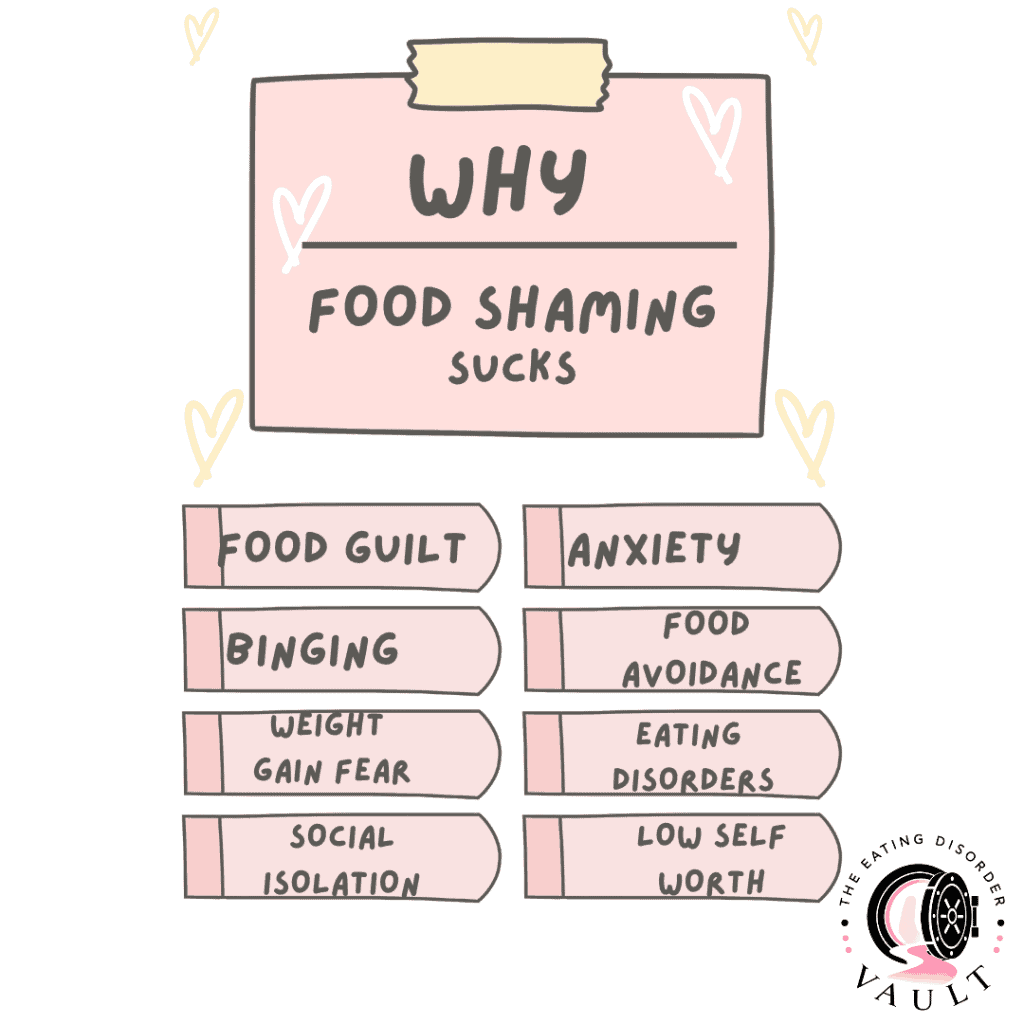
When eating comes with the threat of judgment, your attention can shift from enjoying the meal to monitoring how you look while eating it. You might leave food behind, eat quickly before someone notices, hide wrappers, or replay the comment long after the meal ends.
Research on weight teasing gives us a reason to take these experiences seriously. In a five-year study of adolescents, weight teasing predicted later disordered eating behaviors, with different patterns among boys and girls.
That study examined weight teasing, rather than every kind of food comment, and it does not establish that one remark causes an eating disorder. It does challenge the idea that humiliating someone about eating or body size is a useful health intervention.
For someone already struggling with an eating disorder, a comment can become another rule to obey: don’t eat that food, don’t take that portion, don’t let anyone see you hungry. Even if you keep eating, mentally arguing with every bite can leave you feeling guilty and distracted.
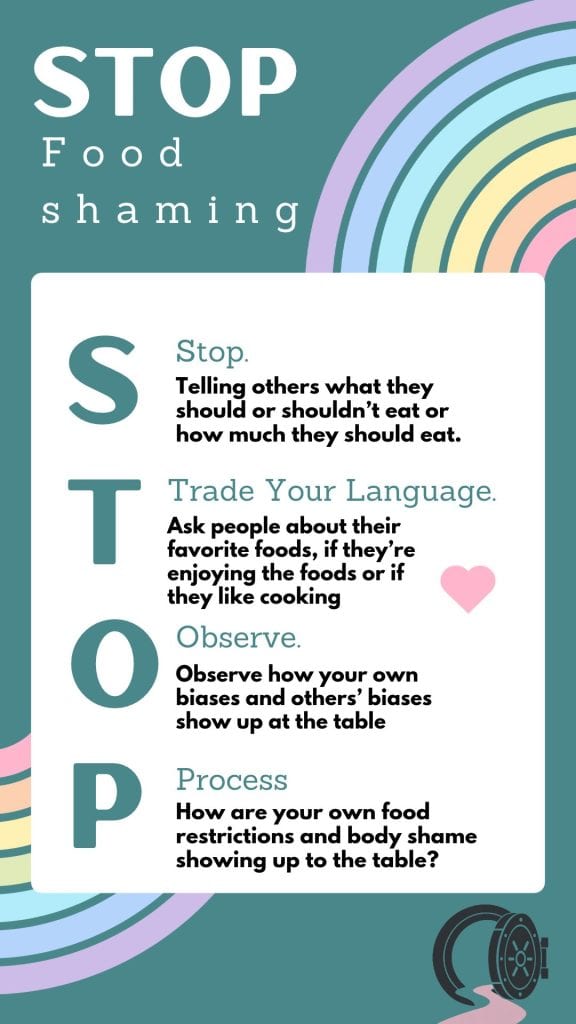
You don’t need to diagnose the person making the comment to set a boundary. They may be repeating beliefs they learned, but you still get to ask them to stop.

How to Respond to Food Shamers
Use a Short, Clear Boundary
You do not owe someone your medical history, an ingredient list, or a detailed accounting of everything you ate today. Choose a response you can actually picture yourself saying:
- “Please don’t comment on what I’m eating.”
- “I’m not asking for feedback on my food.”
- “You can choose what you eat. I’ll choose what I eat.”
- “Let’s leave calories and weight out of this meal.”
- “Please don’t make comments about my child’s food or body.”
If someone says they were only trying to help, you can acknowledge that without giving up the boundary: “I hear that. These comments make eating harder for me, and I need them to stop.”
Skip the Nutrition Debate
Someone questions your fries, and suddenly you’re explaining potatoes, cooking oils, and your entire relationship with carbohydrates. You can spend the whole meal defending your food and still never get the permission you were hoping for.
Try repeating the boundary instead: “We don’t have to agree about nutrition. I’m asking you to stop commenting on my plate.” Your right to eat does not depend on winning an argument.
Decide What You’ll Do If It Continues
A boundary is more useful when you know what action is available to you. You might change seats, end the call, mute an account, or choose a different person to eat with next time.
You can say, “I’ve asked you to stop. If the comments continue, I’m leaving this conversation.” If leaving isn’t practical or safe, a brief response, a subject change, or support from someone you trust may be more workable.
Freezing in the moment doesn’t mean you agreed. You can bring it up later, send a message, or decide you don’t want to discuss it further.
What to Do After a Comment Gets in Your Head
You might know a comment was bullshit and still feel uncomfortable taking the next bite. Understanding food shaming doesn’t give you an emotional force field.
- Name what happened: “Someone judged my food, and now I’m feeling ashamed.” That helps separate their comment from a fact about what you need.
- Keep the comment out of your next food decision: Avoid turning it into a new restriction, a skipped snack, or exercise to compensate.
- Make the meal easier to stay with: Change the subject, put on something familiar, or sit with someone who can talk about literally anything besides your plate.
- Notice the rule it brought up: “I’m only allowed dessert if someone else has it” is a rule you can challenge, rather than an instruction you have to follow.
Practicing food neutrality means separating eating from moral judgments. Foods have different nutrients and uses; choosing one does not make you a better or worse person.
You can feel unsettled and still continue nourishing yourself. You do not have to feel completely confident before you’re allowed to eat.
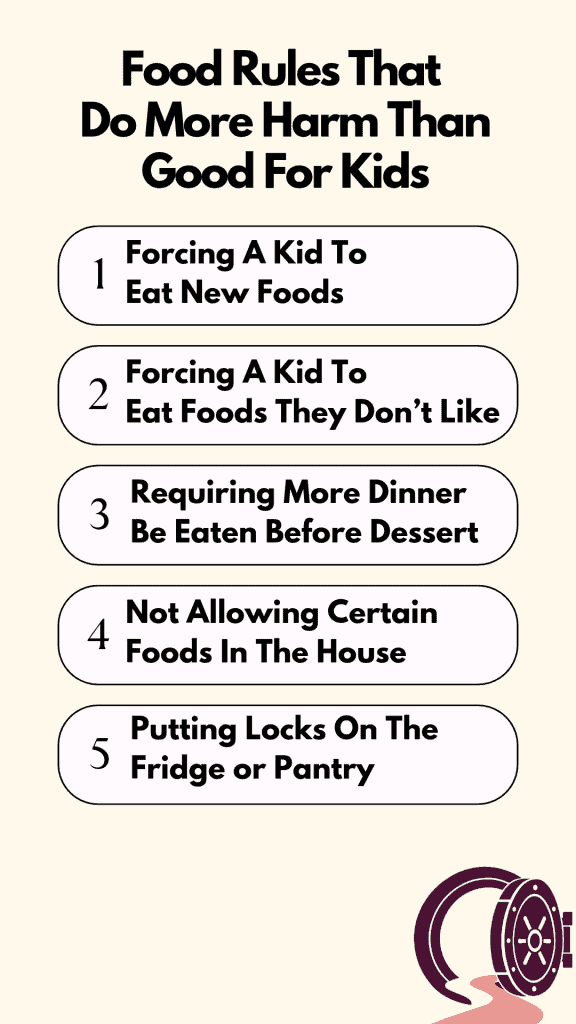
How Food Shaming Can Affect Children
Children hear more than direct criticism. They also hear adults calling themselves “bad” for eating dessert, praising tiny portions, or discussing which bodies should eat less.
In a study of adolescent girls, family weight teasing and parental weight talk were associated with disordered eating behaviors. The findings describe associations, but they support taking the tone of family food conversations seriously.
Parents still have a role in feeding. Providing meals, choosing what’s available, and keeping a predictable routine do not automatically amount to food shaming.
For typical childhood feeding, Ellyn Satter’s division of responsibility gives parents responsibility for what, when, and where food is offered, while children decide whether and how much to eat. Eating disorders and some medical or feeding conditions can require a different, individualized approach.
Practical changes include:
- Describe food by its taste, texture, or ingredients instead of calling it “good,” “bad,” or “guilty.”
- Offer opportunities to explore foods without humiliating a child for refusing a bite.
- Avoid using someone’s body size to decide whether they deserve dessert or another serving.
- Step in when relatives comment: “We don’t discuss their portions or body.”
- If you make a shaming comment, repair it: “I shouldn’t have said that about your food. You didn’t do anything wrong.”
A child does not need to earn your approval by eating the “right” way.
What About People Who Pressure You to Eat?
Food pressure can move in the other direction, too. “You’ll hurt my feelings if you don’t try it” or “You have to finish that so it doesn’t go to waste” makes someone else’s feelings your responsibility at the table.
You can appreciate the effort without accepting the pressure: “Thank you for making it. I’m going to decide what I eat,” or “I’d like to take some home instead.”
Context matters in eating disorder recovery. Support with completing meals can include encouragement to keep eating when hunger cues are unreliable or the eating disorder is telling someone to stop.
That support should be respectful and focused on nourishment, without insults, threats, or judgments about body size. A boundary against food shaming can coexist with accepting help to eat enough.

Your Food Does Not Need Everyone’s Approval
You cannot make every relative, coworker, or stranger rethink their food beliefs before your next meal. You can choose a sentence to use, decide how much of the conversation you’ll stay for, and keep their opinions from becoming another rule on your plate.
Your lunch has enough going on without a performance review.

- Dating Someone With an Eating Disorder: Supporting Them Without Losing Yourself - October 19, 2026
- The Evolution of Thinspo: From Pro-Ana Websites to SkinnyTok - September 19, 2026
- Meal Support For Eating Disorders - August 12, 2026