Table of Contents
Last updated on October 20th, 2026 at 01:11 am
Eating disorders in athletes can be easy to miss when the people around you praise the very behaviors that are making you sick. Skipping meals gets called discipline. Training through an injury gets called commitment, and being terrified of gaining weight gets brushed off as part of the sport.
Sometimes athletes develop disordered eating because they believe they are doing the right thing to improve performance. Pressure from coaches and teammates, high energy demands, and expectations about what an athlete should look like can make it harder to recognize when food and exercise have started running your life.
An eating disorder does not need a particular body size or a losing season to deserve attention. Treatment decisions should not depend on weight alone, and you do not have to wait until you can no longer compete to ask for help.
Warning Signs of Eating Disorders in Athletes
A training schedule alone cannot tell you whether someone has an eating disorder. Look at what happens when that schedule changes, what eating feels like, and how much room food and exercise rules take up outside the sport.
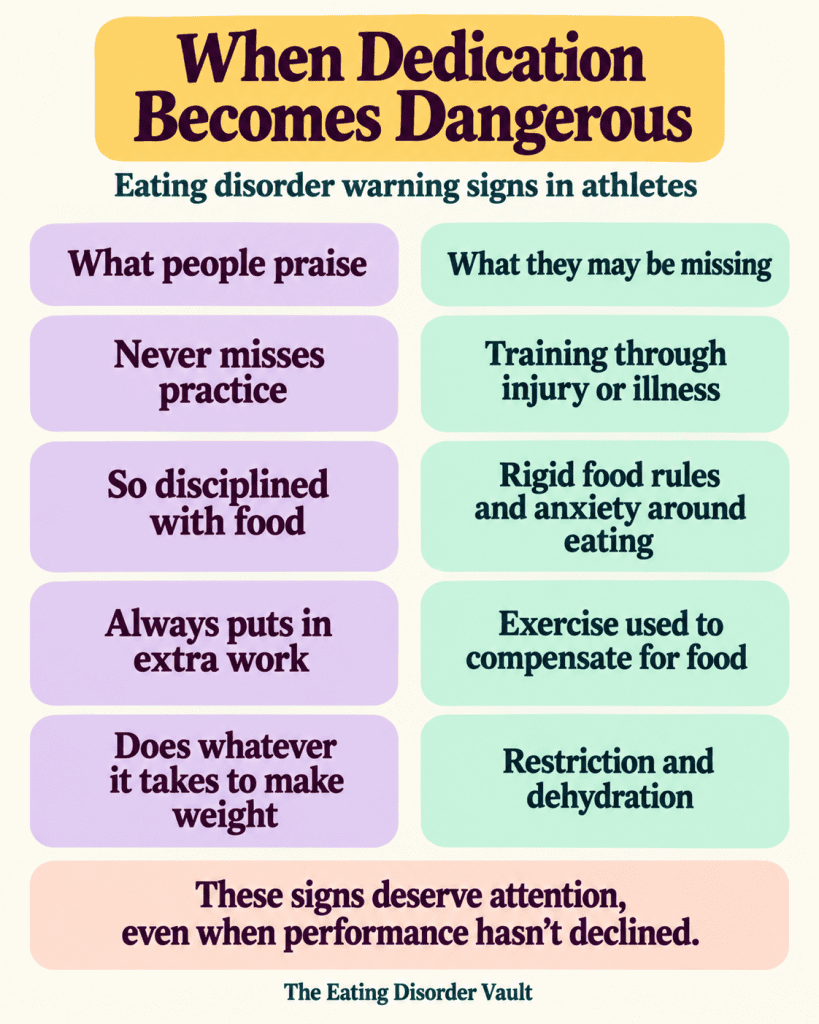
These examples show when something praised in sports deserves a closer look. They are reasons to start a conversation, not a diagnostic checklist.
| What gets praised in sports | When it becomes concerning |
| “They never miss a workout.” | Rest causes intense guilt or anxiety, or they train through illness or injury. |
| “They’re so disciplined with food.” | Food rules cause distress or make eating with teammates, friends, or family difficult. |
| “They’re putting in extra work.” | Extra exercise is used to compensate for eating or earn permission to eat. |
| “They’re committed to their competition weight.” | Fear of weight changes drives food restriction or dehydration. |
| “They track everything.” | A missed food log or an unplanned meal causes panic, or the numbers determine whether they are allowed to eat. |
Compulsive exercise can involve feeling driven to exercise despite injury or other consequences, or using exercise to prevent a feared outcome such as weight gain. The distress and loss of flexibility matter, even when the workout looks ordinary to everyone else.
Physical changes also deserve attention. Missed or irregular periods, recurrent bone stress injuries, persistent fatigue, and difficulty recovering can occur with inadequate fueling, although they can have other causes too. A medical assessment can help identify what is happening; calling everything “part of training” cannot.
Underfueling, Disordered Eating, and REDs: What Is the Difference?
| Term | What it means | How it can relate to the others |
| Underfueling | Eating too little for the demands of training and everyday body functions. It can be intentional or unintentional. | It can occur without disordered eating, or result from restriction. |
| Disordered eating | Harmful eating behaviors, such as rigid restriction or compensating for food, that may not meet criteria for a diagnosed eating disorder. | It can contribute to underfueling but is not a full blown ED. Still deserves help and early intervention can prevent developing an eating disorder. |
| Eating disorder | A mental health condition, such as anorexia, bulimia, or binge-eating disorder, that affects eating behaviors and causes serious distress or harm. | Some eating disorders lead to eating too little and may contribute to REDs. An eating disorder can also be present without REDs. |
| REDs | A condition that develops when an athlete has too little energy available to support the body over time or the shortage is severe. It can affect hormones, bone health, recovery, and performance. | An eating disorder can cause the energy shortage, but so can unintentionally eating too little for training. Having REDs does not automatically mean someone has an eating disorder. |
Why Do Some Athletes Struggle With Eating Disorders?
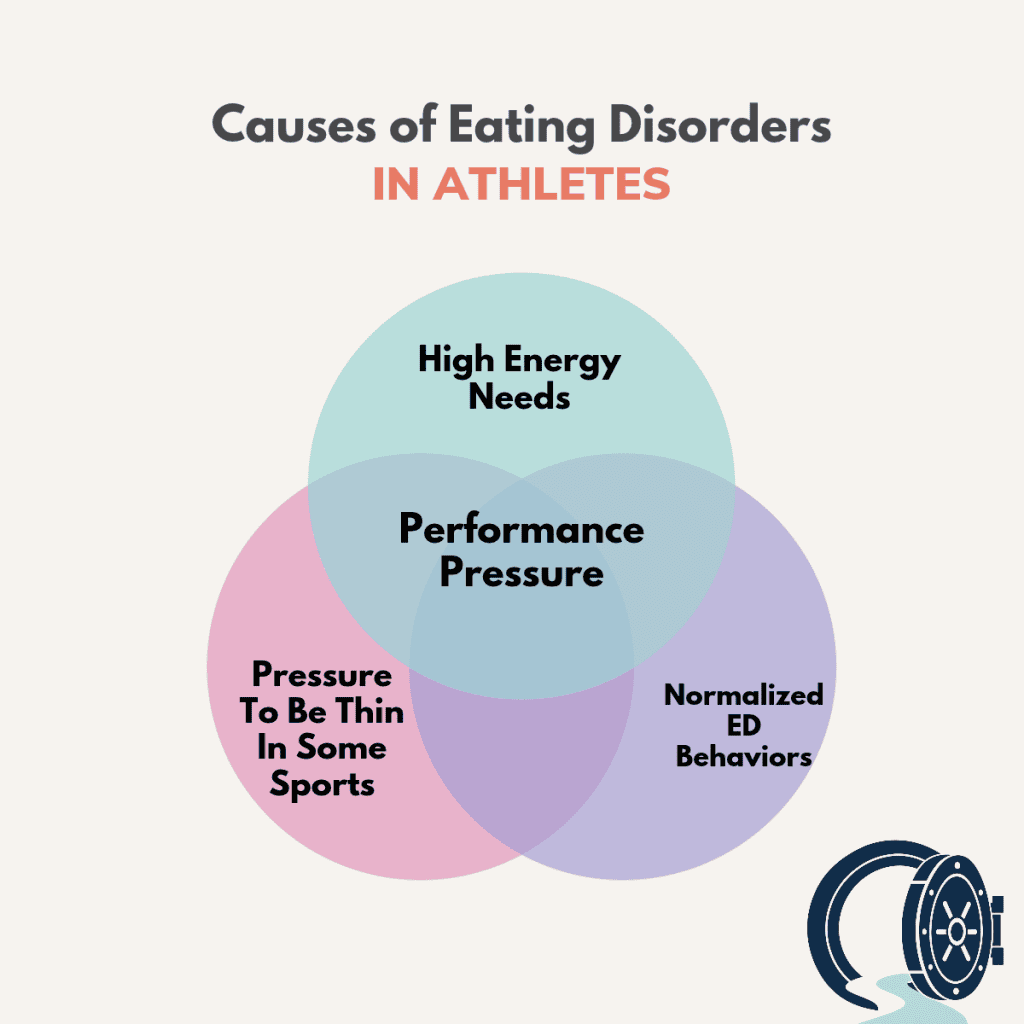
High energy demands mixed with expectations from diet culture to get leaner or bulk up can turn eating into another performance test. The pressure may come from the sport, social media, family, or the athlete’s own eating disorder thoughts.
Energy Demands Are High
Eating enough for training takes time, money, and access to food. When school, work, and practice fill the day, meals can get squeezed into whatever time is left.
Many sports, particularly endurance sports, require extremely high caloric demands (sometimes as high as 5000-7000 calories per day).
Common barriers include:
- Practice overlapping with regular meals.
- Travel days with few opportunities to buy or prepare food.
- Grocery shopping and meal preparation feeling exhausting.
- Avoiding food before training because of digestive discomfort.
- Having less appetite immediately after exercise.
For an athlete who needs 5,000 to 7,000 calories a day, getting enough food can feel like another job. Three meals and a couple of small snacks may leave a substantial gap, even when the athlete never skips a meal. Hunger alone may also be difficult to rely on during heavy training.
Meeting those needs can mean larger meals, substantial snacks, and food before, during, and after training, depending on the session. Increasing the energy in food without greatly increasing its volume can make eating enough more manageable: add nut butter to oatmeal, oil or sauce to rice and pasta, or cheese and avocado to sandwiches. Smoothies made with milk or soy milk, yogurt, fruit, and nut butter can add nourishment when another large plate of food feels difficult.
For prolonged sessions, sports drinks and other carbohydrate foods can help meet fueling needs during exercise. These add to the day’s meals and snacks rather than replacing them.
An individualized sports nutrition plan can account for the amount of food needed, training times, appetite, and digestive comfort.
Meeting high energy needs does not automatically require counting every calorie. However, if an athlete does start counting calories or macros to meet their needs it can sometimes be difficult to stop.
Pressure to Follow Certain Diets
Athletic communities can put a lot of pressure on people to lose body fat, gain muscle, or fit a weight category. Those expectations can encourage fasting, cutting out food groups, and treating every meal as a chance to change your body.
Sports nutrition also includes practices that help athletes eat enough. Carbohydrate loading, for example, can support certain endurance events; it should not be grouped with dehydration or food restriction as inherently disordered. The Australian Institute of Sport’s sports nutrition materials provide a starting point for understanding performance nutrition.
Look at whether a plan allows adequate food and flexibility. Being unable to eat a teammate’s birthday cake without adding another workout is a concern, even if the rest of the plan looks impressive on paper.
Eating Disorder Symptoms Get Normalized in Sports
Some sports environments treat harmful behaviors as the price of participation. Hearing the same advice from an entire team can make it feel reasonable, even when the advice is doing damage.
Behaviors that deserve attention include restricting food to make weight, deliberately dehydrating, using laxatives to change weight, and adding exercise to compensate for eating. None becomes harmless because a coach suggested it.
Separate those behaviors from possible health consequences. Losing your period, recurring injuries, and persistent digestive symptoms are health concerns to investigate, rather than behaviors someone chooses or proof of a specific diagnosis.
Cutting Weight Can Put Athletes at Risk
Cutting weight means deliberately lowering body weight to qualify for a weight category, often shortly before a weigh-in. In sports such as wrestling, boxing, and martial arts, the pressure to compete in a lighter category can normalize food restriction and deliberate dehydration. Calling it part of the sport does not make it harmless.
Rapid weight cutting can involve restricting food or fluids, excessive sweating, or using laxatives or diuretics, medications that increase fluid loss. The Australian Institute of Sport warns that rapid weight-loss practices can impair performance and create serious health risks. A lower number on the scale does not tell you whether an athlete is adequately nourished or ready to compete.
Dehydration makes it harder for the body to manage heat during exercise. Restriction and fluid-loss behaviors can also cause electrolyte imbalances, meaning disturbances in minerals needed for normal body function. Making weight is not evidence that the process was safe.
The psychological risks matter too. Repeated pressure to shrink before competition can reinforce fear of weight gain, rigid food rules, and the belief that eating must be controlled to keep your place in the sport. Athletes in weight-category sports are at increased risk of disordered eating and eating disorders, although cutting weight alone does not establish a diagnosis.
If making a weight category depends on going without needed food or fluids, that category and the plan need to be reassessed with a sports medicine clinician and a dietitian who understands eating disorders. Coaches should help athletes access that support rather than praise their ability to tolerate hunger and thirst. You should not have to harm your body to prove you belong in your sport.
Age, Peer Pressure, and Body Expectations
Teenage and college athletes may be managing school, changing bodies, family stress, and pressure to keep their place on a team. Social media adds another stream of messages about what the perfect body for a sport supposedly looks like.
Adult and recreational athletes can struggle too. You do not need a scholarship, a podium finish, or a coach to develop an eating disorder around exercise.
Urges to Compulsively Exercise
An athlete may begin by enjoying training and gradually feel unable to stop. Rest might bring guilt, fear about losing fitness, or an urge to cut food because the day was less active.
Compulsive exercise can also happen outside scheduled training: extra laps after practice, secret workouts, or pacing around the house to compensate for dinner. The eating disorder can keep moving the finish line, no matter how much exercise you have already done.
Hunger Cues Can Be Hard to Follow
Exercise can temporarily reduce appetite, and busy schedules can make hunger easy to miss. If you regularly reach the end of the day having barely eaten, waiting for stronger hunger may leave the same gaps in place.
Planned meals and snacks can help you make room for food when hunger is unreliable. That might mean having an afternoon snack available before practice and a meal ready afterward, rather than hoping you will feel hungry at a convenient time.
A lack of hunger does not establish that you have eaten enough. Eating in recovery when hunger cues are unreliable may require structure while you work toward a more flexible relationship with food.
What Sports Do We Commonly See Eating Disorders In?
Eating disorders can occur in any sport. Research and athlete guidance identify particular concerns in environments that emphasize appearance, leanness, or weight categories.
Examples include dance, gymnastics, running, wrestling, and other weight-category or appearance-focused sports. The culture within a particular team also matters: public weigh-ins, body comparisons, and pressure to shrink can make food and body concerns harder to escape.
Athletes can experience anorexia, bulimia, binge-eating disorder, and other specified feeding or eating disorders, often called OSFED. An obsession with eating “perfectly” may also involve orthorexia, a term for harmful fixation on healthy eating that is not a separate diagnosis in the current diagnostic manual.

Preventing Eating Disorders in Athletes
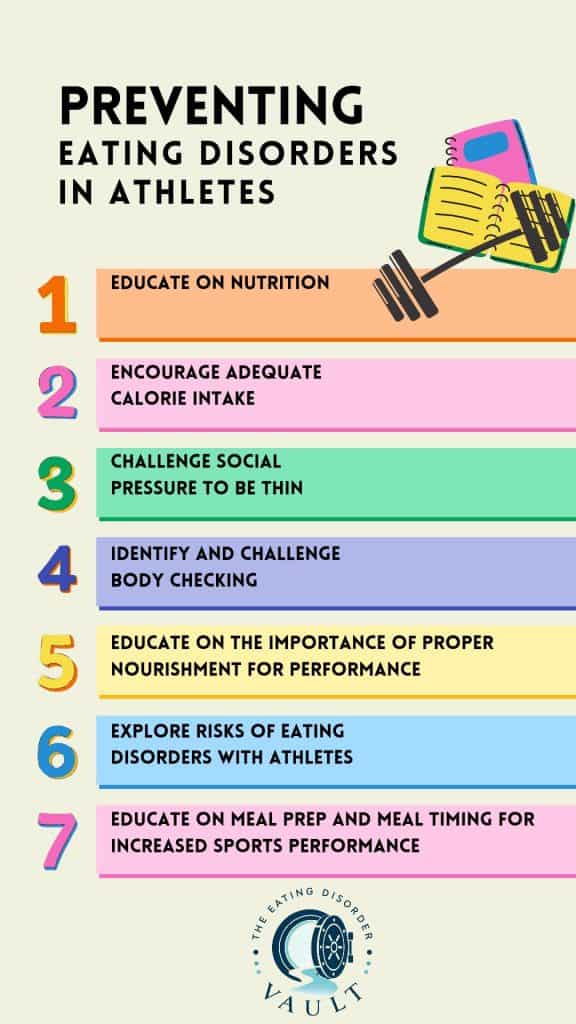
Prevention needs to include the environment athletes train in. Telling someone to respect their body while their coach keeps demanding a smaller one leaves the athlete stuck between two conflicting instructions.
NEDA’s guidance for athletes and their support systems encourages coaches and parents to leave specific weight and nutrition recommendations to qualified professionals. Coaches can protect time for meals, avoid body comparisons, and take concerns about eating seriously.
Useful changes include:
- Planning food access during travel and long competition days.
- Avoiding praise for weight loss or comments about athletes’ bodies.
- Allowing athletes to report fatigue, injury, or eating concerns without ridicule.
- Avoiding exercise as punishment for eating.
- Connecting athletes with nutrition support that understands eating disorders as well as sport.
An athlete responding to weight pressure might say, “I’m concerned about how these weight conversations are affecting my eating. I want any nutrition changes handled by someone qualified in sports nutrition and eating disorders.” If speaking directly to the coach feels unsafe, a parent, school counselor, athletic trainer, or another trusted adult can help raise the concern.
Athletes also deserve to recognize that food is more than fuel. You can eat because you enjoy something, because you are celebrating, or because dinner with your friends matters to you. Your sport does not get exclusive ownership of your plate.
Treating Eating Disorders in Athletes
Treatment needs to address eating, physical health, and the thoughts driving harmful behaviors. Athlete-specific care ideally brings together medical, nutrition, and mental health support with experience in both eating disorders and sport.
If you do not have that support, start with a primary care appointment and be direct about restriction, purging, extra exercise, and any physical symptoms. You can say, “I’m worried I have an eating disorder, and I need an assessment that considers my eating and training.”
Restore Nourishment and Address Food Rules
Treatment may include a recovery meal plan, regular eating, and meal support when food feels difficult. Someone sitting with you through dinner can help with a different part of recovery than knowing what to put on the plate.
Weight restoration may be necessary, including for people who were never considered underweight. The goal cannot be to eat just enough to keep competing while preserving every rule the eating disorder has written.
Training May Need to Change
For REDs, treatment involves restoring adequate energy through changes to eating and, when needed, exercise. Decisions about continuing or returning to sport depend on medical risk and recovery, rather than a coach’s assessment of effort.
An athlete may need reduced training or a temporary pause. Replacing running with hours of another workout can keep the same problem going, so be honest about all movement when discussing a plan.
Stepping back can also mean losing daily contact with teammates or feeling unsure who you are without the sport. Support can include arranging time with teammates outside practice, finding activities that do not revolve around exercise, and having someone available during the hours when training used to happen.
Get Help Before the Situation Becomes an Emergency
Medical guidance for eating disorders recommends assessing physical health and the effects of restriction or compensatory behaviors. Some people need hospital care for medical stabilization; others can receive outpatient or more intensive community treatment.
Fainting during exercise, chest pain, confusion, or severe weakness needs immediate medical attention. Stop exercising and seek emergency care rather than trying to finish the session.
If you are worried about another athlete, start privately with something specific: “You’ve said eating makes you anxious, and I’ve noticed you adding workouts after meals. I’m concerned, and I can help you find support.” You can offer help without arguing about how their body looks.
Your eating disorder may insist that taking recovery seriously means you are letting everyone down. You deserve food, rest, and care even when the season is still happening.

- Dating Someone With an Eating Disorder: Supporting Them Without Losing Yourself - October 19, 2026
- The Evolution of Thinspo: From Pro-Ana Websites to SkinnyTok - September 19, 2026
- Meal Support For Eating Disorders - August 12, 2026