Table of Contents
Last updated on October 12th, 2026 at 02:43 am
You can be restricting food, terrified of gaining weight, and struggling to get through a meal while people congratulate you on your “healthy lifestyle.” You might feel dizzy when you stand up, spend your day calculating what you’re allowed to eat, and still hear that your weight looks fine. That praise can make it harder to recognize what is happening, especially when your eating disorder is already telling you that you’re not sick enough.
Atypical anorexia nervosa is a restrictive eating disorder with the features of anorexia nervosa, except that a person’s weight remains within or above the range considered “normal” after significant weight loss. The word “atypical” describes a distinction in diagnostic criteria. It does not tell you how much someone is suffering or how urgently they need help.
Your body does not have to look a certain way for restriction to hurt it. Understanding atypical anorexia means looking at eating behaviors, fear, weight history, and physical symptoms together, including what happens when a healthcare system sees weight loss as an accomplishment before asking how it happened.
What Is Atypical Anorexia
Atypical anorexia is recognized within Other Specified Feeding or Eating Disorders, or OSFED, in the DSM-5-TR. Someone meets the other features of anorexia nervosa but does not meet the significantly low weight criterion, despite significant weight loss.
Those features include restriction, intense fear of gaining weight or behaviors that interfere with weight gain, and a disturbance in how weight or shape is experienced, low self worth or difficulty recognizing the seriousness of the illness. You do not need to say “I’m afraid of gaining weight” out loud for that fear to show up in your behavior.
OSFED is a clinical eating disorder category. Being diagnosed with atypical anorexia does not mean you failed to qualify for a “real” eating disorder. It also does not mean every person who restricts food has this particular diagnosis. Restriction deserves attention even when the diagnosis is different or has not yet been established.
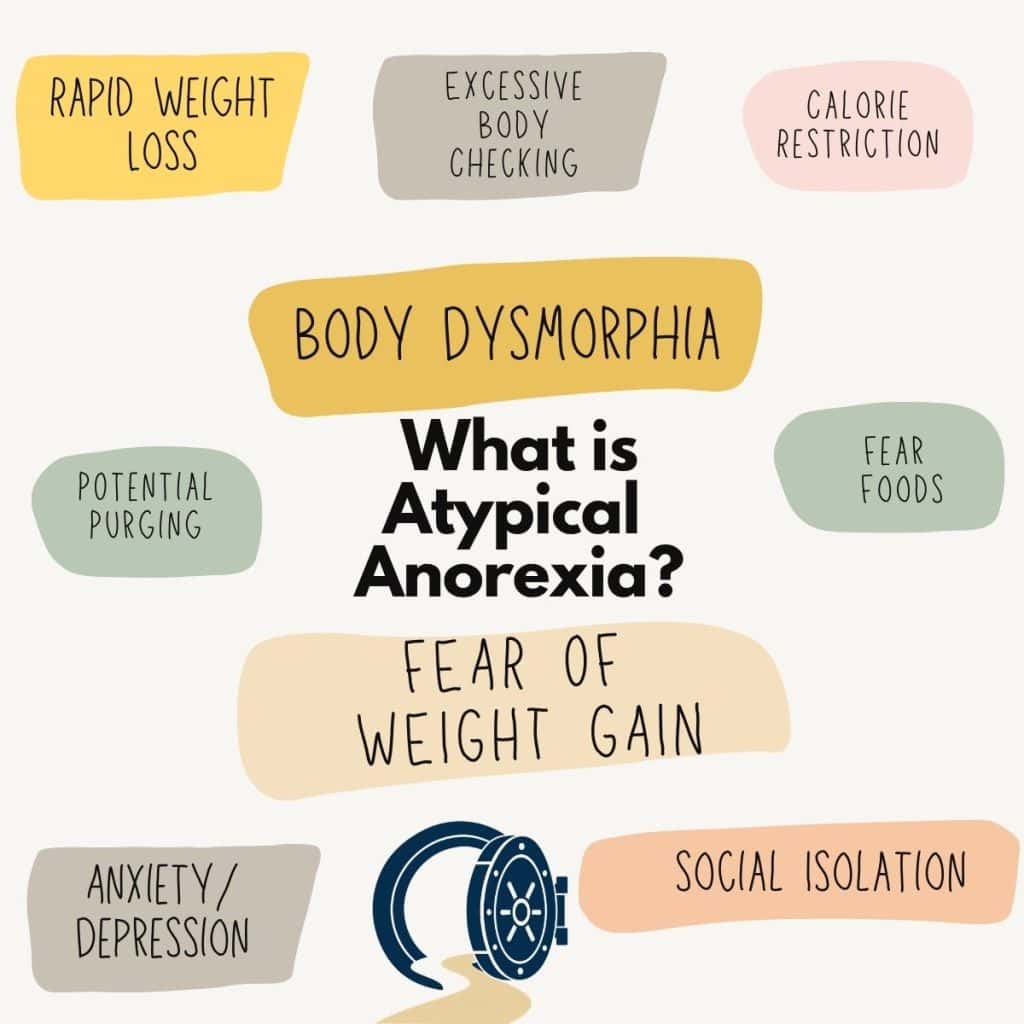
Atypical Anorexia Symptoms
The rules can look reasonable from the outside. Maybe you call it clean eating, discipline, or taking care of your health. A more useful question is what happens when you try to break a rule. Can you eat lunch earlier because you’re hungry? Can you rest without cutting dinner? Can you eat the bread without planning to make up for it tomorrow?
Thoughts and Behaviors You Might Recognize
- Skipping meals or repeatedly reducing portions, even when you’re hungry.
- Feeling that weight gain would be unbearable or would mean you had failed.
- Spending substantial time thinking about food
- Obsessive calorie counting
- Avoiding meals with other people because you cannot control the food.
- Treating particular foods as forbidden or needing to earn them.
- Exercising to compensate for eating, or feeling unable to take a rest day.
- Purging through vomiting, laxatives or other means to attempt to control weight
- Dismissing your symptoms because you do not consider your body small enough.
These are eating disorder warning signs to take seriously, rather than a checklist you need to complete. Someone can be struggling without every behavior listed here. Food restriction can also be mental: eating the food while promising yourself that you will eat less later keeps the restriction alive.
Physical Symptoms and Medical Complications
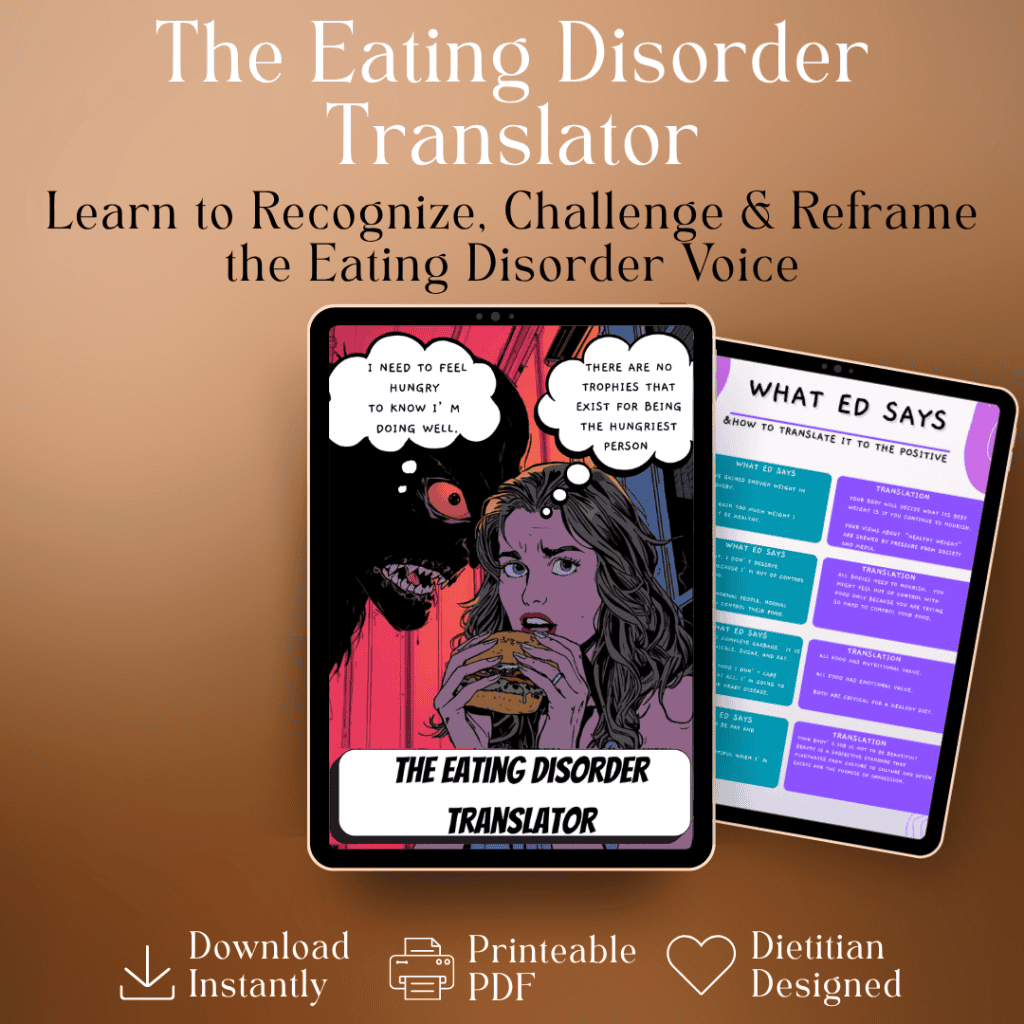
Possible symptoms include dizziness, fatigue, feeling cold, constipation, and changes in menstrual periods. Medical complications can include a slow heart rate, low blood pressure, electrolyte disturbances, and reduced bone density. Some of these problems require an examination or tests to identify; appearance alone cannot rule them out.
These symptoms can have other causes too. The combination of restriction and physical changes is a reason for assessment, rather than assuming everything is explained by the eating disorder or waiting until you become underweight.
If you faint, have chest pain, become confused, or have difficulty breathing, seek urgent medical care. If you have been eating very little or losing weight quickly, arrange a prompt medical assessment even if you do not have an eating disorder specialist. You can begin by telling a primary care clinician exactly what has changed in your eating and how you are feeling.
Is Atypical Anorexia as Serious as Anorexia
Yes. Atypical anorexia is anorexia. It just has a different look (and technically a different official name).
A systematic review of 24 publications found that eating disorder psychological symptoms in atypical anorexia were as severe as, or more severe than, those in anorexia nervosa. Many physical complications overlapped, although some occurred less often. That distinction matters: the research supports taking atypical anorexia seriously without claiming that every complication is identical in every person.
A 2023 review of adolescent studies also found medical instability across a range of body weights. Rapid weight loss was an important indicator of risk. These studies involved young people, so they do not give us a precise risk estimate for every adult. They do challenge the assumption that someone must be underweight before their body can be in trouble.
The “not sick enough” argument gives your eating disorder a moving target. You might decide you need to lose more weight, faint first, or have abnormal blood work before you’re allowed to take recovery seriously. You do not have to meet a personal threshold of suffering before responding to restriction.
Anorexia Versus Atypical Anorexia
The main diagnostic distinction is the low weight criterion. Both can involve intense fear of weight gain, restrictive eating, body image distress, and medical complications. Neither diagnosis tells the whole story of a person’s needs.
Some things to consider when comparing “atypical” vs “typical” anorexia include
- According to research, there is no difference found in occurrences of bradycardia (slowed heart rate) between Atypical Anorexia and Anorexia patients. Both diagnoses experience bradycardia to the same extent.
- Those with atypical anorexia typically have a greater overall weight loss than those diagnosed with anorexia (17.6kg atypical atypical anorexia, 11kg anorexia)
- Psychiatric comorbidities and suicidal ideation are not statistically different among those with anorexia and atypical anorexia. Both are at risk.
- Atypical anorexia is often associated with greater total weight loss. This often leads to a greater risk of low pulse rate (a dangerous or life-threatening side effect of restrictive eating)
- Only 20% of those with Atypical Anorexia seek treatment for their condition
In a study of 116 hospitalized patients aged 12 to 24, faster weight loss was associated with a lower heart rate regardless of admission weight. Greater and longer weight loss was also associated with lower phosphorus levels.
Atypical Anorexia Recovery
Recovery involves getting enough nourishment, interrupting restrictive and compensatory behaviors, and working through the fear that makes those behaviors feel necessary. Depending on medical risk, treatment may happen through outpatient appointments, a structured day program, residential care, or hospital care. You do not need to assemble every part of care before taking your symptoms seriously or asking for an initial assessment.
Do You Need to Gain Weight
Weight restoration may be necessary, including for people whose BMI is already within or above the range labeled “normal.” A review of atypical anorexia management describes individualized recovery goals that account for weight history, growth in young people, and physical recovery. A BMI chart cannot set a universal stopping point for nourishment.
The question is whether your body is recovering from deprivation, not whether other people think you could afford to lose more weight. You cannot determine a safe recovery weight from this article, and there is no single amount of weight gain that applies to everyone. Restoring weight can also bring up fear of renewed judgment, especially if people treated you better after weight loss. That fear deserves room in recovery rather than another instruction to shrink yourself.
Start Interrupting the Rules That Keep You Stuck
In order to know which rules to break, you need to know what rules are keeping you stuck. I like to identify food rules if the thoughts in your head contain any of these five words: Good, bad, healthy, unhealthy or in moderation.
Once you’ve identified these, it’s time to challenge them.
Start with one food rule you can challenge, then repeat the practice:
- Eat breakfast even if you haven’t exercised.
- Keep your planned snack after a larger lunch.
- Leave the calorie tracker closed while you eat.
- Keep convenient meals available when preparing food feels overwhelming.
- Include the sandwich you want instead of filling up on vegetables.
- Allow yourself to eat even when guilt is present.
You should make challenging fear foods part of your weekly recovery routine. If you’ve been eating very little or are malnourished, seek prompt medical guidance when restoring intake. Refeeding can cause dangerous electrolyte changes at any body size.
Make Support Specific
Someone does not have to be a clinician to help you get groceries, sit with you during lunch, or stay on the phone while you make an appointment. Ask for the actual action you need: “Can you eat with me and keep the conversation away from calories and bodies?” is easier to respond to than “Please help me recover.”
Meal support can make eating feel less isolating. If you do not have someone available, ANAD’s free peer support groups offer connection without requiring a formal diagnosis. Peer support can help with isolation and encouragement; medical symptoms still need medical assessment.
Barriers to Care for Atypical Anorexia
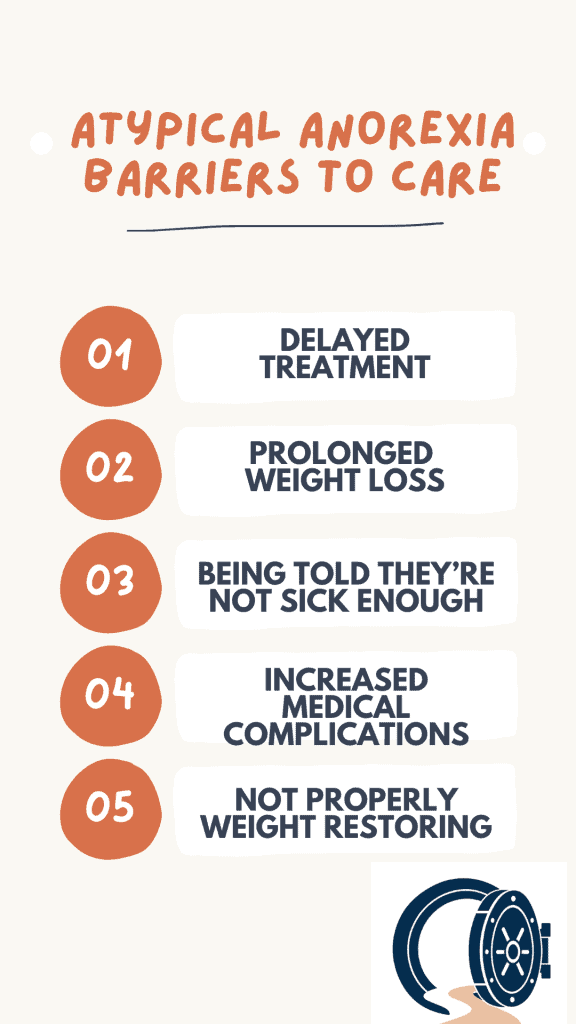
“Get a treatment team” can sound simple until you try to find one. You may face providers who dismiss restriction, insurance that will not cover recommended care, or a specialist appointment you cannot afford. These obstacles can leave you trying to manage the eating disorder while also trying to find care.
Weight Bias and Being Told You Look Healthy
Weight bias happens when assumptions about body size shape the care someone receives. With atypical anorexia, that can mean a clinician praises weight loss without asking about restriction, overlooks eating disorder symptoms, or recommends further weight loss while the person is already struggling to eat.
In research on patients’ experiences of weight stigma, participants described dismissal, missed opportunities for assessment, and delayed care. Some reported continued weight-loss messages during treatment. These were accounts of lived experience, rather than a measurement of how every clinician behaves, but they identify obstacles that medical advice often leaves out.
Being dismissed can make you less willing to disclose what is happening again. It can also reinforce the idea that you need to get worse before anybody believes you. You should not have to prove the seriousness of restriction by becoming more unwell.
Insurance Denials and the Cost of Treatment
Even with insurance, finding covered appointments or paying deductibles can be difficult. Fatphobia limits access to healthcare in many ways, including financial access. Recommended care may be denied or limited, and paying privately may be impossible. Coverage varies by plan, location, and requested service; a diagnosis does not guarantee access.
If coverage is denied, request the written reason and the appeal instructions, including deadlines. Keep the denial, relevant clinical documents, and notes from calls together. Project HEAL’s insurance resources include appeal templates and information about requesting exceptions when appropriate care is unavailable within a plan’s provider network. These options may help you pursue coverage, but they cannot promise approval.
Specialist Shortages and Everyday Logistics
A provider directory can give you names without telling you whether anyone is accepting patients, takes your insurance, or understands restrictive eating in larger bodies. Travel, work hours, childcare, disability access, and a private place for virtual appointments can make available care difficult to use.
Before spending money on an appointment, ask: “Do you treat atypical anorexia in people at my body size?” and “How do you assess restriction when someone is not underweight?” You can also ask about waiting lists, cancellation appointments, fees, and reduced-cost options. Project HEAL offers treatment access programs, including case management and financial assistance; availability and eligibility depend on the program.
Feeling That You Do Not Deserve Care
The eating disorder voice may tell you to save appointments for someone thinner, younger, or visibly struggling more. You may repeat messages you heard from a doctor or family member and mistake them for evidence that your symptoms are unimportant.
Notice the practical cost of that belief. Are you delaying an appointment? Hiding dizziness? Refusing a meal because you have not been diagnosed? Feeling undeserving of food does not remove your need for nourishment. Feeling undeserving of help does not remove your need for care either.
What to Say If Your Symptoms Are Dismissed
Telling someone about your eating disorder can feel scary. Bring a short description of the pattern, rather than relying only on “I think I have an eating disorder.” Include how your intake has changed, compensatory behaviors, physical symptoms, and how food or body thoughts affect your day. You do not need to start counting calories to prepare this description.
You can say: “I have been restricting food and I’m afraid to increase what I eat. I’m experiencing dizziness and fatigue. I need an assessment of the restriction and its effects, even though I’m not underweight.” Use your own symptoms in place of the examples.
If the response focuses only on BMI, you can ask: “What else are you using to assess my nutrition and medical risk?” NICE eating disorder guidance advises against using BMI alone to decide whether to offer treatment, or an absolute BMI threshold to decide on admission. It is UK guidance, rather than a rule binding every provider or insurer, but it supports asking for a fuller assessment. Providing evidence that BMI is a poor metric for determining current health status or future health outcomes can also be helpful.
If possible, bring someone who can help explain what has changed and take notes. Ask for a referral or another opinion if the concern is not being assessed. A dismissive appointment can be exhausting, and you should not have to become an expert advocate to receive basic care. These scripts are tools for that situation, rather than a guarantee that the system will respond well.

- Dating Someone With an Eating Disorder: Supporting Them Without Losing Yourself - October 19, 2026
- The Evolution of Thinspo: From Pro-Ana Websites to SkinnyTok - September 19, 2026
- Meal Support For Eating Disorders - August 12, 2026