Table of Contents
Last updated on November 8th, 2026 at 08:49 pm
Managing type 1 diabetes can mean thinking about food, blood sugar, and insulin all day, every day. Add an eating disorder telling you that taking the medication you need is a threat to your body size, and even ordinary meals can feel exhausting.
Diabulimia is an informal term for intentionally restricting or skipping insulin to influence weight. It is serious, it can become life-threatening, and struggling with it does not make you a “bad diabetic.”
Recovery needs to address both diabetes and the eating disorder. Being told to “just take your insulin” does very little to help with the fear that makes taking it feel impossible.
When to Get Emergency Help
Go to the emergency department or call 911 if you have fruity-smelling breath, trouble breathing, vomiting that prevents you from keeping food or fluids down, or several symptoms of diabetic ketoacidosis together. High ketones or blood sugar that remains at 300 mg/dL or above also require emergency care, according to the CDC’s DKA guidance.
Do not wait for an eating disorder diagnosis or a routine appointment. If you have been restricting insulin without these symptoms, contact your diabetes clinician promptly for advice specific to your situation.
What Is Diabulimia?
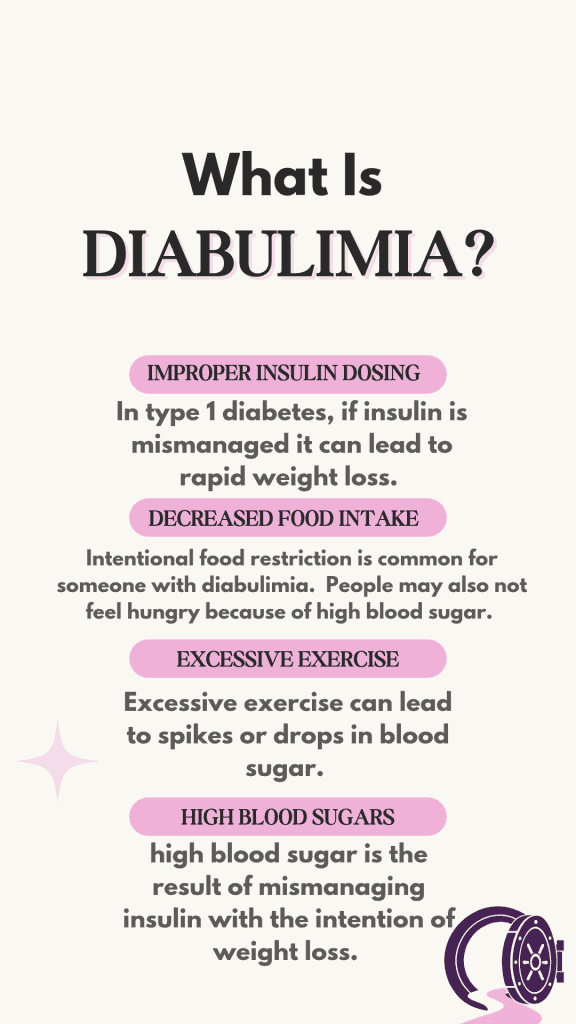
The term usually describes weight-related insulin restriction in someone with type 1 diabetes. Unlike the name might suggest, binge eating or self-induced vomiting does not have to be present. You may also hear type 1 diabetes with disordered eating, or T1DE.
Diabulimia is not a separate diagnosis from other eating disorders such bulimia, anorexia, or OSFED as in the DSM-5-TR, the manual clinicians use to diagnose mental health conditions. This can make the understanding and classification of diabulimia a little muddy, as the symptom of insulin restriction often comes alongside the symptoms associated with other diagnosable eating disorders.
People of different genders, ages, and body sizes can struggle with this. A person with type 2 or another form of diabetes can also have an eating disorder or misuse prescribed medication and deserves assessment, even when “diabulimia” is not the term used.
Why Insulin Restriction Is Dangerous
Insulin helps your body use and store glucose, or blood sugar, for energy. People with type 1 diabetes need replacement insulin because their pancreas makes little or none.
Without enough insulin, glucose builds up in the blood while the body struggles to use it normally. Excess glucose can leave through urine, causing fluid loss, and the body breaks down fat and muscle for energy.
The resulting weight change can involve dehydration and loss of body tissue. Your body is being deprived of something it needs to function, even if the eating disorder insists the change is an achievement.
What Are the Warning Signs of Diabulimia?
Some signs overlap with other eating disorder warning signs, while others involve diabetes care. Look at changes in behavior, distress, and physical health together rather than trying to diagnose someone from one glucose reading.
| Warning sign | Why it deserves attention |
|---|---|
| Fear that insulin will cause unwanted weight gain | Weight fears may be interfering with taking needed medication. |
| Taking less insulin than prescribed to change weight | This is a direct reason to seek help, even without visible weight loss or a previous DKA episode. |
| Repeated high glucose readings, rising A1C, or recurrent DKA | These need medical investigation and a sensitive conversation about possible causes, including insulin restriction. |
| Avoiding appointments, glucose checks, or conversations about insulin | Shame, fear, burnout, access problems, or an eating disorder may be making care harder. |
| Increasing food rules, skipped meals, bingeing, or compulsive exercise | Eating-disorder behaviors can occur alongside insulin restriction or on their own. |
| Unexplained weight loss, persistent thirst, frequent urination, or marked fatigue | These can signal high glucose or other medical problems and need assessment. |
No A1C cutoff diagnoses diabulimia. A1C reflects average blood glucose over roughly three months, but it cannot tell you why someone’s glucose is high or rule out an eating disorder.
Missed insulin can also reflect unaffordable prescriptions, equipment problems, fear of hypoglycemia, or diabetes burnout. Diabetes-specific assessment helps distinguish these concerns without treating every difficulty with diabetes care as proof of an eating disorder.
Emotional and Behavioral Changes
A person may feel trapped between fear of medical complications and fear of weight gain. They may avoid eating with others, become more withdrawn, or feel unable to talk honestly at appointments because they expect another lecture.
- Persistent anxiety about weight, food, or insulin
- Feeling guilty for eating, including eating to treat a low blood sugar
- Rigid food rules or compulsive exercise
- Depression, anxiety, or feeling overwhelmed by diabetes tasks
- Pulling away from friends, family, or activities that involve food
None of these signs proves diabulimia on its own. They are reasons to ask what is happening and offer help, rather than deciding the person is being difficult.
What Can Contribute to Diabulimia?
There is no single cause. Eating-disorder vulnerability, diabetes-related demands, and pressure about body size can interact, and the same person may have several reasons for struggling.
Diabetes Burnout and Constant Food Decisions
Diabetes burnout means feeling worn down by the ongoing work of managing diabetes. Appointments, alarms, supplies, food decisions, and worry about readings can feel like a job with no clock-out time.
Burnout does not automatically mean someone has an eating disorder, but both problems can exist together. Diabetes UK identifies weight-focused appointments, constant attention to food, and shame around diabetes care as possible contributors to disordered eating.
Carbohydrate counting and glucose monitoring can be necessary parts of treatment. The problem deserves attention when fear, rigid rules, or attempts to control weight start interfering with nourishment or prescribed insulin use.
Body Image, Weight Changes, and Diet Culture
After a type 1 diabetes diagnosis, starting insulin can restore fluid and weight lost while the body was unwell. Those changes can feel frightening, especially if weight loss was praised before anyone understood what caused it.
Diet culture, social media, and constant body checking can reinforce the idea that a smaller body matters more than adequate care. Insulin does not need to win diet culture’s approval before you are allowed to take it.
Type 1 diabetes is an autoimmune condition, not something you caused by eating sugar or having a particular body size. Nobody should have to defend their right to treatment against those stereotypes.
Fear of Low Blood Sugar and Judgment
Hypoglycemia, or low blood sugar, can be frightening, and fear of another episode can affect insulin use. Treating a low may also collide with eating-disorder rules about when, what, or how much you are “allowed” to eat.
Fear of low blood sugars needs a workable diabetes plan and support with the fear. Describing someone as “noncompliant” does not explain whether they are terrified, unable to afford insulin, or ashamed to admit what is happening.
Health Risks of Diabulimia
Diabetic Ketoacidosis
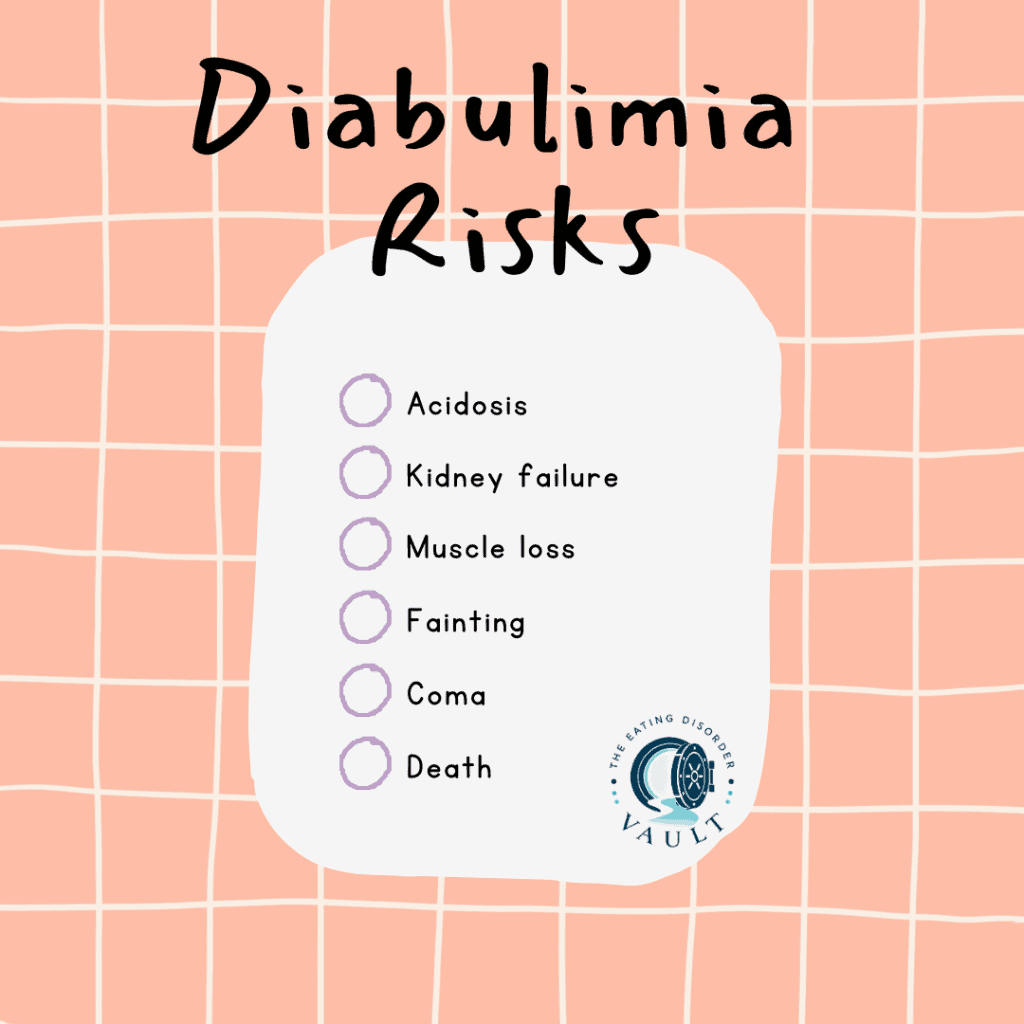
When there is not enough insulin, the body breaks down fat and produces ketones, acids that can build up in the blood. This can lead to diabetic ketoacidosis, or DKA, a medical emergency.
DKA can cause severe dehydration and disturbances in electrolytes, minerals involved in heart and muscle function. Hospital treatment may involve insulin, fluids, and electrolyte replacement; untreated DKA can be fatal.
Longer-Term Complications
Repeated insulin restriction and prolonged high glucose can increase the risk of damage to the eyes, kidneys, and nerves. These are among the complications associated with diabulimia, and they can affect people who do not appear visibly unwell.
Fatigue and other physical changes need proper assessment rather than being treated as a checklist for diabulimia. Blood tests and other medical checks can help identify complications, but they do not replace an honest conversation about food and insulin.
The danger is real, and recovery is possible. A frightening statistic is not a prediction of one person’s future, and you do not have to wait for permanent damage before your struggle deserves treatment.

What Does Diabulimia Treatment Involve?
Treatment needs to address diabetes and the eating disorder together. NICE guidance recommends coordination with diabetes care and addressing insulin misuse within psychological treatment.
Depending on medical stability and available support, care may be outpatient, a more intensive program, or inpatient treatment. DKA needs emergency medical treatment rather than waiting for an eating-disorder program to become available.
A Coordinated Insulin and Monitoring Plan
Your diabetes prescriber needs to know what insulin you are actually taking, as well as what the prescription says. That information helps them plan changes, glucose and ketone monitoring, and support for low blood sugar.
Do not use an article to calculate catch-up doses or independently redesign your insulin schedule. If you have been restricting insulin, contact the prescribing clinician promptly and explain the pattern so they can guide the next steps.
Enough Food Without More Eating-Disorder Rules
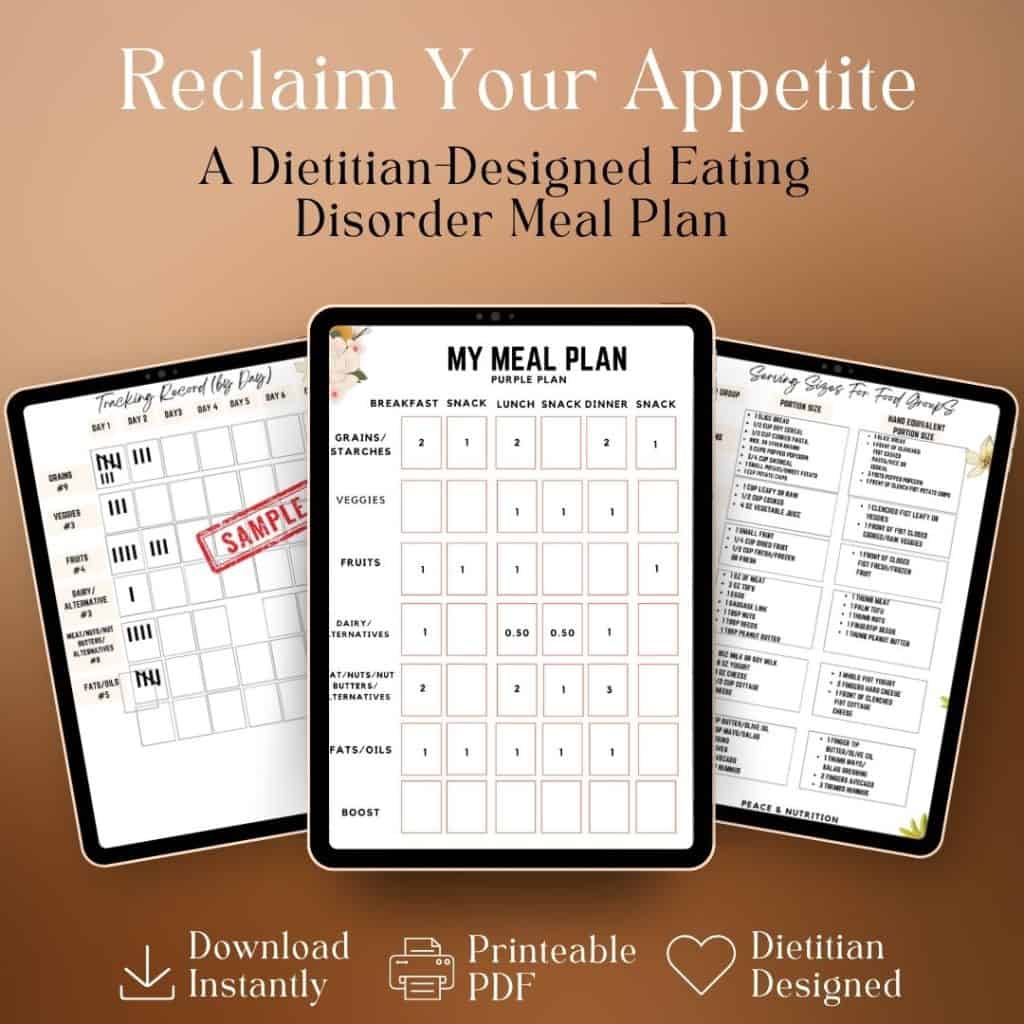
An eating disorder dietitian who understands diabetes can help build an individualized recovery meal plan alongside the insulin plan. The goal is adequate, consistent nourishment with diabetes management that supports it.
Work on fear foods needs to account for diabetes care without making carbohydrates forbidden. Cutting out more foods to avoid taking insulin keeps the underlying problem going.
Reducing compulsive calorie counting is different from abandoning carbohydrate information used for prescribed insulin dosing. Ask for help separating the information your diabetes plan needs from the checking and calculations the eating disorder keeps demanding.
Support for Fear, Body Image, and Compensatory Behaviors
Therapy can address fear of weight change, shame, and the belief that you have to compensate for eating. Practical work on respecting your body and reducing body checking can happen even before you feel comfortable with how your body looks. Letting go of the thin ideal may also mean grieving the approval or sense of safety you associated with being smaller.
If vomiting, laxative misuse, or other purging behaviors are also present, support for stopping purging belongs in the plan too. General coping activities can help with distress, but they cannot replace insulin management or medical care.
How to Ask for Help
You do not need the perfect explanation or a confirmed diagnosis to start the conversation. You can say:
“I’ve been taking less insulin because I’m scared of weight gain. I need help with both my diabetes and the eating-disorder thoughts.”
If saying it out loud feels too hard, send it in a patient message, write it down for an appointment, or ask someone you trust to sit with you while you call. Include what has changed, how long it has been happening, and any symptoms you have.
If you do not have an eating-disorder specialist, start with your diabetes clinic or primary care clinician. Ask: “Can you help coordinate care with someone who treats eating disorders and understands type 1 diabetes?”
Supporting Someone You Are Worried About
Describe what you have noticed without commenting on weight or accusing them of lying. “You seem scared about taking insulin, and I want to help you get support” gives them more room to respond than “Why won’t you just take it?”
- Offer to help make a call or attend an appointment.
- Ask about practical barriers, including access to insulin and supplies.
- Avoid praising weight loss or treating glucose readings as a report card on their character.
- Take emergency symptoms seriously, even if the person minimizes them.
Recovery books and resources can offer additional support while care is being arranged. You deserve help that understands why this is hard and makes it easier to take the next step.

- Dating Someone With an Eating Disorder: Supporting Them Without Losing Yourself - October 19, 2026
- The Evolution of Thinspo: From Pro-Ana Websites to SkinnyTok - September 19, 2026
- Meal Support For Eating Disorders - August 12, 2026